
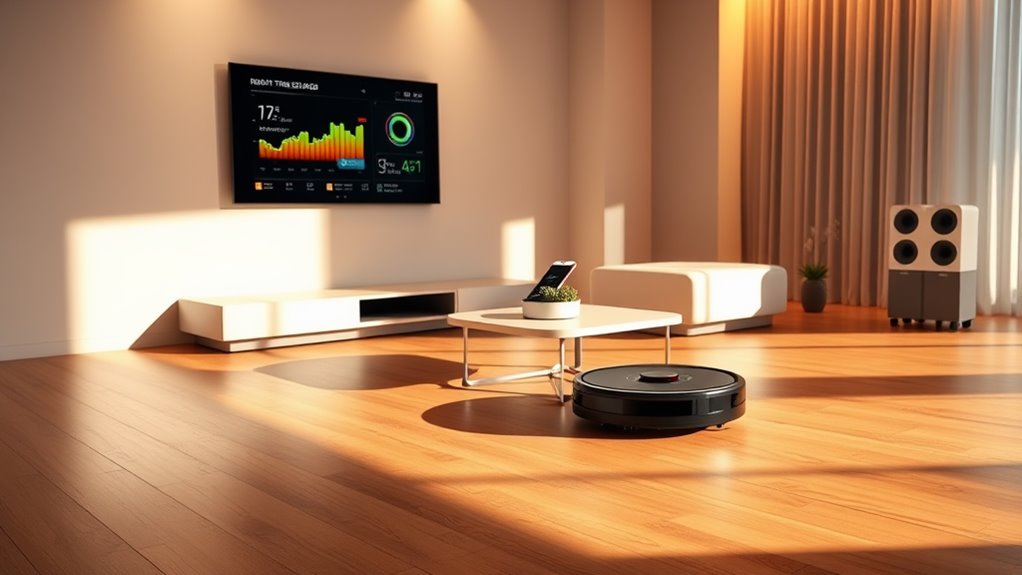
Smart home technologies utilize advanced systems that connect various devices for improved comfort, security, and energy management. Key components include sensors and actuators that detect environmental changes and execute commands accordingly. Communication protocols like Zigbee and Z Wave facilitate seamless connectivity between devices. The integration of the Internet of Things (IoT) enables real-time data processing and analytics, improving efficiency and user experience. Improved security features, along with robust data privacy measures, protect sensitive information. With ongoing advancements in artificial intelligence and machine learning, smart homes are becoming increasingly intuitive and responsive, paving the way for exciting developments ahead.
Overview of Smart Home Technologies
Smart home technologies represent a transformative shift in the way individuals interact with their living spaces. By integrating advanced systems and devices, these technologies empower homeowners to improve control over their environments, thereby optimizing comfort, security, and energy efficiency. The proliferation of smart home devices—ranging from intelligent lighting to sophisticated security cameras—has changed user experience, providing unparalleled convenience and connectivity.
The smart home benefits extend beyond mere automation. Improved security features, such as real-time surveillance and remote monitoring, afford homeowners peace of mind, knowing that their properties are safeguarded against potential threats. Furthermore, energy management systems allow users to monitor and adjust their energy consumption, resulting in substantial savings and a decreased environmental footprint. This proactive approach to resource management not just aligns with contemporary sustainability goals but also resonates with an audience that seeks to exert control over their energy usage.
Moreover, the integration of artificial intelligence and machine learning within smart home technologies enables personalized experiences customized to individual preferences. Devices learn user habits and adjust settings accordingly, creating an adaptive environment that improves daily living. This level of customization promotes a deeper connection between homeowners and their living spaces, transforming the home into a sanctuary that reflects personal values and lifestyle choices.
Key Components of Smart Homes
Key components of smart homes include fundamental elements such as sensors and actuators, which facilitate automation and responsiveness to various environmental conditions. Furthermore, connectivity protocols play an important role in ensuring seamless communication between devices, enabling a cohesive smart home ecosystem. Comprehending these components is significant for maximizing the benefits of smart home technologies.
Sensors and Actuators
Integrating a variety of sensors and actuators is essential for the functionality of modern smart homes. These critical components enable a seamless interaction between users and their environment, improving both convenience and security. Sensor types such as motion detectors, temperature sensors, and humidity sensors collect vital data, allowing the system to respond intelligently to changes in the home. For instance, motion sensors can trigger lights or alert homeowners to intrusions, whereas temperature sensors can regulate HVAC systems for ideal comfort and energy efficiency.
Actuator functions complement these sensors by executing predefined commands based on the data received. For example, smart thermostats utilize actuators to adjust heating and cooling systems, ensuring that homes remain at the desired temperature. Similarly, smart locks employ actuators to secure entry points automatically when sensors detect the absence of residents.
The synergy between sensors and actuators empowers homeowners to exert precise control over their living spaces, offering not only improved functionality but a robust sense of security. As smart home technology continues to evolve, the interplay between these components will certainly play a significant role in shaping the future of domestic automation.
Connectivity Protocols
The effectiveness of sensors and actuators in smart home systems heavily relies on robust connectivity protocols that facilitate communication between devices. Among these, Zigbee advantages include low energy consumption and a mesh networking capability that improves coverage. In contrast, a Z Wave comparison reveals its strength in interoperability, allowing diverse devices to work seamlessly within a network.
Thread benefits further transform smart home connectivity, providing secure, low-latency communication ideal for IoT environments. While Bluetooth serves certain functions, its limitations, particularly in range and scalability, often hinder peak performance in expansive smart homes. Wi-Fi reliability remains paramount for high-bandwidth applications, although it can be susceptible to interference.
Emerging technologies like LoRaWAN applications offer long-range connectivity for devices that require minimal data transmission, making them ideal for outdoor sensors. Moreover, NFC usage facilitates simplified interactions with devices, improving user convenience. RFID integration enriches smart home systems by enabling automatic identification and tracking of objects, thereby streamlining user experience. As the environment of smart home technologies evolves, the choice of connectivity protocol becomes a critical factor in achieving a potent and cohesive ecosystem.
Wireless Communication Protocols
Wireless communication protocols serve as the backbone of smart home technologies, enabling devices to connect and communicate seamlessly. The effectiveness of these protocols determines the overall performance, reliability, and security of a smart home ecosystem. Among the leading protocols, Zigbee stands out because of its advantages, such as low energy consumption and strong mesh networking capabilities. This allows devices to communicate over greater distances while reducing communication latency.
Bluetooth, although widely used, has limitations such as a restricted range and potential signal interference in densely populated areas. In comparison, Wi-Fi provides an expansive range but can suffer from congestion and reduced performance when multiple devices are connected. The Thread protocol emerges as a formidable contender, utilizing sub-GHz frequency bands to deliver low-latency communication and improved security.
For specific applications, LoRa technology excels in long-range communications, making it suitable for devices that require infrequent data transmission. Additionally, NFC security protocols provide a strong solution for sensitive transactions and device pairing within smart home environments.
As smart homes evolve, the interplay between these wireless communication protocols will shape the user experience, dictating device responsiveness and reliability. Grasping the strengths and weaknesses of each protocol is paramount for designing an efficient and secure smart home network. In the end, the choice of wireless communication protocol will define the operational capabilities of smart home technologies, equipping users with greater control and flexibility in their connected environments.
The Role of IoT
The Internet of Things (IoT) is integral to smart home technologies, facilitating seamless connectivity and communication among devices. By enabling real-time data processing and analysis, IoT improves the efficiency and functionality of smart homes. This interconnected ecosystem not only streamlines user experiences but additionally empowers homeowners with valuable insights into their living environments.
Connectivity and Communication
In an increasingly digital world, the role of the Internet of Things (IoT) in smart home technologies cannot be overstated. IoT serves as the backbone of connectivity and communication, enabling seamless interaction between various devices within the home environment. This interconnectedness enables homeowners to exert control over their living spaces, enhancing convenience, security, and energy management.
However, the potential of IoT is often hampered by interoperability issues. As numerous manufacturers develop smart devices, ensuring device compatibility becomes paramount. Without standardized protocols, disparate systems struggle to communicate effectively, leading to fragmented user experiences. Homeowners seeking to deploy a cohesive smart home ecosystem must navigate these challenges to select devices that can communicate effortlessly.
To wield the full influence of smart home technologies, individuals must prioritize solutions that emphasize interoperability. Embracing platforms that facilitate device compatibility not just optimizes functionality but also future-proofs the smart home against evolving technologies. In this environment, comprehending the critical role of connectivity and communication will enable consumers to make informed decisions, eventually transforming their homes into intelligent, responsive environments that cater to their unique lifestyles.
Data Processing and Analysis
At the heart of smart home technologies lies the critical function of data processing and analysis, which transforms raw information generated by IoT devices into actionable insights. This transformation is paramount for homeowners seeking improved control, efficiency, and security. By utilizing sophisticated data visualization techniques, users can intuitively comprehend complex data sets, allowing for informed decision-making that maximizes their living environments.
Moreover, predictive analytics applications play a pivotal role in anticipating user needs and behaviors. By analyzing historical data patterns, these applications empower homeowners to preemptively adjust their smart home systems, ensuring peak performance and energy efficiency. For instance, learning algorithms can predict when a homeowner is likely to arrive, enabling heating or cooling systems to adjust accordingly, thereby conserving resources while maintaining comfort.
Incorporating these advanced analytical capabilities not solely raises the user experience but also reinforces the strategic advantage of smart homes. As the realm of home automation evolves, the synergy between data processing and IoT technologies will continue to shape the future of intelligent living, creating a paradigm where informed choices lead to empowered lifestyles.
Machine Learning in Smart Homes
Leveraging machine learning in smart homes has transformed the way residents interact with their living environments. By utilizing advanced algorithms and data-driven insights, homeowners can achieve unprecedented levels of efficiency and comfort. Central to this transformation is the ability to analyze user behavior, allowing systems to adapt in real-time to individual preferences and needs.
Predictive analytics plays an essential role in anticipating residents' actions, leading to improved automation trends that streamline daily tasks. For instance, smart thermostats utilize adaptive learning to optimize energy consumption, guaranteeing that heating and cooling systems operate at peak efficiency while minimizing costs. This level of energy optimization not only reduces expenses but additionally contributes to sustainability efforts.
User interfaces have evolved to become more intuitive, enabling seamless system integration across various smart devices. By employing machine vision, smart homes can interpret visual data, improving security through sophisticated anomaly detection systems that identify unusual activities and alert homeowners without delay.
Furthermore, the promise of personalized experiences is realized as machine learning continually refines its comprehension of user preferences. This dynamic adaptability guarantees that smart homes remain responsive and relevant, providing a customized environment that evolves with the residents' lifestyle changes.
Voice Recognition Technology
Voice recognition technology serves as a pivotal component in smart home systems, enabling users to interact with devices through natural language commands. This technology not only facilitates hands-free control of various applications within the home but also presents unique challenges and limitations that impact its effectiveness. Comprehending how voice recognition works and its implications for everyday use is crucial for optimizing its integration in smart living environments.
How It Works
Comprehending how voice recognition technology functions is essential for grasping its role in smart home systems. At its core, this technology utilizes a combination of advanced algorithms and machine learning to interpret and respond to vocal commands. When a user speaks, the system captures audio input through microphones embedded in smart appliances, converting sound waves into digital signals. This transformation is followed by a series of complex processes including feature extraction, where specific characteristics of the voice are analyzed to differentiate commands from background noise.
Subsequently, the system employs natural language processing (NLP) to decode the command's intent, aligning it with pre-programmed actions within the user interfaces of smart home devices. This seamless interaction empowers users to control their environment effortlessly, enhancing convenience and efficiency.
Furthermore, continuous learning algorithms allow these systems to adapt over time, improving their recognition accuracy and responsiveness based on user behavior and preferences. Such dynamic capabilities position voice recognition technology as a pivotal element in the evolution of smart home ecosystems, where command execution is not merely swift but also intuitive, reinforcing the user's command over their living space.
Applications in Homes
Integrating voice recognition technology into smart homes has transformed the way residents interact with their living spaces. This state-of-the-art technology enables homeowners to command their environment effortlessly, enhancing convenience and control. With a simple voice command, one can adjust smart lighting systems, setting the perfect ambiance for any occasion—be it a lively gathering or a tranquil evening.
Moreover, voice recognition plays a significant role in bolstering home security. Homeowners can activate security protocols or request updates on their home's status without lifting a finger. This seamless integration strengthens safety and instills a sense of confidence in one's personal sanctuary. Furthermore, the ability to control devices hands-free is particularly advantageous in emergencies, where quick reactions are vital.
As smart home technologies evolve, voice recognition stands out as an important enabler of intelligent living. It transforms homes into responsive environments, where every command translates into immediate action, asserting the influence of the homeowner. In this new era of smart living, the synergy of voice recognition, smart lighting, and advanced security systems creates a dynamic lifestyle that is as sophisticated as it is empowering.
Challenges and Limitations
In spite of the remarkable advancements in voice recognition technology, several challenges and limitations persist that can hinder its widespread adoption in smart homes. These obstacles can greatly impact user adoption rates and overall user experience, as potential users weigh the benefits against inherent risks and costs.
| Challenge | Description | Impact on Adoption |
|---|---|---|
| Technological Barriers | Limitations in accuracy and speed | Decreased user satisfaction |
| Privacy Concerns | Risks related to data security | Reluctance to use devices |
| Interoperability Issues | Lack of compatibility among devices | Fragmented user experience |
| Maintenance Costs | Ongoing expenses for updates | Higher total cost of ownership |
| Regulatory Challenges | Compliance with evolving laws | Uncertainty in market viability |
Market competition further exacerbates these issues, as companies work to differentiate their offerings during the process of overcoming regulatory challenges. As a result, these factors culminate in a complex environment where potential users may hesitate to embrace voice recognition technologies fully, stifling innovation and limiting the realization of smart home potentials. Addressing these challenges is imperative for the future success of voice recognition in smart home ecosystems.
Automation and Control Systems
Automation and control systems serve as the backbone of smart home technologies, enabling seamless connectivity and management of various devices and appliances. These systems empower homeowners to exert unparalleled command over their environments, transforming the conventional living experience into a sophisticated hub of efficiency and convenience. By integrating home automation technologies, individuals can orchestrate a symphony of devices that respond to their preferences and routines, thereby enhancing both comfort and control.
At the core of this automation lies a robust framework of control systems that facilitate communication between devices. These systems employ advanced protocols and standards, ensuring that disparate technologies can interact harmoniously. Whether it is through a centralized hub or a decentralized network, the capability to monitor and regulate devices in real-time provides users with an unprecedented level of oversight. This control is not just about convenience; it additionally enables the customization of home environments to suit individual lifestyles and needs.
Furthermore, automation and control systems are designed with scalability in mind. As technology evolves, homeowners can easily incorporate additional devices into their existing ecosystems, ensuring that their smart home remains at the cutting edge. This adaptability is essential for those who seek to maintain an authoritative grasp on their living spaces, allowing for the integration of new advancements as they emerge.
Energy Efficiency and Management
Energy efficiency and management have become pivotal aspects of smart home technologies, allowing homeowners to not just reduce their energy consumption but in addition minimize their environmental impact. By utilizing advanced automation systems and connected devices, smart homes enable homeowners to exert control over their energy usage, leading to significant energy savings.
Smart thermostats, for instance, learn user habits and preferences, adjusting heating and cooling schedules accordingly. This not only improves comfort but also optimizes energy use, resulting in lower utility bills. Furthermore, smart lighting systems enable precise control over illumination, ensuring that lights are only activated when needed, further contributing to energy efficiency.
Utility management is transformed by the integration of smart meters and energy monitoring apps. These tools provide real-time insights into energy consumption patterns, enabling homeowners to make informed decisions. By identifying peak usage times and high-consumption devices, users can strategically alter their behaviors to minimize costs and consumption. This proactive approach not only benefits individual households but also supports a broader commitment to energy sustainability.
Additionally, smart home technologies facilitate the integration of renewable energy sources, such as solar panels. Homeowners can monitor their energy production and consumption, optimizing the use of generated electricity while contributing excess energy back to the grid. This symbiotic relationship between smart technology and sustainable energy practices positions homeowners at the forefront of modern utility management, allowing them to utilize energy efficiently and responsibly.
Security Features in Smart Homes
Smart homes are increasingly equipped with a variety of security features that improve the safety and peace of mind of homeowners. These advanced technologies transform traditional security measures into sophisticated systems that enable users to maintain control over their living environments. Biometric security, such as fingerprint or facial recognition, guarantees that only authorized individuals gain access to the home, boosting overall access control.
Remote monitoring capabilities further supplement this security framework, allowing homeowners to oversee their properties from anywhere in the world. This is often facilitated through mobile applications that integrate seamlessly with surveillance cameras, enabling real-time video feeds. With smart locks, homeowners can remotely manage entry points, granting or revoking access to visitors without needing physical keys.
Security automation plays a vital role in the modern smart home, automatically adjusting settings based on predefined safety protocols. For instance, intrusion detection systems can trigger emergency alerts, notifying homeowners and authorities of potential breaches. Additionally, extensive home surveillance systems, equipped with high-definition cameras and motion sensors, provide an added layer of protection, capturing significant evidence in case of incidents.
As homeowners increasingly seek effective solutions to improve their security, the integration of these advanced technologies represents a significant advancement in home protection. By leveraging remote monitoring and intelligent security features, individuals can confidently safeguard their homes, guaranteeing a proactive approach to safety that aligns with their desire for control and empowerment in an increasingly complex world.
Data Privacy and Protection
Data privacy and protection have become critical considerations as households adopt increasingly interconnected devices. As consumers integrate smart technologies into their daily lives, the volume of data generated is enormous, raising concerns about how this information is collected, stored, and used. Empowering users to maintain control over their personal data is paramount in this evolving environment.
To safeguard sensitive information, individuals must understand the significance of the following principles:
- Data Encryption: Implementing robust encryption protocols guarantees that data transmitted between devices is secure, rendering it unreadable to unauthorized parties.
- User Consent: Prior to data collection, obtaining explicit consent from users allows them to dictate how their information is utilized, cultivating trust and transparency.
- Regular Security Audits: Conducting routine assessments of smart home devices and networks can identify vulnerabilities, guaranteeing that systems are fortified against potential breaches.
- Privacy Policies: Transparent privacy policies should be a standard practice, enabling users to comprehend the implications of their data sharing and the rights they retain over their information.
Future Trends in Smart Home Tech
An increasing number of households are poised to embrace innovative advancements in home technology, reshaping the way we interact with our living environments. As we look toward the future, several trends are set to dominate the smart home environment, fundamentally changing our daily routines and enhancing our quality of life. From energy-efficient appliances to AI-powered assistants, these innovations aim to create a seamless and more sustainable living experience. Homeowners seeking to upgrade their spaces can benefit from smart home building tips that maximize efficiency, security, and convenience. As technology continues to evolve, integrating these advancements thoughtfully will ensure a more connected and intelligent home environment.
One of the most compelling advancements lies in the integration of augmented reality (AR) within smart home systems. Homeowners will increasingly utilize AR for immersive experiences, allowing them to visualize interior design modifications, assess energy consumption in real-time, and even engage with virtual assistants to manage their smart appliances more intuitively. This sophisticated interaction will empower users to optimize their living spaces like never before.
In parallel, the evolution of smart appliances is anticipated to reach unprecedented levels of intelligence and connectivity. These devices will not merely perform basic tasks but will further communicate with one another, forming a cohesive ecosystem that anticipates user needs. Envision a refrigerator that suggests recipes based on its contents or a washing machine that self-regulates its cycle according to the household's schedule. Such innovations will drive efficiency, saving both time and energy.
As the market for smart home technologies expands, the convergence of AR and advanced smart appliances will position empowered homeowners at the forefront of a new era in domestic living. This future redefines convenience, allowing individuals to leverage the full potential of their environments, eventually leading to a more dynamic and efficient lifestyle.
Frequently Asked Questions
How Do Smart Home Devices Impact Everyday Life?
Smart home devices greatly impact everyday life by enhancing energy efficiency and user convenience. These technologies optimize resource consumption, reducing utility costs as well as promoting sustainable living. Furthermore, they streamline daily tasks through automation, allowing users to control various aspects of their environment seamlessly. This integration nurtures a more comfortable and efficient lifestyle, empowering individuals to manage their homes with greater ease and precision, finally leading to improved quality of life and increased productivity.
Are Smart Homes Accessible for Individuals With Disabilities?
Smart homes can greatly improve accessibility for individuals with disabilities through the integration of adaptive technologies and intuitive user interfaces. These innovations allow for customized experiences, enabling users to control their environments effortlessly. Features such as voice activation and customizable settings empower individuals, encouraging independence and enhancing quality of life. As smart home technologies continue to evolve, their potential to create inclusive living spaces will expand, ensuring that all users can benefit from modern advancements.
What Are the Initial Costs of Setting up a Smart Home?
Setting up a smart home entails significant installation expenses and strategic budget considerations. The initial investment typically includes purchasing devices such as smart thermostats, lights, and security systems, which can collectively amount to thousands of dollars. Additionally, professional installation services may add to costs, particularly for complex setups. Consequently, prospective smart homeowners must carefully manage their financial resources to guarantee a smooth shift into this sophisticated living environment as they maximize convenience and control.
Can Smart Home Technologies Be Integrated With Existing Home Systems?
Yes, smart home technologies can be integrated with existing home systems, provided there is system compatibility. Nevertheless, integration challenges may arise because of varying standards and protocols among devices. Ensuring device interoperability is vital for seamless operation, allowing homeowners to utilize the full potential of home automation. By strategically selecting compatible devices and utilizing integration platforms, homeowners can create a cohesive smart environment that improves functionality and convenience.
What Happens if the Internet Goes Down in a Smart Home?
In the event of an internet outage, smart home systems may experience limited functionality; nonetheless, many devices possess offline capabilities. This allows crucial functions, such as lighting and security systems, to remain operational. Advanced smart homes often implement emergency protocols that automatically activate backup systems, ensuring continued security and convenience. By designing such resilience into smart home technologies, users can maintain a measure of control and peace of mind, even in connectivity disruptions.
