
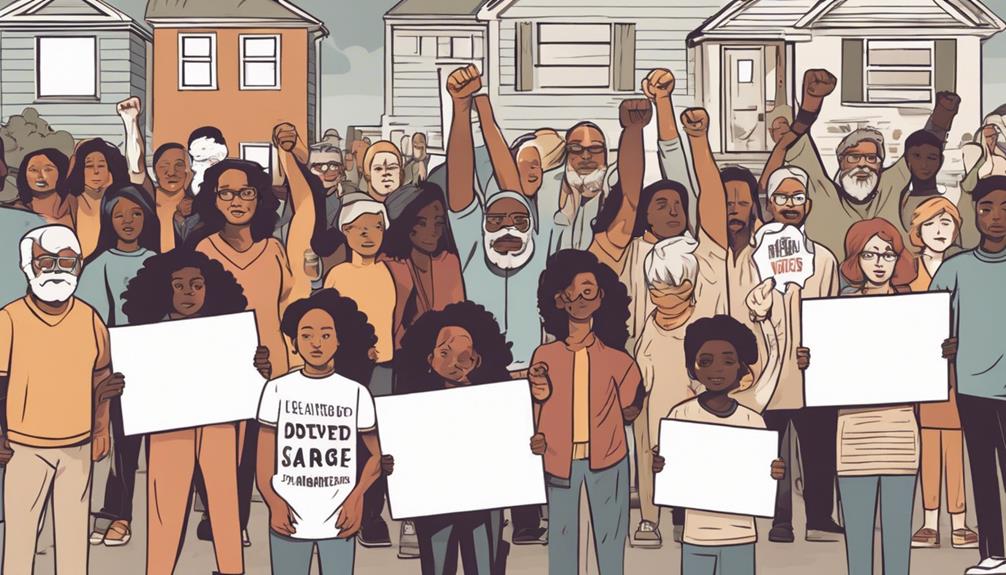
I'm taking a stand against discrimination in my search for a place to call home, and I won't back down until I've fought for my fair housing rights. I know my rights under the Federal Fair Housing Act, which prohibits discrimination based on race, color, religion, and more. I'm vigilant, recognizing signs of discrimination and documenting every incident. I'll file a complaint with the authorities, seeking legal support and building a strong case with evidence. I'll stay informed about housing laws and participate in community advocacy, empowering my community to act. From here, I'll continue to uncover the strategies and resources I need to fight for fair housing rights and create a more just community.
Know Your Fair Housing Rights
As I start my housing search, I should first acquaint myself with the federal Fair Housing Act, which prohibits discrimination based on race, color, religion, sex, national origin, disability, and familial status. Grasping these protections is essential in understanding my rights as a tenant or homebuyer. The Act guarantees that I have equal opportunities to secure housing without encountering unjust treatment.
I need to know that I'm shielded from discriminatory practices, such as being refused housing or being presented with fewer housing options based on my race or national origin. I should also be mindful that I have the right to reasonable accommodations for my disability, if necessary. Moreover, I'm entitled to equal access to housing regardless of my familial status, which means I can't be denied housing because I have children.
Knowing my rights empowers me to push back against discrimination. If I suspect that I've been a victim of housing discrimination, I should record all interactions with the landlord or real estate agent, including dates, times, and details of conversations. I should also contact local fair housing organizations or the U.S. Department of Housing and Urban Development (HUD) for guidance and support. By being informed and proactive, I can make certain that I receive fair treatment in my housing search and push back against any discriminatory practices that may arise.
Identify Discrimination in Housing
My radar for discrimination goes up when I notice a real estate agent or landlord making comments that seem innocent on the surface but actually hint at a bias, such as 'This neighborhood isn't suitable for families with young kids' or 'We're looking for someone who's a better fit for this community.' These subtle remarks can be indicative of a larger issue, and it's crucial to recognize the signs of discrimination in housing.
When I'm searching for a place to live, I'm always on the lookout for red flags. For instance, if a landlord asks about my race, national origin, religion, or family status, I know something is off. Similarly, if they make assumptions about my lifestyle or preferences based on stereotypes, I take it as a warning sign. Recognizing these signs is pivotal in challenging discrimination in housing.
It's not just about being vigilant; it's also about grasping what constitutes discrimination. I educate myself on the Fair Housing Act and local laws to know what my rights are and what constitutes illegal discrimination. I keep an ear out for inconsistencies in the application process or biased language in advertisements. By being proactive and aware, I can identify potential discrimination and take steps to address it. By recognizing the signs and challenging discrimination, I can guarantee that I'm treated fairly and equally in my housing search.
Document Incidents and Evidence
I immediately start documenting every interaction with the landlord or real estate agent, from initial inquiries to viewings and applications, to build a paper trail of evidence in case I need to file a complaint. This includes saving emails, texts, and voicemails, in addition to taking notes during meetings and conversations. I ensure to date and timestamp each entry, so I can easily track the timeline of events.
When it comes to gathering evidence, I focus on the following key areas:
- Any verbal or written statements that suggest discrimination, such as comments about my race, gender, or disability
- Inconsistencies in the application process or rental criteria
- Differences in treatment compared to other applicants or tenants
- Any requests for unnecessary or excessive documentation
I also make sure to record incidents and document violations as they occur. This includes taking photos or videos of any discriminatory signs or postings, in addition to saving any discriminatory ads or listings. I keep a detailed record of every incident, including the date, time, location, and the parties involved.
File a Housing Discrimination Complaint
With a solid paper trail of evidence in place, I'm prepared to take the next step and file a housing discrimination complaint with the appropriate authorities. I know that this is an important step in fighting for my fair housing rights, and I'm determined to see it through.
Before I begin, I'll research the reporting process to make sure I'm filing my complaint with the right agency. In most cases, this will be the U.S. Department of Housing and Urban Development (HUD) or my state's fair housing agency. I'll make sure I understand the specific procedures and deadlines for filing a complaint in my area.
I'll seek legal support to guide me through the process. This could be an attorney specializing in fair housing law or a non-profit organization that provides assistance with housing discrimination cases. Having legal support will help me navigate the complex reporting process and provide me with the confidence to advocate for myself.
When filing my complaint, I'll make sure to include all relevant evidence, including my documentation of incidents, witness statements, and any other supporting materials. I'll clearly outline the alleged discriminatory actions and explain how they've impacted me. By taking these steps, I'll be well on my way to seeking justice and fighting for my right to fair housing.
Understand Your Legal Options
As I navigate the complex world of fair housing rights, I know it's crucial to understand my legal options. I need to familiarize myself with the laws that protect me from discrimination and learn how to take action if my rights are violated. By knowing my rights, I can seek legal action and fight for the justice I deserve.
Know Your Rights
Federal and state laws protect you from housing discrimination, and understanding these laws is vital to fighting for your fair housing rights. As I explore the realm of fair housing, I realize that grasping my legal options is essential. I've participated in fair housing training and advocacy workshops, which have equipped me with the knowledge to identify discriminatory practices. These workshops have connected me with like-minded individuals who share my passion for housing rights awareness and community engagement.
Here are some key takeaways I've gathered:
- The Fair Housing Act prohibits discrimination based on race, color, religion, sex, national origin, disability, and familial status.
- State and local laws may offer additional protections, such as sexual orientation and gender identity.
- I have the right to file a complaint with the Department of Housing and Urban Development (HUD) or my state's fair housing agency if I believe I've experienced discrimination.
- I can also seek assistance from non-profit organizations and legal aid groups that specialize in fair housing cases.
Seek Legal Action
I'll take immediate legal action if I encounter housing discrimination, and understanding my legal options is vital to seeking justice. When facing housing discrimination, it's important to comprehend the legal avenues available to me. I can seek legal representation from experienced attorneys who specialize in fair housing litigation. Moreover, I can reach out to advocacy groups that focus on fighting housing discrimination. These organizations often provide valuable resources, guidance, and support throughout the legal process.
| Legal Option | Description | Benefits |
|---|---|---|
| Fair Housing Act | Federal law that prohibits housing discrimination | Provides legal grounds for filing a lawsuit |
| State and Local Laws | Laws that provide additional protections and remedies | Offers alternative avenues for seeking justice |
| Administrative Complaint | Filing a complaint with government agencies | Can lead to quicker resolutions and settlements |
| Private Lawsuit | Filing a lawsuit against the discriminator | Allows for potential monetary damages and legal fees |
Seek Help From Local Organizations
As I navigate the complex process of fighting for fair housing rights, I've come to realize that seeking help from local organizations is essential. I've found that local fair housing groups and community advocacy resources can provide me with the support and guidance I need to take action. By reaching out to these organizations, I can tap into their expertise and resources, which will help me build a stronger case.
Local Fair Housing Groups
Several local fair housing groups operate in my community, offering free or low-cost assistance to individuals who believe they've experienced housing discrimination. These organizations are often the most effective way to address housing injustices, as they're deeply rooted in the local community and understand the unique challenges we face. By partnering with these groups, I can tap into their expertise and resources to amplify my fight for fair housing rights.
Here are some ways local fair housing groups can support my efforts:
- Providing education and outreach to promote housing rights awareness
- Organizing grassroots campaigns to push for policy changes
- Offering free or low-cost legal assistance to help me navigate the complaint process
- Conducting community outreach to gather evidence and build a stronger case
Community Advocacy Resources
What community advocacy resources are available to support my fight for fair housing rights, and how can I tap into these resources to amplify my efforts? As I navigate the intricate terrain of fair housing, I've come to realize that I don't have to go it alone. Local organizations dedicated to community outreach and grassroots organizing can provide valuable support and guidance. They often have established relationships with local policymakers, allowing them to effectively advocate for policy changes that benefit marginalized communities. By partnering with these organizations, I can tap into their expertise and amplify my voice. Many organizations offer allyship training, which can help me better understand the experiences of marginalized communities and become a more effective advocate. By seeking help from local organizations, I can leverage their resources and expertise to create meaningful change. With their support, I can focus on building a stronger, more equitable community for all.
Report Discriminatory Ads and Practices
I'll take immediate action against discriminatory ads and practices by reporting them to the proper authorities, making sure that everyone has a fair shot at securing a place to call home. As a vigilant advocate for fair housing, I recognize the importance of speaking out against discriminatory practices that deny individuals and families the opportunity to find a place to live.
- I'll monitor online platforms for discriminatory ads that violate fair housing laws, such as those that exclude certain groups based on race, gender, or family status.
- I'll report any suspicious rental applications or leases that contain discriminatory clauses or language.
- I'll document all instances of discriminatory practices, including dates, times, and details of the incidents.
- I'll file complaints with local and national fair housing organizations, such as the Department of Housing and Urban Development (HUD), to make certain that perpetrators are held accountable.
Work With a Fair Housing Attorney
As I navigate the complex world of fair housing rights, I know I need expert guidance to fight for my rights. That's why I'm working with a fair housing attorney, who can help me identify legal options, understand the intricacies of housing laws, and build a strong case against discriminatory practices. With their expertise, I'm confident I can take a stand against unfair treatment and secure the justice I deserve.
Identify Legal Options
I've already taken the important step of documenting evidence and gathering witnesses, and now it's time to explore my legal options by consulting a fair housing attorney who specializes in fighting discrimination cases. A skilled attorney can provide valuable guidance on the best course of action and help me guide the complex legal system. With their expertise, I can build a strong case and increase my chances of success in court.
Here are some benefits of working with a fair housing attorney:
- They can help me determine the best legal strategy for my case
- They have experience with court proceedings and can represent me in court
- They can help me negotiate with landlords or property managers to reach a settlement
- They can assist in filing complaints with government agencies, such as the Department of Housing and Urban Development (HUD)
With legal representation, I can focus on fighting for my rights and seeking justice, rather than navigating the legal system on my own. By working with a fair housing attorney, I can take a vital step forward achieving fair housing and holding those responsible accountable for their discriminatory actions.
Understand Housing Laws
Working with a fair housing attorney gives me access to in-depth knowledge of federal, state, and local housing laws, which is crucial in building a strong case against discriminatory landlords or property managers. With their expertise, I can navigate the complex legal terrain and comprehend my tenant rights. This legal guidance helps me identify potential violations of fair housing laws and develop a strategy to address them. By tapping into these legal resources, I can stay informed about the latest developments in housing legislation and regulations, ensuring that I'm equipped to fight for my rights. Additionally, a fair housing attorney can provide housing education and discrimination prevention strategies, empowering me to recognize and respond to discriminatory practices. With their support, I can confidently assert my rights and advocate for a fair and inclusive living environment. By grasping housing laws, I'm better positioned to combat discrimination and promote equal access to housing opportunities.
Build Strong Case
As I prepare to fight for my fair housing rights, I know that building a strong case is pivotal to achieving justice. My fair housing attorney helps me gather necessary evidence, including documents, witness statements, and photographic proof, to build a solid foundation for my case against discriminatory landlords or property managers.
With their expertise, we develop a robust case preparation strategy that includes:
- Reviewing and organizing all relevant documents, such as rental agreements, correspondence, and repair records
- Identifying and interviewing key witnesses, including neighbors, friends, and family members who may have experienced similar discrimination
- Collecting photographic and video evidence of discriminatory practices or hazardous living conditions
- Analyzing local, state, and federal fair housing laws to identify specific violations
Through legal representation and evidence collection, my attorney and I work together to craft a strong case that advocates for my rights and holds discriminatory landlords accountable. With a solid case preparation, we're well-equipped to take on the complex and often intimidating world of fair housing law.
Build a Strong Case Against Discrimination
To construct a robust case against discrimination, I must meticulously document every detail of the alleged incident, including dates, times, locations, and the parties involved. This documentation will serve as the foundation of my evidence gathering process. I understand that having legal representation can significantly strengthen my case, as they can offer guidance on what evidence to collect and how to present it effectively.
To make sure I have a solid discrimination proof, I will focus on collecting the following types of evidence:
| Type of Evidence | Description | Importance |
|---|---|---|
| Witness statements | Accounts from individuals who witnessed the discriminatory act | Provides firsthand details of the incident |
| Communication records | Copies of emails, letters, or phone calls related to the incident | Shows a paper trail of discriminatory behavior |
| Photographic evidence | Images or videos of the discriminatory act or its aftermath | Visual evidence of the incident |
| Financial records | Documents showing financial losses or damages resulting from the discrimination | Demonstrates the tangible impact of the discrimination |
| Testimonies from experts | Statements from experts in fair housing laws and practices | Provides authoritative insight into the discriminatory nature of the act |
Participate in Community Advocacy
By engaging in local fair housing initiatives, I can amplify my voice and join forces with like-minded individuals to create a ripple effect of change in my community. Community engagement is key to sparking meaningful conversations and driving progress in the direction of fair housing. Through grassroots activism, I can mobilize others to take action and demand change from local policymakers and housing authorities.
Here are some ways I can make a difference:
- Attend community meetings: Show up to city council meetings, town halls, and other gatherings to raise awareness about fair housing issues and push for policy changes.
- Join a local fair housing organization: Collaborate with groups already working in the direction of fair housing to amplify our collective voice and share resources.
- Organize community events: Host rallies, protests, or educational seminars to educate others about fair housing rights and mobilize them to take action.
- Build relationships with local leaders: Develop relationships with local policymakers, housing authorities, and other influencers to advocate for fair housing policies and practices.
Educate Yourself on Housing Laws
I empower myself to become a more effective advocate for fair housing rights by grasping the local, state, and federal laws that protect individuals from discrimination. Understanding these laws is essential in identifying and addressing discriminatory practices in the housing market. I take the time to study the Fair Housing Act, which prohibits discrimination based on race, color, religion, sex, national origin, disability, and familial status. I familiarize myself with state and local housing regulations, which often provide additional legal protections.
I delve deeper into the specifics of each law, including the types of discrimination prohibited, the entities covered, and the available remedies for victims of discrimination. I learn about the legal protections afforded to vulnerable populations, such as people with disabilities and families with children. I explore the role of government agencies, like the Department of Housing and Urban Development, in enforcing these laws and providing resources for individuals experiencing discrimination.
Empower Your Community to Act
Every individual has an essential role to play in fighting for fair housing rights, and it starts with empowering our own community to take action against discrimination. As I explore deeper into this fight, I've come to realize that community empowerment is the key to creating lasting change. It's not just about educating ourselves on housing laws; it's about mobilizing our community to take collective action.
Here are some ways I'm working to empower my community to act:
- Organize community meetings: I'm hosting regular gatherings to raise awareness about fair housing issues and provide a platform for residents to share their experiences and concerns.
- Build a coalition of allies: I'm partnering with local organizations, advocacy groups, and community leaders to amplify our voice and create a united front against discrimination.
- Develop a social media campaign: I'm leveraging social media to spread the word about fair housing rights and mobilize my community to take action.
- Provide resources and support: I'm connecting residents with resources and support services to help them navigate the intricacies of housing laws and advocate for themselves.
Frequently Asked Questions
Can Housing Discrimination Occur Based on Sexual Orientation?
As I navigate the intricate terrain of housing, I've realized that housing discrimination can certainly occur based on sexual orientation. Sadly, many individuals within the LGBTQ+ community face discrimination when searching for a place to call home. Even though some states have implemented legal protections, sexual orientation discrimination remains a widespread issue. It's essential we continue to advocate for inclusive protections, ensuring everyone has equal access to safe and affordable housing, regardless of their sexual orientation.
Are There Federal Protections for Housing Discrimination Victims?
Traversing the housing market can feel like sailing through treacherous waters, but knowing your rights is the anchor that keeps you grounded. Concerning federal protections, I’m relieved to know that the Fair Housing Act has my back. As a tenant, I’m shielded from discrimination based on race, color, religion, sex, national origin, disability, and familial status – these are the protected classes. My landlord has responsibilities to uphold, and if they fail, I can seek justice under federal law. Beyond federal protections, some state and local laws offer additional safeguards to ensure fair treatment in housing. If you ever face unfair eviction or denied accommodations, understanding these laws can help you take action and protect your rights as a tenant. Knowing where to turn for legal assistance can make all the difference in holding landlords accountable.
Can I Sue My Landlord for Emotional Distress Damages?
As I navigate this frustrating situation, I'm wondering if I can sue my landlord for emotional distress damages. The answer is yes, I can. Under the Fair Housing Act, I have legal options to hold my landlord accountable for their discriminatory actions. I can seek compensation for emotional distress, including anxiety, depression, and other mental health issues.
How Long Does a Fair Housing Complaint Investigation Take?
When I file a fair housing complaint, I want to know how long the investigation will take. The average timeline varies, but I've found that it usually takes several months to a year or more to resolve. The challenges faced during this process can be frustrating, from gathering evidence to dealing with potential pushback from my landlord. Still, I'm determined to see it through and get the justice I deserve.
Do Fair Housing Laws Apply to Roommate Situations?
As I navigate the intricate web of housing regulations, I often wonder: do fair housing laws apply to roommate situations? The answer is a resounding yes. Even though roommate agreements might seem like a private matter, they're still subject to federal and state fair housing laws. This means my roommate rights are protected from discrimination based on race, gender, and other characteristics. It's essential to understand these laws to avoid unintentionally violating them.
