
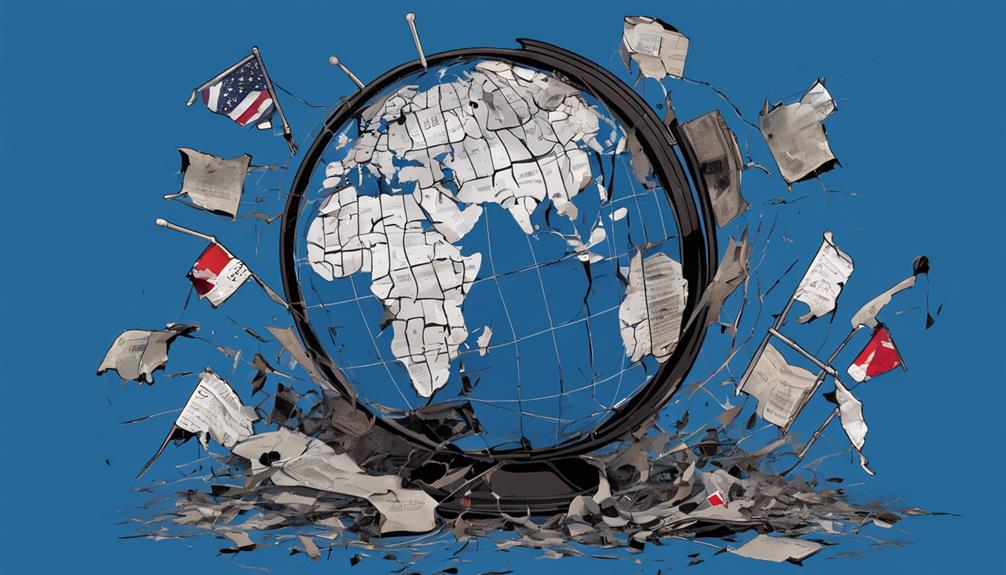
Freedom of speech is severely restricted in nearly 40% of the world's countries, with only 13% of the global population enjoying a free press. Governments in these countries tightly control information, monitor online activities, and silence dissenting voices. Corporations also exert significant influence over speech, prioritizing profit over diverse viewpoints. The rise of online harassment and intimidation further threatens freedom of expression. However, some countries like Norway and Sweden are beacons of hope, promoting press freedoms and journalist safety. As the battle for free speech continues, there's still much to uncover about the complex global landscape of freedom of expression.
Global Freedom of Speech Rankings
According to the annual report by Freedom House, a non-profit organization that tracks global freedom, nearly 40% of the world's population lives in countries where freedom of speech is severely restricted, with only 13% enjoying a free press. This stark reality highlights the need for a thorough understanding of global freedom of speech rankings. To quantify and compare the state of freedom of speech across nations, Freedom House employs speech metrics that assess the ability of citizens to express themselves freely. These metrics include indicators such as access to information, freedom of assembly, and the absence of censorship.
The organization's global benchmarks provide a framework for evaluating the performance of countries in upholding freedom of speech. By analyzing these benchmarks, researchers can identify trends and patterns in the suppression or promotion of free speech. For instance, the report reveals that many countries in the Asia-Pacific region, such as China and North Korea, consistently rank low regarding freedom of speech. On the other hand, countries like Norway and Sweden are among the top performers, with high scores in speech metrics and a strong commitment to protecting free expression.
Countries With Severe Censorship
In countries with severe censorship, the government tightly controls the flow of information, and citizens' online activities are closely monitored. These governments often own or heavily influence media outlets, ensuring that only approved narratives are disseminated to the public. As a result, restricted online expression and government-controlled media outlets become the norm, stifling free speech and open discussion.
Restricted Online Expression
Governments in countries with severe censorship tightly control online expression, often using sophisticated algorithms and mass surveillance to monitor and suppress dissenting voices. This surveillance capitalism enables them to track citizens' online activities, identifying and silencing those who dare to challenge the status quo. Digital boundaries are carefully constructed to keep undesirable content out and prevent the free flow of information. Social media platforms are closely monitored, and any posts deemed subversive are quickly removed. Online activists and journalists who attempt to circumvent these restrictions face severe penalties, including imprisonment and even torture.
Citizens in these countries are forced to self-censor, fearful of reprisal for expressing opinions that deviate from the government's narrative. The internet, once hailed as a powerful tool for democratization, has become a means of social control. Governments use it to spread propaganda and disinformation, while suppressing alternative viewpoints. The consequences are dire, as the free exchange of ideas is stifled, and creativity is suffocated. In these countries, the notion of online freedom of expression is nothing more than an illusion.
Government-Controlled Media Outlets
State-run media outlets serve as mouthpieces for the government, disseminating carefully crafted narratives that reinforce the official ideology and suppress dissenting voices. These propaganda machines are designed to shape public opinion, often at the expense of truth and accuracy. In countries with severe censorship, government-controlled media outlets dominate the airwaves, restricting access to alternative viewpoints and independent news sources.
Media blackouts are commonplace, with authorities silencing critical voices and opposition viewpoints. This can manifest in the form of strict media regulations, censorship of online content, and even physical intimidation of journalists. The result is a heavily controlled media landscape where the government's narrative is the only one that matters.
Citizens living in these countries are often left in the dark, with limited access to reliable information and diverse perspectives. The lack of a free press enables governments to manipulate public opinion, perpetuate misinformation, and maintain their grip on power. As a result, government-controlled media outlets pose a significant threat to freedom of speech and the dissemination of accurate information.
Online Harassment and Intimidation
Cyberbullies and trolls often use online platforms to silence marginalized voices, threatening freedom of speech and undermining democratic discourse. These online harassers employ cyberbullying tactics, such as hate speech, doxxing, and online stalking, to intimidate and silence individuals who express dissenting opinions or belong to vulnerable groups. Online vigilantism, where individuals take the law into their own hands, further exacerbates the problem, often leading to mob mentality and online witch hunts.
| Cyberbullying Tactic | Description |
|---|---|
| Hate Speech | Using derogatory language to demean and intimidate individuals or groups based on their race, gender, religion, or other characteristics. |
| Doxxing | Publishing private or identifying information about an individual online, putting them at risk of physical harm or harassment. |
| Online Stalking | Repeatedly sending unwanted messages, emails, or comments to an individual, causing them emotional distress and fear. |
The rise of online harassment and intimidation has a chilling effect on freedom of speech, as individuals become hesitant to express themselves online for fear of reprisal. This is particularly concerning for marginalized communities, who already face significant barriers to participation in public discourse. To combat this, online platforms must take concrete steps to address online harassment, including implementing effective reporting mechanisms and holding perpetrators accountable for their actions. By creating a safe and inclusive online environment, we can promote a vibrant and diverse exchange of ideas, essential for a healthy democracy.
Governments Vs. Independent Media
In many countries, independent media outlets face intense scrutiny and censorship, as authorities seek to control the narrative and suppress dissenting voices. This has led to a worrying trend of governments exerting significant influence over media ownership, allowing them to shape public opinion and stifle critical reporting. In some cases, governments have used their power to revoke licenses, shut down outlets, or arrest journalists who dare to challenge their authority.
Journalist safety is a major concern in these environments, as reporters often face harassment, intimidation, and even violence for doing their job. Many have been detained, beaten, or even killed for investigating corruption, human rights abuses, or other sensitive topics. This climate of fear has a chilling effect on the media, causing many outlets to self-censor and avoid controversial topics.
The concentration of media ownership in the hands of a few powerful individuals or state-controlled entities further exacerbates the problem. This allows governments to dictate what information is disseminated to the public, creating a lack of diversity in viewpoints and opinions. Independent media outlets, which are essential for holding those in power accountable, are often forced to operate in the shadows, using encrypted channels and other covert means to get their message out.
Ultimately, the suppression of independent media outlets has far-reaching consequences for democracy and freedom of speech. When governments can control the narrative and silence dissenting voices, they can manipulate public opinion and maintain their grip on power. It is imperative that governments respect the independence of the media and safeguard journalist safety, allowing for a free flow of information and a vibrant exchange of ideas.
Corporate Influence on Speech
Beyond government censorship, corporate influence poses a significant threat to freedom of speech, as large conglomerates increasingly shape public discourse by buying up media outlets and sponsoring content that aligns with their interests. This can lead to self-censorship, as journalists and media outlets may avoid criticizing their corporate benefactors or tackling controversial issues that might jeopardize their funding.
Corporate influence can also manifest in more subtle ways, such as:
- Speech Surveillance: Corporations may use sophisticated algorithms to monitor and analyze public opinion, identifying and suppressing dissenting voices or views that threaten their interests.
- Advertising Regulation: Companies may use their financial clout to influence the content of media outlets, ensuring that ads are placed alongside content that aligns with their values or promotes their products.
- Content Sponsorship: Corporations may sponsor content that promotes their interests, often blurring the lines between editorial content and advertising.
- Media Consolidation: The concentration of media ownership in the hands of a few large corporations can stifle diversity of opinion and limit the range of voices and perspectives available to the public.
Therefore, it's crucial to recognize the insidious ways in which corporate influence can erode freedom of speech and to develop strategies to promote transparency, accountability, and media literacy. By doing so, we can guarantee that the public has access to a diverse range of voices and perspectives, and that the free exchange of ideas remains a cornerstone of our democracy.
Social Media's Impact on Freedom
As corporate influence over traditional media outlets continues to grow, social media platforms have emerged as a seemingly democratizing force, allowing individuals to express themselves freely and connect with others across the globe, but beneath the surface, a more complex and troubling dynamic is at play.
While social media has enabled virtual activism, allowing people to mobilize and raise awareness about social and political issues, it has also created a platform for the spread of misinformation and hate speech. Algorithmic bias, which prioritizes sensational and provocative content, has contributed to the proliferation of fake news and the amplification of extremist voices. This has led to a distorted view of reality, where opinions are shaped by manipulated information rather than facts.
Moreover, social media companies' lack of transparency and accountability has raised concerns about their role in shaping public discourse. Their algorithms, designed to maximize engagement, often prioritize controversy over accuracy, further eroding the quality of online discourse. The consequences are far-reaching, as social media has become a primary source of information for many people, influencing their perceptions and beliefs.
Ultimately, social media's impact on freedom of speech is a double-edged sword. While it has opened up new avenues for self-expression and activism, it has also created new challenges for promoting accurate information and respectful dialogue. As the digital landscape continues to evolve, it's crucial to address these concerns and make sure that social media platforms serve as a force for good, rather than a threat to freedom of speech.
Historical Struggles for Free Speech
Throughout history, courageous individuals and groups have fought tirelessly to secure the fundamental right to free speech, often facing brutal suppression, persecution, and even death in their pursuit of expressing dissenting opinions and challenging oppressive regimes. Their sacrifices have paved the way for the evolution of human rights, ensuring that future generations can voice their thoughts without fear of retribution. As societies progress, the fight to protect and expand free speech remains ongoing, with new challenges emerging in the digital age. The evolution of human rights depends on the continued vigilance and advocacy of those committed to defending freedom of expression.
From ancient civilizations to modern times, the struggle for free speech has been a long and arduous one. Here are a few examples of historical struggles for free speech:
- Ancient Scribes: In ancient Mesopotamia, scribes risked their lives to record and disseminate written works that challenged the authority of rulers. These early writers played an essential role in preserving and promoting free thought and expression.
- Revolutionary Pamphlets: During the American and French Revolutions, pamphlets written by thinkers like Thomas Paine and Voltaire helped spread revolutionary ideas and inspire rebellion against oppressive governments.
- Censorship in the Middle Ages: The Catholic Church's Index Librorum Prohibitorum, established in 1559, banned books deemed heretical or threatening to Church authority, leading to a centuries-long struggle for intellectual freedom.
- Dissenting Voices in the 20th Century: Activists like Martin Luther King Jr. and Nelson Mandela used their voices to challenge racist regimes and demand equal rights, often facing imprisonment and violence for their efforts.
These historical struggles have shaped our understanding of free speech and its importance in promoting democracy, equality, and human rights. The sacrifices made by these courageous individuals and groups serve as a powerful reminder of the ongoing struggle to protect and promote this fundamental right.
Modern Threats to Free Expression
Despite significant progress in promoting free speech, modern threats to free expression persist, taking on insidious forms that can be just as stifling as the brutal suppression of the past. One of the most pervasive threats is the rise of the Surveillance State, where governments and corporations collect and analyze vast amounts of personal data, often without individuals' knowledge or consent. This creates a chilling effect, as people become hesitant to express themselves freely for fear of being watched, tracked, or punished.
Another modern threat is the proliferation of Echo Chambers, where people only engage with information and opinions that confirm their existing beliefs. This self-reinforcing cycle of confirmation bias can lead to the erosion of critical thinking and the suppression of dissenting voices. Social media platforms, in particular, have been criticized for perpetuating Echo Chambers by algorithmically prioritizing content that reinforces users' existing beliefs.
The consequences of these modern threats are far-reaching. They can lead to the silencing of marginalized voices, the suppression of dissent, and the erosion of trust in institutions. Moreover, they can create a culture of self-censorship, where individuals are reluctant to express themselves freely for fear of retribution or social ostracism. As the world becomes increasingly interconnected, it is essential to recognize and address these modern threats to free expression, lest we sacrifice the very foundations of democracy and open society.
Countries Leading the Way Forward
As the world grapples with the challenges to free speech, some countries are setting a positive tone by actively safeguarding press freedoms and promoting online dissenting voices. These nations aren't just paying lip service to democratic ideals; they're taking concrete steps to guarantee their citizens can express themselves without fear of reprisal. By examining these countries' strategies, we can learn what it takes to create an environment where freedom of speech can truly thrive.
Protecting Press Freedoms Fully
Norway, Sweden, and Finland consistently top the rankings of countries that safeguard press freedoms fully, earning them a reputation as beacons of journalistic independence. These nations understand the importance of a free press in maintaining a healthy democracy. They have implemented measures to guarantee journalist safety, such as providing protection for whistleblowers and ensuring access to information.
To safeguard press freedoms fully, these countries have taken the following steps:
- Promoting Media Literacy: Educating citizens on how to critically evaluate information and identify disinformation helps to combat the spread of fake news.
- Ensuring Journalist Safety: Governments have implemented laws and policies to protect journalists from harassment, intimidation, and violence.
- Supporting Independent Media: Governments provide funding and resources to independent media outlets, allowing them to operate freely without government interference.
- Fostering Transparency: Governments maintain transparency in their decision-making processes, providing journalists with access to information and enabling them to hold those in power accountable.
Championing Dissenting Voices Online
Three trailblazing countries – Estonia, Iceland, and the Netherlands – are championing dissenting voices online by fostering an environment where diverse perspectives can thrive. These nations recognize the importance of digital activism and online empowerment in promoting freedom of speech. They have taken concrete steps to guarantee that their citizens can express themselves freely online, without fear of censorship or persecution.
| Country | Initiatives |
|---|---|
| Estonia | Developed a detailed digital strategy, including online platforms for civic engagement and e-participation. |
| Iceland | Established a strong legal framework to safeguard online free speech, including a law on media and freedom of expression. |
| Netherlands | Launched initiatives to promote online safety and counter online harassment, ensuring a secure space for online discussions. |
These countries are leading the way forward in promoting online freedom of speech. By creating an environment where diverse voices can be heard, they are empowering citizens to engage in digital activism and promoting a culture of online empowerment. As a result, they are setting a positive example for other countries to follow, and paving the way for a more inclusive and diverse online landscape.
Fighting for Freedom of Speech
Scores of activists, journalists, and ordinary citizens around the world are risking their lives to speak out against oppressive governments and demand freedom of speech. They're fighting for the right to express themselves without fear of persecution, imprisonment, or even death. This courageous pursuit of freedom of speech is taking many forms, from online campaigns to street protests, and from artistic expressions to legal challenges.
Here are 4 key ways speech activists are fighting for freedom of speech:
- Critical Protest Strategies: Artists, musicians, and writers are using their work to challenge oppressive regimes and inspire others to join the fight for freedom of speech.
- Legal Challenges: Lawyers and advocacy groups are taking governments to court, arguing that laws restricting free speech are unconstitutional and violate human rights.
- Online Activism: Social media campaigns, petitions, and online protests are mobilizing millions of people to demand freedom of speech and hold governments accountable.
- Grassroots Organizing: Community-based organizations and local activists are building coalitions and organizing protests to push for policy changes and greater protection for free speech.
These speech activists are putting their lives on the line to safeguard that everyone has the right to express themselves freely, without fear of reprisal. Their bravery and determination are inspiring a new generation of freedom fighters, and their efforts are pivotal to protecting and promoting freedom of speech around the world.
Frequently Asked Questions
Can Freedom of Speech Be Limited for the Greater Good?
She ponders whether freedom of speech can be limited for the greater good. In some cases, it's essential to restrict speech that compromises national security or violates moral standards. For instance, sharing classified information or promoting hate speech can put innocent lives at risk. By setting boundaries, society can protect itself without stifling open discussion. However, it's vital to strike a balance, ensuring that limitations don't become a tool for oppression.
Are There Differences Between Freedom of Speech and Freedom of Press?
She wonders if the freedom to speak her mind is the same as the freedom to publish her thoughts. Ha! As if the government wouldn't love to censor both. But seriously, there's a difference. Freedom of speech is about individual expression, whereas freedom of press refers to the media's ability to disseminate information. Historically, governments have targeted the press to control the narrative, proving these rights are distinct and equally vital.
Can Individuals Be Held Accountable for Hate Speech Online?
She believes individuals should be held accountable for hate speech online because online anonymity can't justify harmful words. When users hide behind screens, they often forget the social consequences of their actions. Hate speech can spread rapidly, causing real-life harm to marginalized groups. It's essential to hold individuals responsible for promoting hate online, as it can lead to offline violence and discrimination.
Do Satire and Parody Qualify as Free Speech?
She argues that satire and parody qualify as free speech, as they employ artistic license to critique societal norms. However, she notes that cultural sensitivity is pivotal, as the line between humor and offense is easily blurred. By acknowledging these nuances, she believes that satire and parody can remain effective tools for social commentary, sparking essential conversations without causing harm.
Can Corporations Restrict Employee Speech Outside of Work?
She wonders if corporations can restrict employee speech outside of work. The answer lies in the blurred lines of workplace boundaries and personal freedom. With social media, it's increasingly difficult for employees to separate their personal and professional lives. While corporations may not directly censor, they can create policies that discourage certain speech, raising questions about the limits of employee autonomy outside the office.
