
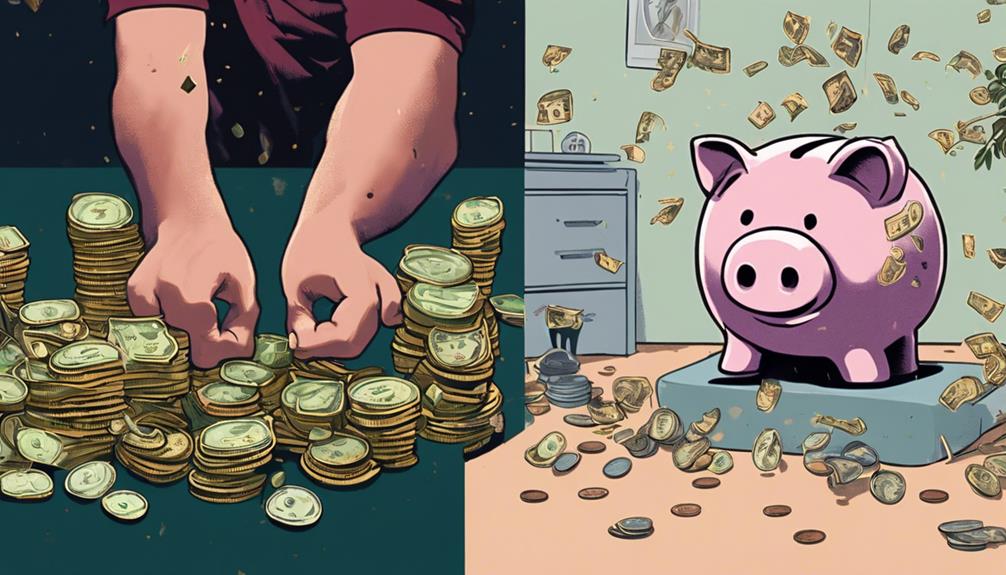
You're likely making financial mistakes that are quietly eroding your chances of achieving a prosperous life. You're probably living beyond your means, failing to plan for retirement, and neglecting to monitor your credit scores. You might be relying too heavily on a single investment or ignoring high-interest debt. Impulse purchases and missed tax benefits are also likely holding you back. And, let's be honest, procrastination is probably stalling your financial progress. By recognizing and addressing these common financial mistakes, you can regain control of your finances and set yourself up for long-term prosperity – and the first step is understanding the pitfalls that are holding you back.
Living Beyond Your Means
When you consistently spend more than you earn, you're living beyond your means, a financial habit that can quickly drain your savings and lead to debt. This habit can be particularly damaging if you're not careful, as it can lead to a vicious cycle of overspending and borrowing. You might think you're getting away with it in the short term, but trust us, it'll catch up to you eventually.
The problem is, it's easy to get caught up in the thrill of buying something new and exciting. You see your friends posting about their latest purchases on social media, and you feel pressure to keep up. But let's be real – you can't afford to keep up with the Joneses if it means breaking the bank. It's essential to take a step back and assess your spending habits honestly. Are you really using that gym membership, or is it just a waste of money? Do you need that new video game, or can you wait until it goes on sale?
You have the power to take control of your finances. Start by tracking your expenses and making a budget that works for you. Cut back on unnecessary expenses and prioritize your savings. Remember, living within your means doesn’t have to mean sacrificing happiness. It means being mindful of your spending and making conscious decisions about how you use your hard-earned cash. By taking control of your finances, you’ll be amazed at how much more confident and in control you’ll feel. Consider exploring different wealth creation strategies, such as investing in stocks, real estate, or starting a side business to grow your income over time. Educate yourself on financial planning and seek advice from experts if needed to make informed decisions. The more proactive you are about managing and growing your money, the closer you’ll get to achieving long-term financial security.
Failing to Plan for Retirement
When you're in your 20s and 30s, retirement might seem like a distant dream, but you can't afford to put it off. You're likely to make a costly mistake if you don't start planning for retirement early, as it can lead to a significant shortfall in your golden years. By understanding the importance of an early start and a sufficient savings rate, you can set yourself up for a more secure financial future.
Lack of Early Start
You're likely to sacrifice a significant portion of your retirement savings if you don't start planning and saving early. The power of compound interest can work for or against you, depending on when you start saving. By delaying your retirement planning, you're giving up potential earnings that could have added up over time.
To illustrate the importance of an early start, consider the following scenarios:
| Age Started Saving | Monthly Savings | Total Savings at 65 |
|---|---|---|
| 25 | $500 | $1,234,000 |
| 35 | $500 | $694,000 |
| 45 | $500 | $343,000 |
| 55 | $500 | $134,000 |
| 65 | $0 | $0 |
As the table shows, starting to save at 25 can result in a significant difference in total savings at 65 compared to starting later. Don't put off planning for your retirement – take control of your financial future today. Remember, every year counts, and the earlier you start, the better.
Insufficient Savings Rate
By not saving enough, you're risking a retirement that's heavily reliant on others, rather than being the master of your own financial destiny. You'll be forced to rely on family, friends, or government assistance, which can be unpredictable and unreliable. This lack of financial independence can lead to stress, anxiety, and a loss of autonomy.
Insufficient savings also mean you'll have to work longer, sacrificing precious time and energy that could be spent on personal pursuits and passions. You might have to take on a part-time job or freelance work just to make ends meet, which can be exhausting and demotivating. Moreover, you'll have limited options for travel, hobbies, or personal development, as your financial resources will be stretched thin.
To avoid this fate, it's essential to prioritize retirement savings from an early age. Start by setting aside a fixed percentage of your income each month, and take advantage of tax-advantaged accounts like 401(k) or IRA. By doing so, you'll be well on your way to securing a comfortable retirement, where you can enjoy the fruits of your labor and live life on your own terms.
Not Monitoring Credit Scores
You're likely aware of the importance of your credit score, but are you regularly checking in on it? Not monitoring your credit scores can lead to some costly surprises, from errors on your report to hidden fees eating into your finances. By neglecting to keep an eye on your credit, you're leaving yourself vulnerable to unseen threats that can wreak havoc on your financial well-being.
Credit Report Errors
Failing to regularly review your credit report can lead to undetected errors that can negatively impact your financial health. You might think you're doing everything right, but a small mistake can have long-lasting consequences. It's crucial to stay on top of your credit report to guarantee it accurately reflects your financial situation.
Here are some common credit report errors to look out for:
- Inaccurate personal information: Make sure your name, address, and birthdate are correct.
- Incorrect accounts: Verify that all accounts listed are yours, and there are no unknown or fraudulent accounts.
- Erroneous credit inquiries: Confirm that all credit inquiries are legitimate and not a sign of identity theft.
Unchecked Identity Theft
As you're reviewing your credit report for errors, don't overlook the importance of regularly checking your credit score, since identity thieves often go undetected until it's too late. You might think you're doing enough by monitoring your accounts, but identity thieves can quickly wreak havoc on your financial life. They can open new credit cards, take out loans, and even file fake tax returns in your name. If you're not keeping tabs on your credit score, you might not notice these red flags until it's too late. By regularly checking your credit score, you'll be able to identify any suspicious activity and take action quickly. You can request a free credit report from each of the three major credit bureaus (Experian, TransUnion, and Equifax) once a year. Take control of your financial life by making credit score monitoring a regular habit. It's a simple step that can save you from financial disaster.
Hidden Credit Fees
By neglecting to monitor your credit scores, you'll likely overlook hidden credit fees that can quietly drain your wallet over time. These sneaky charges can add up quickly, making it difficult to achieve financial stability. To avoid falling prey to these fees, it's essential to stay on top of your credit reports and scores.
Here are some common hidden credit fees to watch out for:
- Late payment fees: Missed payment deadlines can result in hefty fees, which can quickly add up.
- Foreign transaction fees: Using your credit card abroad can lead to surprise charges, often ranging from 1% to 3% of the transaction amount.
- Balance transfer fees: Transferring your credit card balance to a new card can come with a fee, typically ranging from 3% to 5% of the transferred amount.
Putting All Eggs in One Basket
You're probably familiar with the old adage "don't put all your eggs in one basket," but it's surprising how many people still fall prey to this common financial mistake. Putting all your eggs in one basket means relying too heavily on a single investment, job, or source of income. This can be risky because if that one thing fails, your entire financial stability is threatened.
To avoid this mistake, it's essential to diversify your investments, income streams, and even your skills. Here are some examples of what diversification might look like:
| Diversification Area | Examples |
|---|---|
| Investments | Stocks, bonds, real estate, mutual funds |
| Income Streams | Salary, freelance work, rental income, dividends |
| Skills | Programming, writing, design, marketing |
| Education | College degree, online courses, certifications |
| Emergency Fund | 3-6 months' worth of expenses in a easily accessible savings account |
Ignoring High-Interest Debt
When you neglect high-interest debt, you're basically giving creditors free rein to drain your wallet. You might think you're managing, but the truth is, those high interest rates are quietly suffocating your finances, and you're likely paying much more than you need to. It's time to confront the hidden fees and break the debt spiral that's holding you back.
Hidden Fees Exposed
One common oversight that can drain your wallet is failing to recognize and tackle high-interest debt, which can lead to a vicious cycle of compounding fees and interest rates. You may think you're managing your debt, but hidden fees can sneak up on you. It's essential to uncover these fees and take control of your finances.
Some hidden fees to watch out for include:
- Late payment fees, which can add up quickly
- Balance transfer fees, which can negate any benefits of transferring your balance
- Cash advance fees, which can be as high as 5% of the transaction amount
Debt Spiral Accelerates
Failing to tackle high-interest debt can quickly land you in a debt spiral that's hard to escape. When you ignore high-interest debt, the interest charges can snowball, making it increasingly difficult to pay off the principal amount. You'll find yourself stuck in a vicious cycle, where a significant portion of your payments goes towards interest, leaving you with minimal progress on the actual debt.
You must prioritize high-interest debt, such as credit card balances, to avoid this debt spiral. Create a plan to pay off these debts aggressively, and consider consolidating them into lower-interest loans or balance transfer credit cards. It's essential to take control of your debt by making more than the minimum payments and cutting expenses to free up more money in your budget.
Neglecting Emergency Funds
You're likely to face financial distress if you don't set aside three to six months' worth of living expenses in an easily accessible savings account. This emergency fund serves as a safety net, providing a cushion against unexpected expenses, job loss, or medical emergencies. Without it, you'll be forced to rely on credit cards or loans, leading to a debt spiral.
Having an emergency fund in place gives you peace of mind and control over your financial situation. Here are just a few benefits of prioritizing this vital fund:
- Reduced financial stress: Knowing you have a safety net in place can greatly reduce anxiety and uncertainty.
- Avoid debt accumulation: With a cushion in place, you'll be less likely to turn to credit cards or loans when unexpected expenses arise.
- Increased financial flexibility: An emergency fund provides the freedom to make choices, rather than being forced into debt or financial desperation.
Lack of Diversified Investments
By neglecting to diversify your investments, you're leaving your financial future vulnerable to market fluctuations and potential downturns. You're putting all your eggs in one basket, and if that basket takes a hit, you'll be left scrambling to recover. Don't be caught off guard – spreading your investments across different asset classes can help mitigate risk and increase potential returns.
Think of diversification as a safety net for your financial well-being. By allocating your investments across stocks, bonds, real estate, and other assets, you'll reduce your exposure to any one particular market. This way, if one investment takes a hit, the others can help absorb the blow. You'll sleep better at night knowing your financial future is protected.
It's not just about minimizing risk, though – diversification can also help you capitalize on growth opportunities. By investing in a mix of high-growth and income-generating assets, you'll be poised to take advantage of market upswings while still earning steady returns. Don't put all your hopes in a single investment; instead, build a diversified portfolio that works for you. Take control of your financial future and make informed investment decisions that set you up for long-term success.
Making Impulse Purchases
Often, impulse purchases can drain your bank account and derail your financial goals, leaving you wondering where all your money went. You might not even realize how much you're spending on impulse buys, but they can add up quickly. It's essential to be mindful of your spending habits and avoid making impulse purchases that can sabotage your financial progress.
Here are some common impulse purchase traps to watch out for:
- Emotional buying: You're feeling stressed or bored, and you decide to treat yourself to something to lift your mood. Before you know it, you've spent a small fortune on things you don't really need.
- FOMO (Fear of Missing Out) purchases: You see a limited-time offer or a sale, and you feel pressured to buy something immediately, even if you don't really need it.
- Social media influence: You see a celebrity or influencer promoting a product, and you feel like you need it too.
To avoid making impulse purchases, take a step back and ask yourself if you really need the item. Can you afford it? Will it align with your financial goals? By being more mindful of your spending habits and avoiding impulse purchases, you'll be able to save money, reduce debt, and achieve your long-term financial goals.
Not Taking Advantage of Tax Benefits
As you're mindful of your spending habits, don't forget to also maximize your hard-earned money by taking advantage of tax benefits that can help you save even more. You've worked hard for your money, so it's essential to keep as much of it as possible. Failing to take advantage of tax benefits can lead to unnecessary losses, which can add up over time.
You're likely already aware of the importance of contributing to a 401(k) or IRA, but are you also taking advantage of other tax benefits, such as deductions for charitable donations, mortgage interest, and education expenses? These deductions can greatly reduce your taxable income, resulting in a lower tax bill. You may also be eligible for tax credits, such as the Earned Income Tax Credit (EITC) or the Child Tax Credit, which can provide a refund even if you don't owe taxes.
It's crucial to stay organized and keep track of your expenses throughout the year, so you can accurately claim these benefits when filing your taxes. You can also consult with a tax professional or use tax preparation software to make sure you're taking advantage of all the benefits available to you. By being proactive and staying on top of your taxes, you can keep more of your hard-earned money and achieve your long-term financial goals.
Procrastinating Financial Planning
You put off financial planning, and your future self pays the price, leaving you vulnerable to financial shocks and uncertainty. By delaying financial planning, you're basically rolling the dice, hoping that everything will work out in your favor. But, let's face it, that's not a reliable strategy. Without a clear plan, you're more likely to make impulsive financial decisions, leading to debt, missed opportunities, and a less secure future.
Procrastinating financial planning can have serious consequences, including:
- Missed investment opportunities, which can add up to tens of thousands of dollars over time
- Insufficient emergency funds, leaving you exposed to financial shocks and debt
- A lack of clarity on your financial goals, making it harder to achieve them
Frequently Asked Questions
How Can I Prioritize Needs Over Wants in My Budget?
Did you know that 64% of Americans can't cover a $1,000 emergency expense? You're taking an essential step by prioritizing needs over wants in your budget. Start by categorizing expenses into must-haves (housing, food, utilities) and nice-to-haves (entertainment, hobbies). Then, allocate 50-30-20: 50% for must-haves, 30% for discretionary spending, and 20% for saving and debt repayment. You'll be in control of your finances, and that's a great feeling!
Can I Redeem Credit Score Damage From Past Mistakes?
You're wondering if you can redeem credit score damage from past mistakes? Yes, you can! It's not a permanent sentence. By making on-time payments, keeping credit utilization low, and monitoring your report, you're taking control. Don't let past mistakes define your financial future. You're in the driver's seat now, and with time, patience, and responsible habits, you'll see your credit score start to rise. You got this!
Are There Any Safe Investment Options With High Returns?
You're exploring the investment landscape, seeking safe havens with high returns. Imagine a lighthouse guiding you through turbulent waters. For you, a sturdy anchor is a diversified portfolio. Consider high-yield savings accounts, certificates of deposit (CDs), and U.S. Treasury bonds for stability. If you're willing to take on some risk, index funds or ETFs can provide growth. You're in control, charting your course towards financial freedom.
How Often Should I Review and Adjust My Financial Plan?
You should regularly review and adjust your financial plan to make sure you're on track to meet your goals. Aim to review it every 3-6 months, or whenever you experience a significant life change, like a new job or move. Take this opportunity to assess your progress, rebalance your investments, and make adjustments as needed. By doing so, you'll stay in control of your finances and make intentional decisions to achieve prosperity.
What Is the Ideal Emergency Fund Amount for My Income Level?
You're wondering what the ideal emergency fund amount is for your income level. Generally, it's recommended to save 3-6 months' worth of living expenses. However, this amount may vary depending on your job security, debt, and financial goals. Consider your income volatility, expenses, and savings goals to determine a suitable emergency fund size. You can adjust this range based on your individual circumstances to make sure you're prepared for unexpected expenses.
