
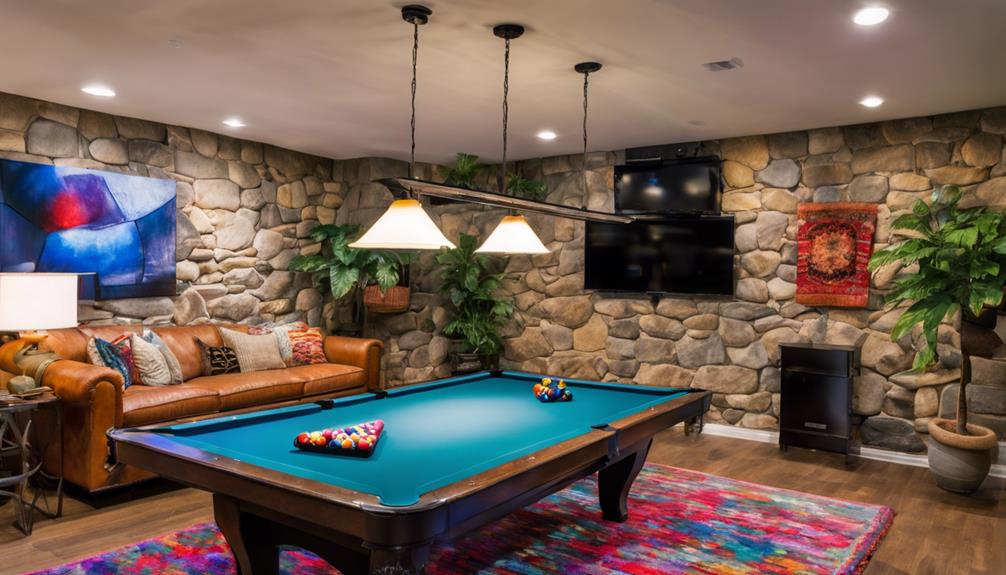
Turning a basement into a fun space requires a thoughtful approach. First, assess the space, taking note of its dimensions, features, and quirks. Next, choose a theme or concept that reflects personality and guides decor and color decisions. Set a realistic budget, prioritizing must-haves and planning for unexpected expenses. Plan for lighting and electricity, insulate and drywall the area, and incorporate essential furniture like sectional sofas and game tables. From there, add entertainment options like arcade stations and pool tables, and consider storage solutions. With careful planning, a basement can be transformed into a vibrant entertainment hub – and it's just the beginning of the possibilities.
Assess Your Basement Space
She begins by taking stock of her basement's current state, measuring its dimensions, and identifying any existing features that could impact her design plans. After all, you can't turn your basement into a fun space if you don't know what you're working with. She whips out her trusty tape measure and gets to work, jotting down the length, width, and any quirky nooks or crannies. This is where the magic happens – or, you know, where the magic doesn't happen because of those pesky hidden obstacles.
As she measures, she's on high alert for anything that could throw a wrench in her plans. Is that a wonky pipe sticking out of the wall? Check. Are those mysterious stains on the ceiling a sign of a deeper issue? You bet. She's like a basement detective, searching for clues and piecing together the puzzle of her underground lair. And let's not forget those basement measurements – she's got to know exactly how much space she has to work with if she wants to fit in that pool table or home theater.
Choose a Theme or Concept
When choosing a theme or concept for their basement, homeowners need to define the vibe they want to create and set the mood they want to evoke. This involves considering how they'll use the space and what kind of atmosphere will make it enjoyable for them and their guests. By doing so, they can narrow down their options and create a cohesive design that brings their vision to life.
Define the Vibe
By selecting a theme or concept, homeowners can create a cohesive atmosphere in their basement that reflects their personality, hobbies, or interests, making the space feel truly unique and inviting. It's an opportunity to let their hair down and showcase their quirks. Do they love movies? A home theater theme could be the way to go. Are they a sports enthusiast? A sports-themed basement with neon signs and stadium seating could be a slam dunk. Whatever the choice, it's essential to define the vibe before diving into the design process. A well-chosen theme will guide decisions on color schemes, furniture, and decor, ensuring a cozy atmosphere that's a true personal haven. It's also a chance to get creative and have some fun! After all, who wouldn't want a basement that feels like their own private playground? By nailing down a theme, homeowners can create a space that's an extension of themselves, making it the perfect spot to unwind and let loose.
Set the Mood
With their personality, hobbies, and interests in mind, they can now brainstorm a theme or concept that will set the tone for their basement's unique atmosphere. This is where the magic happens, folks! They can choose a theme that reflects their passions, like a sports fan cave or a home music studio. Or, they can go for something more whimsical, like a speakeasy or a vintage arcade.
| Theme | Mood Boards | Ambient Sounds |
|---|---|---|
| Sports Fan Cave | Jerseys, team logos, and sports memorabilia | Cheering crowds, stadium music |
| Home Music Studio | Guitars, music notes, and vinyl records | Soft instrumentals, coffee shop vibes |
| Speakeasy | Vintage posters, feathers, and fedoras | Jazz standards, soft whispers |
| Vintage Arcade | Retro video games, neon lights, and pixel art | Chiptune music, arcade sounds |
| Outer Space | Stars, planets, and spaceships | Cosmic sounds, alien whispers |
Set a Realistic Budget
They establish a realistic budget by considering the scope of their project, the materials needed, and the labor costs involved. It's essential to set a budget that aligns with their financial priorities and avoids breaking the bank. After all, who wants to end up with a half-finished basement and a wallet that's crying for mercy?
To set a realistic budget, homeowners should:
- Determine their must-haves: Identify the essential elements that'll turn their basement into a fun space, such as a bar or a home theater.
- Research costs: Get quotes from contractors, and research the prices of materials to get a realistic estimate of the expenses.
- Prioritize: Decide which elements are nice-to-haves and which can be cut if the budget gets tight.
- Contingency planning: Set aside 10-20% of the budget for unexpected expenses that'll inevitably pop up.
- Be flexible: Be prepared to make adjustments as the project progresses, and don't be afraid to negotiate with contractors.
Plan for Lighting and Electricity
When planning for lighting and electricity in the basement, it's essential to take stock of the current situation. She'll need to assess the existing lighting and identify areas that require improvement, as well as determine if new circuits are necessary to support her vision. By doing so, she'll be able to create a well-lit and functional space that's perfect for relaxation or entertainment.
Assess Current Lighting
Evaluating the current lighting in your basement is essential to determining the best approach for creating a functional and inviting space. It's time to shed some light on the situation (pun intended)! Take a closer look at the existing lighting setup and identify what's working and what's not. Consider the following:
- Natural Illumination: How much natural light does your basement receive? Are there any windows or skylights that can be leveraged?
- Artificial Sources: What types of artificial light sources are currently installed, such as overhead lighting, table lamps, or floor lamps?
- Are there any dark corners or areas that need additional illumination?
- Are the light fixtures outdated, broken, or just plain ugly?
- Are there any areas where you'd like to create ambiance or highlight a specific feature, like a bar or game area?
Add Task Lighting
Now that the current lighting setup has been assessed, it's time to plan for task lighting that will illuminate specific areas and activities, ensuring that each zone of the basement has the necessary light to function efficiently. Think of it like this: you wouldn't try to cook a gourmet meal in a dark kitchen, would you? Task lighting is all about providing focused lighting for specific tasks, like reading, gaming, or even doing homework (if you're feeling ambitious). For example, consider adding desk lamps to your home office or study area to provide a concentrated beam of light exactly where you need it. And if you're creating a cozy reading nook, install a floor lamp or table lamp to create a warm and inviting atmosphere. By adding task lighting, you'll be able to create zones within your basement that are designed for specific activities, making the space feel more functional and fun. So, get creative and start planning your task lighting strategy – your basement (and your eyes) will thank you!
Run New Circuits
She begins by identifying areas that require additional power outlets and lighting fixtures, then determines the best route for running new circuits to support her basement's transformed spaces. This is no DIY project for the faint of heart, as circuit safety is paramount to avoiding electrical shocks, fires, and other hazards. She must guarantee that her plan meets the local Electrical Code and complies with safety regulations.
Here are some key considerations for running new circuits:
- Hire a licensed electrician if you're not comfortable with electrical work or unsure about local codes.
- Map out the circuit route to avoid damaging walls, floors, or ceilings.
- Choose the right wire for the load and distance to prevent overheating or voltage drops.
- Install outlets and fixtures that can handle the increased power demand.
- Test the circuits before finalizing the installation to make sure they're safe and functional.
Insulate and Drywall the Area
They kick off the renovation by wrapping the basement's chilly walls and ceiling with insulation, effectively shutting out moisture and cold air. It's like giving the space a cozy blanket to snuggle up in, but instead of getting all warm and fuzzy, it's getting warm and dry. Moisture protection is key in a basement, where dampness can seep in and wreak havoc on your fun space dreams. By insulating the walls and ceiling, they're creating a barrier against the outside elements and ensuring that their new hangout spot stays dry and comfortable.
But insulation does more than just keep the space dry – it's also a soundproofing superhero. By reducing the echo and outside noise, they're creating a space that's perfect for movie nights, game sessions, or even a home gym. No more worrying about disturbing the neighbors (or the rest of the household) with loud music or clanging weights. The insulation helps to absorb sound, making the space feel more intimate and private. With the insulation in place, it's time to bring in the drywall to create smooth, even walls that are ready for painting and decorating. The result is a space that's not only functional but also aesthetically pleasing – the perfect combo for a fun and cozy basement hangout.
Install Flooring and Ceilings
When it comes to installing flooring and ceilings in a basement, there are several key considerations to keep in mind. First, homeowners need to select the right flooring material for their space, taking into account factors like moisture resistance and durability. Next, they'll need to take into consideration ceiling height and installation best practices to guarantee a smooth, stress-free process.
Flooring Material Options
Several popular flooring material options are available for basement renovations, each with its unique benefits and drawbacks. When selecting the perfect flooring for your basement, it's crucial to take into account factors like moisture resistance, sound absorption, and durability.
Here are some top contenders:
- Luxury Vinyl Tiles (LVT): Water-resistant, easy to install, and budget-friendly. They're perfect for basements prone to moisture issues.
- Engineered Hardwood: Offers a touch of sophistication, but can be pricey and sensitive to humidity.
- Ceramic or Porcelain Tiles: Excellent moisture resistance, easy to clean, and durable. However, they can be cold and unforgiving.
- Carpet: Soft, warm, and great for sound absorption. But, it's not the best choice for basements with high moisture levels.
- Rubber Flooring: Soft, flexible, and perfect for playrooms or home gyms. It's also resistant to moisture and easy to clean.
Ceiling Height Considerations
Opting for a basement renovation that incorporates the right ceiling height can greatly impact the overall ambiance and functionality of the space. It's like the difference between feeling cooped up in a rabbit hole or sprawled out in a luxurious cave. When it comes to ceiling height, basement dwellers have two main options: drop ceilings or vaulted spaces. Drop ceilings, as the name suggests, involve installing a false ceiling that's lower than the original one. This can be a cost-effective way to conceal unsightly ductwork and pipes while still allowing for some natural light to filter through. On the other hand, vaulted spaces are perfect for those who want to create a sense of grandeur. By leaving the ceiling open, you can create a sense of airiness that makes the space feel larger than it actually is. Just be prepared for the extra cost and effort required to insulate and finish the ceiling properly. Whichever option you choose, make sure it's one that makes you feel like you're walking into a fun space, not a cramped cave.
Installation Best Practices
By the time you're ready to install flooring and ceilings, you've likely finalized your design plans and prepared your basement for renovation. Now it's time to get down to business and make those plans a reality. When it comes to installation best practices, there are a few key things to keep in mind.
Here are some tips to keep you on track:
- Soundproofing methods: Don't forget to add insulation to your ceiling to reduce noise and create a more comfortable space. You don't want to be disturbed by every creak and groan from upstairs!
- Cable management: Plan ahead for cable management to keep your space organized and clutter-free. You don't want to trip over cords or have a mess of wires hanging from the ceiling.
- Use a vapor barrier to prevent moisture from seeping into your flooring and causing damage.
- Choose flooring that's durable and easy to clean, like ceramic tile or laminate.
- Consider installing a drop ceiling to create a sleek, modern look and make it easier to access pipes and wires in the future.
Add Walls and Partitions
How can you effectively carve out separate areas within your basement without breaking the bank or sacrificing its openness? It's a common dilemma, but fear not, dear basement renovator! Adding walls and partitions can be a game-changer, and it's more affordable than you think.
First, consider the purpose of each area. Do you need a home office, a playroom, or a home theater? Once you've got your zones mapped out, it's time to think about soundproofing strategies. After all, you don't want the noise from your home theater to disturb your home office (or vice versa!). Acoustic considerations are key here. You can use sound-absorbing materials like acoustic panels or add mass to your walls with thick, heavy materials.
When it comes to partitioning, you've got options. Permanent walls are the most dramatic, but they can be pricey. Temporary or movable partitions, on the other hand, offer flexibility and can be just as effective. You can use floor-to-ceiling curtains, shelving units, or even bookcases to create separate areas. And, as a bonus, these options won't break the bank! With a little creativity, you can create a functional, fun space that's perfect for your needs.
Select Fun Color Schemes
With the functional zones of your basement defined, it's time to inject some personality into the space through a vibrant color scheme that reflects your unique style. A fun basement shouldn't be dull and boring, after all! When selecting a color scheme, remember that it's all about balance. You want to create a space that's lively and engaging, but not overwhelming.
Here are some tips to get you started:
- Vibrant Neutrals: Choose a bold, yet neutral base color that will set the tone for your space. Think rich blues, deep purples, or warm yellows. These colors will provide a fun backdrop for your whimsical accents.
- Whimsy Accents: Add pops of color and personality with fun accents like throw pillows, rugs, and wall art. Bright corals, lime greens, and sunny oranges can add a playful touch to your space.
- Consider the natural light in your basement and choose colors that will complement it. If your space is dimly lit, opt for lighter, brighter colors to make it feel more spacious.
- Don't be afraid to get creative and try out new color combinations. After all, this is your fun space!
- Lastly, remember that a fun basement is all about self-expression. Choose colors that make you happy and reflect your personality!
Incorporate Essential Furniture
Essential furniture pieces, like sectionals, game tables, and bars, help transform a basement into a vibrant entertainment hub. These must-haves can make or break the vibe of your underground lair, so choose wisely! A sleek sectional sofa can provide ample seating for movie nights or game days, while a game table can host epic battles of ping-pong or pool. And let's not forget the pièce de résistance – a bar station that'll make you the envy of all your friends.
But don't forget about those often-wasted corner spaces! Turn them into cozy corner nooks perfect for curling up with a good book or sneaking in a quick power nap. Add a plush armchair, a floor lamp, and a side table, and you've got a snug little retreat that's all your own. And if you're feeling fancy, install a built-in banquette with storage for extra seating and stashing away board games or other basement essentials.
When it comes to bar stations, the possibilities are endless. You can opt for a sleek, modern wet bar with a built-in wine fridge or go for a more rustic, DIY vibe with a repurposed wooden bar and stools. Whatever your style, a well-designed bar station can elevate your basement from meh to mesmerizing. So don't be afraid to get creative and make your basement the ultimate hangout spot!
Add Entertainment and Games
As the lights dim and the music starts, a basement transformed into an entertainment haven comes alive with a variety of games and activities that guarantee a fun-filled experience for family and friends. It's time to get this party started! A well-designed Game Zone can be the centerpiece of your basement renovation, providing endless hours of entertainment for kids and adults alike.
To create the ultimate Game Zone, consider incorporating these must-haves:
- Arcade Station: Set up a dedicated area for classic arcade games, complete with retro consoles and a comfortable seating area for gamers to hang out.
- Pool Table: A staple of any game room, a pool table is a great way to get the party started and encourage some friendly competition.
- Giant Jenga: This oversized version of the popular board game is sure to be a hit with guests of all ages.
- Karaoke Corner: Create a designated area for wannabe rockstars to belt out their favorite tunes, complete with a microphone and speaker system.
- Dartboard: A classic pub game, a dartboard is a great way to add some friendly competition to your Game Zone.
Consider Storage and Organization
Beyond the excitement of designing a Game Zone, homeowners must also tackle the often-overlooked task of incorporating ample storage and organization solutions to keep the space clutter-free and functional. Let's face it, a fun space quickly turns into a hot mess without a plan for storing all the fun stuff.
To avoid this, homeowners should consider investing in shelving units that can hold board games, puzzles, and other entertainment essentials. These units come in a variety of styles and materials, from sleek and modern to rustic and cozy. For a more customized approach, cabinet systems can be designed to fit snugly into corners or against walls, providing hidden storage for items like snacks, drinks, and party supplies.
When choosing storage solutions, homeowners should think about the types of activities they'll be doing in their basement space. For example, if they plan to have a home gym or yoga studio, they'll need storage for equipment and mats. If they're planning a home theater, they'll need space for DVDs, CDs, and other media. By thinking ahead and incorporating storage and organization solutions from the start, homeowners can create a fun space that's both functional and enjoyable. With a little creativity and planning, they can have a space that's both fun and clutter-free – the ultimate party pad!
Add Final Touches and Decorations
With the functional elements of their basement space in place, homeowners can now focus on adding the final flourishes that will bring the area to life. This is where the fun part begins! It’s time to get creative and make the space truly reflect their personality. They can experiment with different colors, textures, and décor to create a warm and inviting atmosphere. Whether it’s incorporating cozy lighting, stylish furniture, or personal touches like artwork and memorabilia, these details play a crucial role in turning dull spaces into retreats. By carefully selecting each element, homeowners can ensure their basement becomes a favorite gathering spot for relaxation and entertainment.
To add some visual interest, homeowners can start with some wall decor. * Wall Decals are a great option to add a pop of color and pattern to the space without damaging the walls. They come in a variety of designs, from geometric shapes to quirky quotes.
- Art Pieces can also be used to add some personality to the space. Whether it's a vintage poster or a modern painting, art can help tie the whole room together.
- Rugs can help define different areas of the basement, such as a game zone or a cozy reading nook.
- Plants can bring some much-needed greenery to the space and even help purify the air.
- Lighting can make or break the ambiance of the basement. Consider adding some string lights or table lamps to create a warm and inviting atmosphere.
Frequently Asked Questions
Can I Convert My Basement Into a Fun Space With Low Ceiling Height?
She swoops into spaces with sagging ceiling syndrome, seeking salvation. Can she convert her cramped cave into a fun zone? Absolutely! A drop ceiling can create a cozy atmosphere, but it might mean making a design compromise. She'll need to choose between a stylish statement light fixture and a few precious inches of headroom. With some clever compromises, she'll be dancing under the dimly lit drop ceiling in no time!
How Do I Deal With Musty Smells and Odors in the Basement?
She's got a stinky situation on her hands! Musty smells and odors can be a real party pooper. To tackle this issue, she needs to identify the odor sources – think damp walls, moldy carpets, and that mysterious puddle in the corner. Then, she can bring in the big guns: air purifiers! These superheroes of the air can eliminate funky smells, leaving her basement smelling fresh and fabulous.
Are There Any Specific Building Codes I Need to Follow?
Careful constructors crave clarity on compliance. Before breaking ground, she checks local building codes to avoid costly corrections. Permit requirements vary, so it's essential to research and secure necessary approvals. Ensuring structural integrity is paramount; a sturdy foundation prevents future frustrations. By following these fundamental rules, she can focus on creating a fantastic, fun space that's both safe and spectacular.
Can I DIY the Entire Project or Do I Need Professionals?
Can she DIY the entire project or does she need pros? Well, that depends on her superhero skills and patience level. If she's a master of time management and has a budget that's not too tight, she can tackle some tasks solo. However, if electrical work or plumbing is involved, it's best to call in the cavalry to avoid DIY disasters. After all, who needs a flooded basement or a wonky circuit breaker to ruin the fun?
How Do I Ensure the Space Remains Warm in Winter and Cool in Summer?
Think of temperature control like a thermostat for your mood – too hot and you're cranky, too cold and you're miserable. To avoid this, she considers insulation options like spray foam, fiberglass, or cellulose to keep the space cozy. Then, she tackles climate control by installing a programmable thermostat and a dehumidifier to maintain a comfortable temperature and humidity level. With these elements in place, her fun space stays warm in winter and cool in summer, ensuring a perpetual good vibe.
