
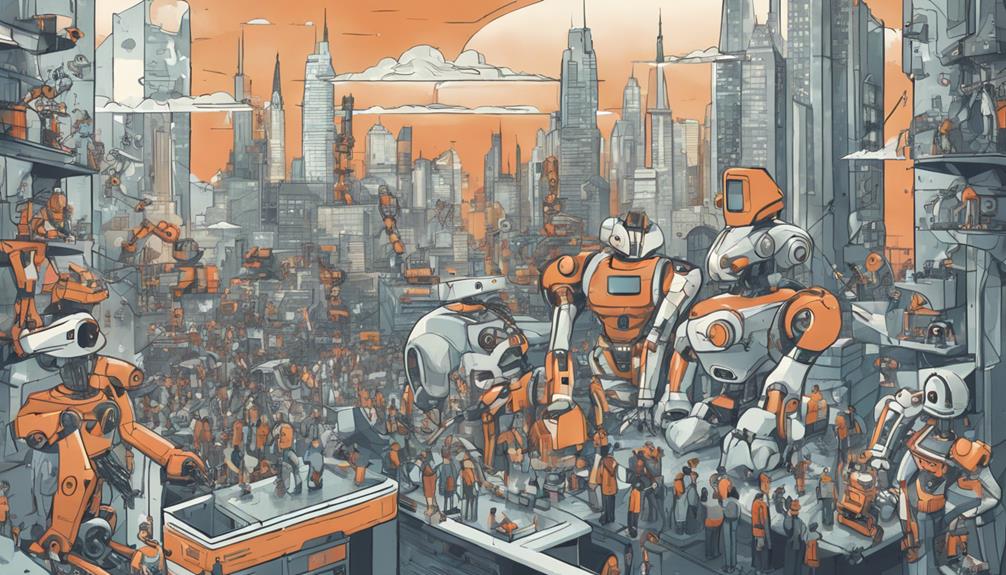
Artificial intelligence is transforming the job landscape, with approximately 1. 5 million jobs in the US alone at risk of displacement by automation. Industries like customer service, data entry, and manufacturing are vulnerable to AI-driven job replacement. However, AI also creates new opportunities in data science, machine learning, and AI research. To thrive, professionals must develop AI literacy, digital dexterity, and strong analytical skills. As AI continues to shape the workforce, it’s essential to stay ahead of the curve. Discover how you can prepare for the changing job landscape and uncover the skills and strategies needed to succeed in an AI-driven economy. Embracing continuous learning and upskilling will be crucial for professionals aiming to remain competitive in this evolving landscape. Businesses that leverage artificial intelligence in modern industry can drive innovation, streamline operations, and enhance productivity, creating demand for skilled workers who can adapt to technological advancements. By fostering a mindset of adaptability and proactive skill development, individuals can position themselves for success in an AI-driven future.
AI's Current Job Displacement Rate
According to recent estimates, approximately 1.5 million jobs are currently at risk of being displaced by artificial intelligence in the United States alone. This staggering number has sparked concerns about the impact of AI on the job market. As AI adoption continues to rise, many industries are experiencing significant changes in their workforce dynamics. The job quantification process, which involves categorizing and analyzing job tasks, has revealed that many positions are susceptible to automation.
AI's ability to perform repetitive and mundane tasks with precision and speed has made it an attractive solution for companies looking to increase efficiency and reduce costs. While this may lead to short-term gains, it also means that many jobs are becoming obsolete. The displacement of jobs is not limited to manual labor; AI is also capable of performing complex tasks, such as data analysis and customer service, which were previously thought to be the exclusive domain of humans.
As AI continues to advance, it's essential to evaluate its impact on the job market and identify strategies to mitigate its effects. This includes investing in education and retraining programs that equip workers with the skills needed to adapt to an AI-driven economy. By understanding the current job displacement rate, policymakers and business leaders can work together to create a more sustainable future for workers and make certain that the benefits of AI adoption are shared by all.
Industries Most Vulnerable to AI
They identify the industries most susceptible to AI's impact by analyzing the sectors with high automation potential. These high-risk job sectors are likely to experience significant changes in the workforce as AI takes over routine and repetitive tasks. Manufacturing, in particular, is expected to undergo significant transformations as automation replaces human labor.
High-Risk Job Sectors
Several industries, including customer service, bookkeeping, and data entry, are particularly susceptible to AI-driven automation due to the repetitive and rule-based nature of their tasks. These industries are at high risk of job redundancy, as AI systems can perform tasks with greater speed and accuracy, making human workers redundant.
Some of the most vulnerable professions include:
- Telemarketing and telesales
- Cashiers and retail salespersons
- Fast food cooks and preparers
- Data entry clerks
- Bank tellers and cashiers
These professions are not only at risk of job redundancy but also face the threat of entire job categories becoming obsolete. As AI technology advances, it's likely that more industries will be impacted, leading to significant changes in the job market. It's essential for workers in these industries to develop new skills and adapt to the changing landscape to remain employable. As AI continues to transform the workforce, it's critical to understand the industries most vulnerable to its impact and prepare for the consequences.
Automation in Manufacturing
Manufacturing industries, where repetitive tasks and precision are paramount, are now facing a significant threat from AI-driven automation, which can optimize production processes and improve product quality. With the integration of Machine Learning algorithms, machines can learn from data and adapt to new situations, making them more efficient and accurate. This shift towards automation is likely to have a significant impact on the workforce, as machines take over tasks previously performed by humans.
In supply chains, AI-driven automation can streamline logistics and inventory management, reducing costs and increasing efficiency. However, this increased efficiency comes at the cost of job displacement, as machines and algorithms replace human workers. As manufacturing industries continue to adopt AI-driven automation, it's crucial to contemplate the broader implications on the workforce and develop strategies to mitigate the negative impacts. By understanding the effects of automation on manufacturing, we can begin to develop solutions to support workers and ensure a smooth adjustment to an AI-driven economy.
Jobs Replaced by Bots
One in five jobs in the transportation industry is at high risk of being replaced by bots, as AI-powered self-driving cars and trucks are increasingly being tested and implemented on public roads. This shift is not limited to transportation; various industries are vulnerable to job replacement by AI.
Some of the most affected industries include:
- Customer Service: Chatbots are already handling customer inquiries, reducing the need for human representatives.
- Bookkeeping and Accounting: Automated software can accurately process transactions and generate reports.
- Manufacturing: Robots are taking over assembly lines, performing tasks with precision and speed.
- Retail: Online shopping platforms and AI-powered inventory management systems are minimizing the need for human labor.
- Food Service: Automated kitchens and robotic servers are being tested in restaurants and cafes.
As AI continues to advance, it's essential to contemplate the implications of bot taxation and job redefinition. While AI may replace some jobs, it will also create new opportunities. It's vital for workers to adapt and develop skills that complement AI, ensuring they remain valuable in an increasingly automated workforce.
New Job Opportunities Emerging
As AI transforms industries, creating novel solutions and optimizing processes, it's spawning a plethora of new job opportunities that didn't exist just a decade ago. The emergence of AI has opened up avenues for AI entrepreneurs who are leveraging machine learning and natural language processing to develop innovative products and services. These entrepreneurs are creating new markets, disrupting traditional business models, and driving economic growth.
Virtual nomads, a new breed of remote workers, are also thriving in the AI era. With the rise of virtual and augmented reality, they can now work from anywhere, collaborate with global teams, and provide services that transcend geographical boundaries. AI-powered tools are enabling them to work more efficiently, automate routine tasks, and focus on high-value activities.
Moreover, AI is creating new job opportunities in areas like data science, machine learning engineering, and AI research. As AI systems become more pervasive, the demand for professionals who can develop, train, and maintain these systems is skyrocketing. Additionally, AI is enabling the creation of new industries like autonomous transportation, smart healthcare, and personalized education, which are generating new job opportunities in manufacturing, logistics, and customer support. Overall, while AI may be replacing some jobs, it's also creating a wide range of new opportunities that are transforming the workforce and driving economic growth.
Skills Required for AI Era
Professionals must develop a unique blend of technical, business, and soft skills to thrive in the AI era, where humans and machines collaborate to drive innovation and growth. As AI transforms the workforce, it's essential to possess skills that complement AI capabilities.
To stay relevant, professionals need to:
- Develop AI Literacy, understanding the capabilities and limitations of AI technologies to make informed decisions
- Cultivate Digital Dexterity, being proficient in using digital tools and platforms to streamline workflows and enhance productivity
- Possess strong analytical and problem-solving skills to interpret data-driven insights and drive business outcomes
- Foster creativity and innovation, leveraging AI to generate new ideas and solutions
- Exhibit emotional intelligence, empathy, and strong communication skills to effectively collaborate with humans and machines
Human Touch in AI Dominated Fields
As AI takes over various industries, it's becoming clear that certain jobs require a human touch to thrive. Emotional labor demands, such as empathy and emotional intelligence, are essential in fields like healthcare and social work, where machines can't replicate the comforting presence of a human caregiver. In these AI-dominated fields, personalized service matters, and humans are needed to provide the emotional support that technology can't replace.
Emotional Labor Demands
In AI-dominated fields, employees are increasingly expected to compensate for the emotional deficiencies of automated systems with their own empathetic responses. This shift towards emotional labor demands can take a significant toll on workers, leading to emotional exhaustion and burnout. As machines assume more tasks, human workers are left to handle the emotional nuances that machines cannot replicate.
Some examples of emotional labor demands in AI-dominated fields include:
- *Handling customer complaints and frustrations*
- *Providing emotional support to patients or clients*
- *Mediating conflicts and disputes*
- *Delivering sensitive or difficult news*
- *Offering personalized comfort and reassurance*
To mitigate the emotional toll of this labor, empathy training is becoming essential for employees in AI-dominated fields. By developing their emotional intelligence, workers can better navigate the complex emotional landscapes of their jobs and provide more effective support to those they interact with. As AI continues to reshape the workforce, understanding and addressing the emotional labor demands placed on human workers will be vital for maintaining their well-being and job satisfaction.
Personalized Service Matters
Human workers in AI-dominated fields are now tasked with delivering personalized service that resonates with customers on a deeper level, going beyond mere efficiency and accuracy to create meaningful connections. This shift in focus is pivotal, as customers crave human interaction that acknowledges their individuality and emotional needs. By doing so, companies can foster customer loyalty, which is essential for long-term success. AI systems, no matter how advanced, cannot replicate the emotional intelligence and empathy that human workers bring to the table.
Personalized service matters because it allows customers to feel seen, heard, and understood. Human connection is the key to building trust and loyalty, and it's what sets human workers apart from AI systems. When customers feel a genuine connection with a brand, they're more likely to return and recommend it to others. Companies that prioritize personalized service will reap the benefits of customer loyalty, ultimately driving business growth and profitability. By embracing their unique strengths, human workers can thrive in AI-dominated fields and create a competitive advantage for their companies.
Augmenting Human Abilities With AI
AI systems are being designed to enhance workers' capabilities, freeing them to focus on higher-value tasks that require creativity, empathy, and complex decision-making. By automating routine and repetitive tasks, AI enables humans to make cognitive leaps, uncovering connections and identifying patterns that were previously hidden. This fusion of human intuition and AI-driven insights creates intelligent partnerships that drive innovation and productivity.
As AI augments human abilities, workers can:
- Analyze complex data sets: AI can process vast amounts of data, providing humans with actionable insights and trends that inform strategic decisions.
- Develop personalized solutions: By analyzing customer data and behavior, AI helps humans craft tailored solutions that meet unique needs and preferences.
- Streamline workflows: AI automates administrative tasks, freeing humans to focus on high-value tasks that require creativity, empathy, and complex problem-solving.
- Enhance customer experiences: AI-powered chatbots and virtual assistants provide 24/7 support, allowing humans to concentrate on complex, emotionally charged customer interactions.
- Make data-driven decisions: AI provides humans with real-time data and analytics, enabling informed decisions that drive business growth and success.
As AI continues to enhance human abilities, we can expect to see significant improvements in productivity, innovation, and customer satisfaction. By embracing this partnership, we can open up new opportunities for growth and success.
AI's Impact on Low-Skilled Workers
Workers in low-skilled positions face a different reality, as AI's ability to automate routine tasks threatens to displace them. These workers, often already struggling with limited social mobility, may find themselves further marginalized as machines take over tasks that were once their sole domain. The digital divide, where those with access to technology and skills have an advantage over those without, will only widen if left unattended.
Low-skilled workers are often the backbone of industries such as retail, hospitality, and manufacturing. However, AI-powered automation is making it possible for companies to reduce their workforce, citing increased efficiency and cost savings. While this may be true in the short term, the long-term consequences for these workers are dire. Without the necessary skills to adapt to an AI-driven workforce, they may find themselves unable to compete for jobs, leading to a decline in their standard of living.
The impact of AI on low-skilled workers is a pressing concern that requires immediate attention. Governments, educators, and corporations must collaborate to make sure that these workers are not left behind. This can be achieved by providing them with access to training and education that focuses on developing skills that are complementary to AI, rather than competing with it. By doing so, we can mitigate the negative effects of AI on low-skilled workers and create a more equitable society where everyone has the opportunity to thrive.
Upskilling and Reskilling Strategies
Every year, millions of jobs are being displaced by automation, making it essential for low-skilled workers to acquire new skills that can help them remain relevant in an increasingly technology-driven workforce. As AI continues to transform industries, workers need to adapt quickly to stay employable. This is where upskilling and reskilling strategies come into play.
To remain competitive, workers must be proactive in identifying new skills that are in demand. This involves career pivoting, which requires a thorough understanding of one's strengths, weaknesses, and interests. Skill mapping is another vital step, where workers assess their current skills and identify areas that need improvement or expansion.
Here are some strategies workers can employ to upskill and reskill:
- Take online courses: Utilize online platforms like Coursera, Udemy, or edX to acquire new skills in areas like data science, cloud computing, or cybersecurity.
- Attend industry conferences: Stay updated on the latest industry trends and network with professionals in the field.
- Seek mentorship: Find experienced professionals who can guide and support career development.
- Pursue certifications: Obtain certifications that are recognized industry-wide, such as CompTIA or Google Cloud certifications.
- Join professional networks: Connect with like-minded individuals on platforms like LinkedIn or GitHub to stay informed about new opportunities and best practices.
Future of Workforce Management
As the workforce undergoes a significant shift, companies must rethink their management strategies to effectively harness the skills of their employees and stay ahead in a rapidly changing landscape. With the integration of artificial intelligence, workforce management is becoming increasingly complex, and traditional approaches are no longer sufficient. To adapt, companies are turning to innovative solutions that prioritize flexibility and agility.
One such solution is the adoption of flexible workspaces. These spaces allow employees to work from anywhere, at any time, and are designed to foster collaboration and creativity. By providing employees with the freedom to choose their work environment, companies can boost productivity and job satisfaction. Additionally, flexible workspaces enable companies to attract and retain top talent from a global pool, rather than being limited to a specific geographic location.
Another key aspect of future workforce management is the rise of virtual teams. With the advancement of digital communication tools, it's now possible for teams to work together seamlessly across different locations and time zones. Virtual teams offer numerous benefits, including increased diversity, improved communication, and enhanced problem-solving capabilities. By embracing virtual teams, companies can tap into a global talent pool and stay competitive in a rapidly changing market. As the workforce continues to evolve, companies that adopt flexible and virtual workforce management strategies will be best positioned to succeed.
Mitigating AI's Unemployment Effects
As AI continues to transform the job market, it's essential to focus on mitigating its unemployment effects. To do this, companies and governments must prioritize upskilling the workforce, enabling them to adapt to new technologies and take on emerging roles. Additionally, they should explore new job creation opportunities that leverage AI's capabilities and create new industries.
Upskilling the Workforce
Companies must prioritize upskilling their workforce to mitigate the unemployment effects of artificial intelligence, focusing on emerging skills that augment human capabilities rather than replace them. This requires identifying skill gaps and providing training platforms that cater to the needs of a rapidly changing job landscape.
Upskilling efforts should focus on developing skills that are complementary to AI, such as:
- Critical thinking and problem-solving
- Emotional intelligence and empathy
- Creativity and innovation
- Complex decision-making and judgment
- Human-centered skills like communication and collaboration
New Job Creation Opportunities
Frequently, artificial intelligence gives rise to new job creation opportunities that can unleash its unemployment effects by stimulating demand for specialized professionals who can develop, train, and maintain AI systems. As AI continues to transform industries, it creates a need for experts who can design and implement these systems. This has led to the emergence of new job roles, such as AI researchers, machine learning engineers, and natural language processing specialists.
Moreover, AI Pioneers are creating new industries and job opportunities that didn't exist before. For instance, the development of autonomous vehicles has given rise to new careers in sensor engineering, computer vision, and robotics. Creative Entrepreneurs are also leveraging AI to start innovative businesses, such as AI-powered chatbots, virtual assistants, and personalized recommendation platforms. These new ventures not only create jobs but also drive economic growth and stimulate innovation. By embracing AI, we can unleash new job creation opportunities that can help mitigate its unemployment effects and create a more prosperous future for all.
Preparing for an AI Driven Economy
Leaders must proactively cultivate a workforce that can thrive in an AI-driven economy by investing in skills development and education that focuses on human creativity, empathy, and problem-solving. This requires a shift in the way we approach education and training, prioritizing skills that are complementary to AI rather than trying to compete with it.
To prepare for an AI-driven economy, governments, educational institutions, and companies must work together to:
- Provide AI education and training programs that focus on developing skills like critical thinking, creativity, and emotional intelligence
- Implement virtual mentorship programs that pair students with experienced professionals in AI-related fields
- Foster a culture of lifelong learning, encouraging workers to continually update their skills and adapt to changing job requirements
- Develop apprenticeship programs that combine on-the-job training with AI-driven education
- Create public-private partnerships to fund research and development in AI and its applications
Frequently Asked Questions
Can AI Systems Truly Replace Human Emotions and Empathy in the Workplace?
She wonders if AI systems can genuinely replicate human emotions and empathy in the workplace. While AI can mimic certain emotional responses, it lacks the depth and nuance of human emotional intelligence. Human connection is rooted in empathy, trust, and understanding, which AI systems currently can't fully replicate. AI may assist with emotional labor, but it can't replace the authentic emotional intelligence that underlies meaningful human interactions.
Will Ai-Generated Jobs Be Limited to Tech-Savvy Individuals Only?
Will AI-generated jobs be limited to tech-savvy individuals only? She thinks not. While it's true that new AI-driven roles may require advanced digital skills, it's unlikely that only tech-savvy individuals will be eligible. The digital divide will narrow as more people develop the necessary skills. A skill shift is already underway, with workers adapting to new technologies. As AI-generated jobs emerge, she expects to see a diverse range of candidates, not just tech experts, taking advantage of these opportunities.
How Will AI Affect the Productivity of Remote Workers Versus In-Office Workers?
She wonders how AI will influence the productivity of remote workers versus in-office workers. With virtual distractions lurking around every corner, remote workers might struggle to stay focused. On the other hand, flexible schedules can boost their efficiency. AI can help mitigate these effects by providing personalized productivity tools and tracking systems. By analyzing individual work patterns, AI can offer tailored suggestions to optimize output, regardless of the work environment.
Can AI Be Used to Eliminate Biases in the Hiring Process and Promotions?
The scales of justice, once vulnerable to human bias, can now be balanced by AI's impartial hand. Blind hiring, aided by AI, removes names and backgrounds, leaving only skills and merits. AI auditing further guarantees fairness, scrutinizing hiring processes for hidden biases. As a referee, AI calls fouls on unconscious prejudice, promoting a level playing field. With AI's help, the hiring process can finally be as fair as it is efficient, giving everyone an equal shot at the finish line.
Will Universal Basic Income Be Necessary to Compensate for Ai-Driven Job Losses?
As automation replaces jobs, it's important to evaluate whether universal basic income (UBI) is necessary to guarantee economic safety and preserve human dignity. UBI could provide a financial safety net, allowing individuals to pursue new opportunities and maintain a decent standard of living. Without it, the loss of livelihoods could lead to widespread poverty and social unrest. By implementing UBI, governments can mitigate the negative consequences of AI-driven job losses and safeguard citizens' economic well-being.
