
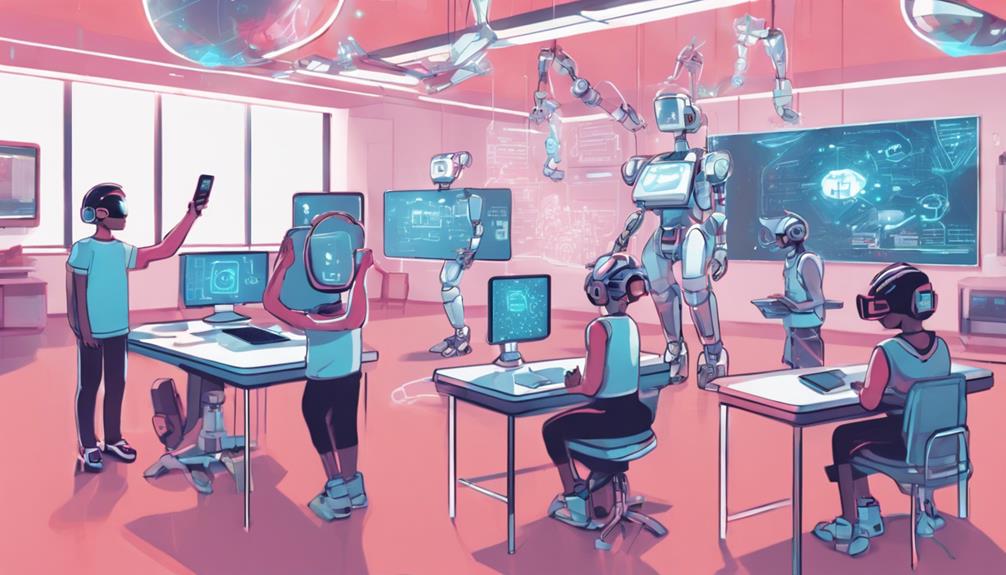
You're entering an education system where technology plays an essential role in modernizing the learning experience. With over 90% of teachers using tech in their lesson plans, you'll engage in interactive and collaborative learning environments that foster participation and idea sharing. Personalized learning experiences tailored to your strengths and weaknesses are made possible through real-time feedback and self-directed exploration. As you navigate this new world of education, you'll discover immersive experiences, online learning platforms, and emerging technologies like AI and gamification. And as you explore further, you'll uncover even more ways technology is shaping the future of education.
Revolutionizing the Classroom Experience
With over 90% of teachers incorporating technology into their lesson plans, you're likely to find interactive whiteboards, educational apps, and online resources transforming the way you learn and engage with course materials in the classroom. This tech integration has revolutionized the traditional classroom experience, making it more engaging, interactive, and collaborative. You're no longer confined to a static textbook or a one-way lecture; instead, you're encouraged to participate, discuss, and share ideas with your peers.
Collaborative learning has become a hallmark of modern education, and technology has played a significant role in facilitating this shift. You can now work on group projects, share files, and communicate with your teammates in real-time, regardless of your physical location. This has not only improved your communication skills but also helped you develop essential skills like teamwork, problem-solving, and critical thinking.
Moreover, technology has enabled teachers to create customized lesson plans that cater to diverse learning styles and needs. You can access a wealth of educational resources, including videos, podcasts, and online tutorials, that help you better understand complex concepts and topics. This personalized approach has led to improved learning outcomes, increased student motivation, and a more enjoyable learning experience. As you navigate the modern classroom, you'll find that technology has become an indispensable tool that empowers you to take charge of your learning journey.
Personalized Learning Through Tech
You're now able to learn at your own pace, thanks to technology that adapts to your individual needs and abilities. This personalized approach to education is revolutionizing the way you absorb information and retain knowledge. With adaptive learning tools, you're no longer confined to a one-size-fits-all approach, where you're forced to keep up with your peers or struggle to stay ahead.
You're now in control of your learning journey, with the freedom to accelerate or decelerate your progress as needed. This sense of student autonomy is empowering, as you take ownership of your education and make informed decisions about your learning path.
Some of the benefits of personalized learning through tech include:
- Tailored instruction: Receive customized lessons and activities that cater to your strengths, weaknesses, and learning style.
- Real-time feedback: Get immediate feedback and assessment results, allowing you to track your progress and make adjustments on the fly.
- Self-directed exploration: Pursue topics and interests that fascinate you, exploring deeper into subjects that resonate with your passions and goals.
Boosting Student Engagement
Technology’s interactive features and immersive experiences captivate your attention, making learning a dynamic and enjoyable process that fosters a deeper connection with the subject matter. You’re no longer a passive learner, but an active participant in the educational journey. With technology, you can engage in student collaboration projects that transcend geographical boundaries, allowing you to work with peers from diverse backgrounds and perspectives. This collaborative environment encourages healthy debates, creative problem-solving, and critical thinking. Additionally, tech in modern storytelling enhances comprehension by allowing learners to experience narratives through interactive simulations, augmented reality, and virtual storytelling platforms. These innovative tools not only make learning more engaging but also help develop a deeper emotional connection to the material. As a result, students can better retain information and apply their knowledge in real-world scenarios.
Interactive lessons are another way technology boosts your engagement. You're presented with simulations, gamification, and virtual labs that make complex concepts more accessible and fun. You can visualize abstract ideas, experiment with different scenarios, and receive immediate feedback on your performance. This hands-on approach helps you develop a deeper understanding of the subject matter, and you're more likely to retain the information.
Moreover, technology provides real-time feedback and assessment tools, enabling you to track your progress and identify areas for improvement. This personalized feedback loop helps you stay motivated and focused, as you're able to see the direct impact of your efforts. By leveraging technology's interactive features and immersive experiences, you're empowered to take ownership of your learning, making education a more enjoyable and rewarding experience.
Online Learning Platforms Rise
As you explore online learning platforms, you'll notice that virtual classrooms are emerging as a norm, allowing you to attend classes from anywhere, at any time. You'll also have access to learning materials 24/7, making it possible to learn at your own pace and convenience. Additionally, these platforms offer personalized study paths tailored to your learning style and needs, making education more effective and efficient.
Virtual Classrooms Emerge
Virtual classrooms are transforming the way you learn, with online learning platforms rising to meet the demands of modern education. You're no longer limited to a physical classroom, and this shift is revolutionizing the way you interact with your peers and instructors.
With virtual classrooms, you can engage in virtual collaboration, working together with classmates on group projects and sharing ideas in real-time. This level of remote engagement is unprecedented, allowing you to connect with others from all over the world.
Some of the key benefits of virtual classrooms include:
- Increased flexibility: learn whenever and wherever you want
- Personalized learning: instructors can tailor the learning experience to your needs
- Cost-effective: reduce costs associated with traditional classroom learning
Virtual classrooms are more than just a novelty – they're a game-changer. They're providing you with the tools and resources you need to succeed in today's fast-paced, tech-driven world.
Accessible Anytime Learning
You're now free to learn at your own pace, anytime, with online learning platforms that provide 24/7 access to course materials, assignments, and instructors. This level of flexibility is a game-changer, especially for those with busy schedules or other commitments. With remote access, you can learn from anywhere, whether that's at home, in a coffee shop, or even on your daily commute. Online platforms cater to your needs, allowing you to create a schedule that suits you best. You can review lectures, complete assignments, and engage in discussions with your peers at a time that works for you. This means you can learn in the morning, afternoon, or evening – whenever you're most focused and productive. The best part? You're not limited by geographical location or traditional classroom hours. With online learning platforms, you can access high-quality education from anywhere in the world, at any time.
Personalized Study Paths
Online learning platforms rise to the challenge of catering to individual learning styles by offering personalized study paths that adapt to your strengths, weaknesses, and learning preferences. This means you're no longer confined to a one-size-fits-all approach, where you're forced to learn at the same pace as your peers. Instead, you're in control, with the ability to accelerate or decelerate your learning journey as needed.
With adaptive learning, you'll receive individualized instruction that's tailored to your unique needs. Here are just a few benefits you can expect:
- Targeted learning: Focus on areas where you need improvement, rather than wasting time on topics you've already mastered.
- Real-time feedback: Receive immediate assessments and feedback, so you can adjust your learning strategy on the fly.
- Increased engagement: Stay motivated and engaged, as the learning material is presented in a way that resonates with your learning style.
Digital Divide in Education
As you explore the benefits of technology in modern education, you'll soon realize that not everyone has an equal footing. You'll notice that some students have access to the latest gadgets and high-speed internet, while others struggle to get online. This disparity in access to technology and varying skill levels are the key aspects of the digital divide that you need to take into account.
Access to Technology
In today's digital age, having access to technology is no longer a luxury, but a necessity for students to remain competitive in the education system. As you navigate your academic journey, you'll realize that technology has become an integral part of the learning process. However, not everyone has equal access to these digital tools, creating a significant gap in the education system.
This digital divide can hinder your ability to develop essential tech literacy skills, making it challenging to keep up with your peers. Additionally, it can lead to digital exclusion, where you're left behind due to lack of access to digital resources.
Some of the key challenges you may face due to limited access to technology include:
- Limited access to online educational resources, restricting your ability to learn new concepts and skills
- Inability to complete assignments and projects that require digital tools, putting you at a disadvantage
- Difficulty in developing critical skills like online research, digital communication, and collaboration
It's crucial to address this issue to ensure that all students have equal opportunities to succeed in today's digital landscape.
Skill Level Gap
You'll often find that even among students with access to technology, a significant skill level gap exists, where some excel in using digital tools while others struggle to keep up. This gap can be attributed to varying levels of digital literacy, prior exposure to technology, and learning styles. A skills assessment can help identify areas where students need extra support, but it's only the first step.
| Student Group | Digital Skills | Learning Outcomes |
|---|---|---|
| Tech-savvy | Advanced | High academic achievement |
| Average | Basic | Average academic performance |
| Struggling | Limited | Low academic achievement |
| Special needs | Adaptive | Varied academic outcomes |
Integration challenges also play a significant role in exacerbating the skill level gap. When technology is not seamlessly integrated into the curriculum, it can create confusion and frustration among students. Teachers must be trained to effectively incorporate digital tools into their teaching practices, ensuring that all students have an equal opportunity to develop their skills and bridge the gap. By acknowledging and addressing these challenges, educators can create a more inclusive and supportive learning environment.
Enhancing Teacher Training Methods
By leveraging technology, educators can now access a wealth of training resources, from online courses to virtual coaching, that help them stay updated on best practices and improve their instructional skills. This is especially important in today's fast-paced educational landscape, where teachers need to be equipped to handle diverse learning styles and abilities.
With technology, you can take advantage of innovative training methods that cater to your unique needs and learning style. For instance, you can:
- Engage in interactive simulations that mimic real-world scenarios, allowing you to practice and refine your teaching strategies in a safe and controlled environment.
- Receive virtual coaching from experienced educators who can provide personalized feedback and guidance on your instructional techniques.
- Access a vast library of online resources, including video tutorials, webinars, and educational blogs, that offer valuable insights and tips on effective teaching practices.
These technology-enabled training methods not only enhance your instructional skills but also provide you with the flexibility to learn at your own pace, anytime, anywhere. Additionally, they offer a cost-effective and efficient way to stay updated on the latest educational trends and research, ultimately benefiting your students and improving educational outcomes. By embracing technology in teacher training, you can take your instructional skills to the next level and make a more significant impact on your students' learning journey.
Virtual Field Trips Unleashed
Now that you've enhanced your instructional skills through technology-enhanced training methods, it's time to explore how virtual field trips can transform the way you engage your students with immersive, interactive learning experiences. These innovative excursions can transport your students to anywhere in the world, allowing them to explore and interact with historical sites, museums, or other places that may be challenging to visit in person.
Virtual field trips offer a plethora of educational benefits, including increased student engagement, improved retention, and enhanced critical thinking skills. By utilizing virtual reality (VR) and augmented reality (AR) technologies, you can create immersive experiences that replicate real-world environments, making learning more engaging and enjoyable. For example, you can take your students on a virtual tour of the ancient Egyptian pyramids, where they can explore the detailed hieroglyphics, examine artifacts, and even participate in interactive quizzes.
As you commence on these virtual adventures, you'll notice a significant shift in your students' learning dynamics. They'll be more curious, ask more questions, and develop a deeper understanding of the subject matter. Furthermore, virtual field trips can be customized to accommodate different learning styles, making them an inclusive and efficient way to reach students with varying abilities. By incorporating virtual field trips into your teaching repertoire, you'll be able to access new levels of engagement, motivation, and academic achievement.
Artificial Intelligence in EdTech
As you explore the world of EdTech, the potential of artificial intelligence (AI) to revolutionize teaching and learning becomes increasingly evident. AI has the power to transform the education landscape, making it more personalized, efficient, and impactful. One of the most promising applications of AI in EdTech is AI tutoring, which uses machine learning algorithms to provide one-on-one support to students. This adaptive learning approach allows students to learn at their own pace, receiving real-time feedback and guidance tailored to their individual needs.
- AI-powered chatbots can facilitate interactive learning experiences, engaging students in conversational dialogue that mimics real-world scenarios.
- AI-driven analytics can help identify knowledge gaps and learning patterns, enabling educators to create focused interventions and enhance student outcomes.
- Intelligent tutoring systems can offer personalized lesson plans, adjusting to a student's strengths, weaknesses, and learning style.
However, as AI becomes more integrated into education, it's important to contemplate the data privacy and ethical implications. How will student data be safeguarded and used? What safeguards will be implemented to prevent bias and guarantee fair access to AI-driven resources? As you dig deeper into the world of AI in EdTech, it's essential to prioritize transparency, accountability, and responsible innovation. By doing so, we can harness the full potential of AI to create a more inclusive, efficient, and student-centered education system.
Gamification of Learning Process
As you explore the gamification of learning, you'll discover how virtual reward systems can motivate you to learn more. You'll also find out how interactive game design can make complex concepts more engaging and fun to grasp. By incorporating these elements, you'll experience learning in a whole new way, with engaging learning experiences that stick with you long after the lesson is over.
Virtual Reward Systems
Frequently, educators turn to virtual reward systems to enhance your engagement and motivation in the learning process. These systems use behavioral incentives to encourage you to participate more actively in class and aim for better academic achievements. Virtual tokens, badges, or points are awarded for completing tasks, achieving milestones, or demonstrating mastery of skills. This gamification of learning makes the process more enjoyable and interactive, increasing your sense of accomplishment and pride in your work.
Here are some ways virtual reward systems can benefit you:
- *They provide instant feedback and recognition*, motivating you to continue performing well.
- *They create a sense of friendly competition*, encouraging you to push yourself beyond your comfort zone.
- *They help you set and achieve goals*, developing your self-regulation skills and confidence.
Interactive Game Design
By incorporating interactive game design elements, you can experience a more immersive and engaging learning environment that simulates real-life challenges and fosters deeper understanding and retention of complex concepts. Through interactive simulations, you'll find yourself in the midst of a virtual lab, where you can experiment and explore without the risks associated with real-world trials. Gamified assessments will challenge you to apply what you've learned, making the learning process feel more like a competition than a chore.
Immersive storytelling will transport you to new worlds, where educational games will guide you through interactive quests and missions. You'll venture on a journey of discovery, collecting badges and rewards as you progress. The line between learning and play will blur, making the educational experience feel more enjoyable and less like a burden. As you navigate through these interactive game design elements, you'll develop a deeper understanding of complex concepts, and retention will become a natural byproduct of your engaging experience. By harnessing the power of interactive game design, you'll access a more effective and enjoyable way of learning.
Engaging Learning Experiences
With gamification, you'll experience a learning process that's transformed into a dynamic, competitive, and highly motivating journey, where every challenge and achievement fuels your desire to learn more. You'll find yourself fully immersed in interactive simulations, gamified assessments, and virtual reality experiences that make learning feel like a thrilling adventure.
- You'll participate in virtual labs, where you'll conduct experiments and investigations in a safe and controlled environment, allowing you to take risks and learn from your mistakes.
- You'll engage in augmented reality field trips, where you'll explore historical sites, visit distant lands, and interact with virtual guides, making history come alive.
- You'll collaborate with peers on gamified projects, where you'll work together to solve real-world problems, sharing ideas and insights in a fun and competitive way.
Through gamification, you'll develop a growth mindset, embracing challenges and setbacks as opportunities to learn and grow. You'll be motivated to push beyond your comfort zone, to explore new ideas, and to develop a deeper understanding of complex concepts. By making learning fun, engaging, and interactive, gamification will revolutionize the way you experience education.
Cybersecurity in Educational Institutions
You're increasingly likely to encounter cyber threats as educational institutions rely more heavily on digital tools and store sensitive student data online. As a result, data protection and online safety have become top priorities. It's essential for educational institutions to safeguard student information, making sure it doesn't fall into the wrong hands.
Phishing attacks, in particular, are a major concern. Cybercriminals often target educational institutions, disguising themselves as legitimate entities to trick staff and students into revealing sensitive information. These attacks can have devastating consequences, compromising student data and putting the entire institution at risk.
To combat these threats, educational institutions must implement robust cybersecurity measures. This includes investing in advanced security systems, conducting regular security audits, and providing staff and students with training on online safety best practices. By doing so, institutions can significantly lower the risk of cyber threats and ensure a safe online learning environment.
As you navigate the digital landscape of modern education, it's crucial to remain vigilant and proactive in the face of cyber threats. By prioritizing data protection and online safety, educational institutions can provide a secure environment for students to learn and thrive. Remember, cybersecurity is an ongoing battle, and it's up to everyone involved to stay one step ahead of cybercriminals.
Preparing Students for Digital Futures
In today's digital age, it's estimated that 65% of students will work in jobs that don't yet exist, making it imperative for educational institutions to prepare them for digital futures that are both uncertain and exciting. You're likely wondering how schools can ready you for careers that don't even exist yet. The answer lies in emphasizing tech literacy and future readiness.
To prepare you for the unknown, educational institutions should focus on developing your skills in emerging technologies like AI, blockchain, and the Internet of Things (IoT). This will enable you to adapt quickly to new technologies and stay ahead of the curve. Here are some ways schools can help you prepare for digital futures:
- Foster a culture of lifelong learning: Encourage you to continuously update your skills and knowledge to stay relevant in a rapidly changing job market.
- Emphasize problem-solving and critical thinking: Teach you to approach complex problems with a logical and analytical mindset, enabling you to tackle challenges in any industry.
- Provide opportunities for hands-on experience: Offer internships, hackathons, and project-based learning to give you practical experience in using technology to solve real-world problems.
Frequently Asked Questions
Can Technology Replace Human Teachers in the Classroom Entirely?
Can a robot truly replace the guiding hand of a human mentor? You might think so, but let's dig deeper. While tech can process info faster, it can't replicate the emotional connection you share with your teacher. The playful banter, the encouraging smile, and the gentle nudge when you're stuck – these are the things that make learning stick. Without human teacher-student dynamics, classroom engagement suffers, and you're left with a hollow, impersonal experience.
How Do Educators Ensure Tech-Based Learning Is Accessible to All Students?
When you're designing a learning experience, you need to take into account everyone's tech situation. You can't assume everyone has a fancy laptop or reliable internet at home. That's where the digital divide comes in – it's a significant equity issue. To bridge the gap, you create inclusive learning plans that prioritize accessibility. This means selecting tools that work on various devices, offering alternatives for offline access, and providing tech support for those who need it. By doing so, you make sure all students can participate, regardless of their tech background.
What Are the Potential Drawbacks of Over-Reliance on Technology in Education?
As you surrender to the allure of digital devices, beware of the slippery slope of over-reliance. You'll find yourself facing a fog of privacy concerns, with learning outcomes shrouded in uncertainty. Excessive screen time will sap your social skills, leaving you isolated and disconnected. Don't let the convenience of tech-based learning compromise your personal growth and relationships. Take a step back, reassess, and strike a balance that prioritizes human connection alongside digital exploration.
Can Educational Technology Be Used to Support Students With Disabilities?
You're probably wondering if tech can be a game-changer for students with disabilities. The answer is a resounding yes! Inclusive learning is made possible with assistive technology, which provides personalized accommodations tailored to individual needs. Digital tools can help level the playing field, enabling students to engage with learning materials in ways that work best for them. By harnessing the power of edtech, you can create a more supportive and accessible learning environment.
How Do Schools Balance Technology Use With Outdoor Play and Physical Activity?
You know that kids spend an average of 4-7 minutes playing outside each day? That's concerning! As you balance technology use with outdoor play and physical activity, it's important to set limits on screen time. Why not use recess as an opportunity for unstructured play, and reserve digital tools for enhancing PE classes? By doing so, you'll guarantee your students get the physical and mental benefits they need to thrive.
