
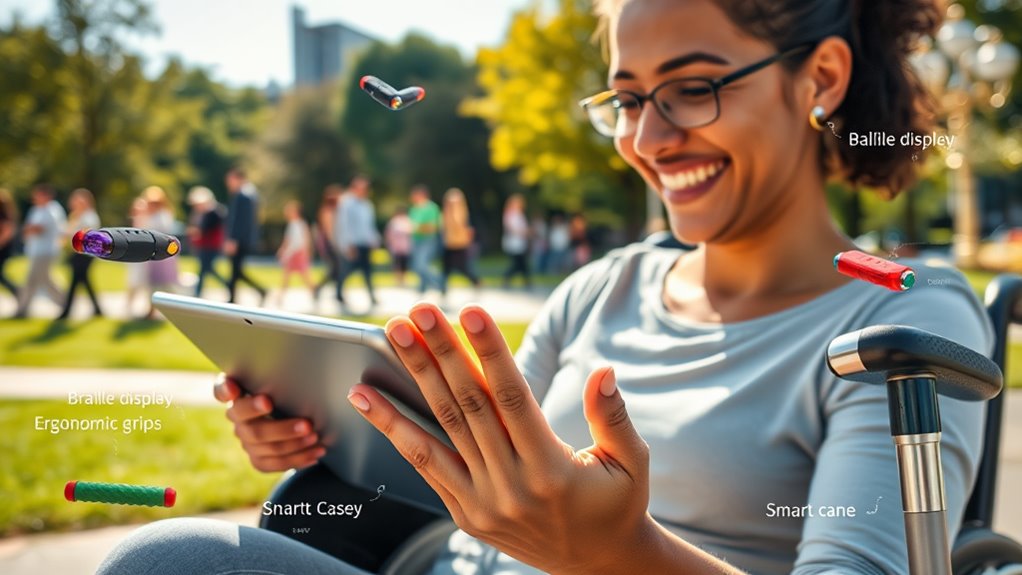
Technology greatly improves accessibility for individuals with disabilities, promoting independence and inclusion. Assistive technologies like voice recognition software and screen readers empower users to navigate their environments effectively. Smart devices facilitate communication and home control, whereas wearable technology encourages constant health monitoring. Software innovations, prioritizing inclusive design, enhance user experiences through features such as closed captioning. Customizable user interfaces allow for personalized adjustments catering to individual needs. As we look to the future, advancements like AI and virtual reality promise even more accessible environments. Explore how these technologies serve as crucial tools for empowerment and transformation.
Assistive Technologies Overview
As technology continues to evolve, assistive technologies play a crucial role in improving the quality of life for individuals with disabilities. These innovations, often referred to as assistive devices, are designed to empower users by providing them with the necessary tools to navigate their environments more effectively. The integration of advanced technology into these devices is a proof of the relentless pursuit of accessibility, enabling individuals to overcome barriers that have historically hindered their independence.
Technology advancements have led to the development of a diverse array of assistive devices that cater to various needs. For example, voice recognition software allows individuals with mobility impairments to control their devices hands-free, whereas screen readers enable users with visual impairments to access information effortlessly. Such innovations not just improve functional capabilities but contribute to a more inclusive society by ensuring that every individual has the opportunity to participate fully.
Moreover, the continuous evolution of assistive technologies signifies a shift in the direction of personalized solutions. With the advent of smart devices, there is now a focus on tailoring assistive devices to meet the specific requirements of each user. This customization empowers individuals to take charge of their lives, encouraging a sense of agency and autonomy that is often lacking in traditional settings.
Benefits of Smart Devices
Smart devices have considerably transformed the environment of assistive technologies, offering numerous advantages that improve user experience and independence. These innovations not just enhance the quality of life for individuals with disabilities but likewise empower them to take control over their surroundings. By integrating smart home features and wearable technology, the potential for increased autonomy is remarkable.
The benefits of smart devices are multifaceted and can be categorized as follows:
- Improved Communication: Smart devices facilitate better communication through voice-activated assistants and real-time translation features, ensuring that users can connect effortlessly with others.
- Increased Control: Individuals can manage home environments via smartphone applications, enabling them to operate lights, thermostats, and security systems—all customized to their specific needs and preferences.
- Health Monitoring: Wearable technology provides constant health tracking, allowing users to monitor essential signs and receive alerts in case of emergencies, promoting a sense of security and well-being.
The integration of smart home technologies and wearable devices into daily routines not only promotes independence but also cultivates a sense of belonging within a digitally connected society. As these devices continue to advance, they hold the promise of further improving accessibility and inclusivity for all users. In this constantly changing environment, embracing smart devices is not merely a choice; it is a requisite for those seeking to assert their autonomy and improve their quality of life.
Software Innovations for Inclusion
The evolution of software innovations has greatly improved inclusivity for individuals with disabilities, providing customized solutions that address diverse needs. These advancements reflect a commitment to inclusive design, ensuring that technology is not merely accessible but truly empowering for all users. By prioritizing user experience, software developers are creating environments where barriers are minimized, enabling individuals with disabilities to engage fully with digital platforms.
Emerging technologies such as artificial intelligence and machine learning are transforming the realm of software accessibility. For instance, intelligent voice recognition systems facilitate seamless interaction for users with mobility impairments, as adaptive learning algorithms improve comprehension for those with cognitive challenges. These innovations underscore the importance of grasping user requirements, consequently nurturing a culture of inclusivity.
In addition, the integration of assistive technologies within mainstream applications exemplifies a paradigm shift. Features such as screen readers, text-to-speech, and closed captioning are becoming standard, rather than optional. This shift not only improves user experience but also cultivates a sense of belonging among individuals with disabilities, reinforcing their right to participate fully in society.
Moreover, the rise of collaboration tools and platforms that prioritize inclusivity is paving the way for a more integrated approach to teamwork. By utilizing software designed with inclusive principles, organizations can capitalize on the diverse capabilities of all team members, driving innovation and productivity.
Ultimately, these software innovations are not just about compliance; they represent a strategic commitment to nurturing an inclusive society where everyone has the opportunity to thrive.
Customizable User Interfaces
Customizable user interfaces (UIs) are revolutionizing the way individuals interact with technology, offering personalized experiences that accommodate varying needs and preferences. By integrating adaptive layouts and user personalization, these interfaces enable users to tailor their technological environment to improve usability and comfort. This shift in approach not only boosts user engagement but also promotes inclusivity, allowing diverse populations to utilize technology effectively.
The significance of customizable UIs lies in their ability to adapt to individual requirements. Key benefits include:
- Improved Accessibility: Users can modify text size, color contrasts, and icon placements, ensuring that those with visual impairments or learning disabilities can navigate with ease.
- Streamlined Navigation: Personalization allows users to prioritize frequently accessed features, reducing cognitive load and improving efficiency in task completion.
- User Empowerment: Providing control over interface elements cultivates a sense of ownership, motivating users to explore and utilize technology without frustration.
As businesses and developers increasingly recognize the necessity for adaptable solutions, the demand for customizable UIs continues to grow. This evolution not only enriches the user experience but also drives innovation in product design, aligning technology with the unique needs of every user. In a world where accessibility is paramount, customizable user interfaces stand as a symbol of the strength of inclusivity, ensuring that everyone can engage with technology on their terms.
Future Trends in Accessibility
As technology continues to advance, the future of accessibility is poised to undergo significant transformations that will improve inclusivity across various platforms. The integration of universal design principles is set to transform how we approach accessibility, ensuring that products and services cater to the diverse needs of all users. This proactive strategy minimizes barriers and promotes an environment where everyone can participate fully and equally.
Emerging technologies, such as artificial intelligence and machine learning, will play pivotal roles in improving accessibility. These innovations enable the development of adaptive software that can anticipate and respond to individual user requirements, thereby personalizing the experience in real-time. As a result, the potential for inclusive education will expand, allowing educational institutions to provide customized learning experiences that accommodate students with varying abilities.
Furthermore, the rise of augmented and virtual reality holds promise for creating immersive environments that are both engaging and accessible. These technologies will improve user interaction, enabling individuals with disabilities to navigate complex systems with greater ease and confidence.
As we look toward the future, the collaboration between technologists, educators, and policymakers will be crucial in advancing accessibility initiatives. By prioritizing universal design and promoting inclusive education, we can create a setting where technology serves as a bridge, rather than a barrier, empowering all individuals to thrive in an increasingly digital world. The commitment to these principles will not only improve user experiences but will also drive societal progress toward true equity and inclusion.
Frequently Asked Questions
How Does Tech Improve Physical Accessibility in Public Spaces?
In a world where barriers crumble like paper walls, technology emerges as a beacon of possibility, redefining physical accessibility in public spaces. Innovations such as smart signage illuminate pathways, guiding individuals with precision and clarity, as mobility aids transform the act of movement into a seamless experience. These advancements empower individuals, ensuring that every corner of our environment is navigable, inclusive, and welcoming, in the end nurturing a society where everyone can thrive without constraint.
What Legal Requirements Exist for Tech Accessibility Compliance?
Legal requirements for tech accessibility compliance primarily stem from the Americans with Disabilities Act (ADA), which mandates that digital platforms be accessible to individuals with disabilities. This encompasses web content, applications, and electronic communications, ensuring they meet established standards for digital accessibility. Organizations must actively assess their digital environments and implement necessary modifications to adhere to ADA compliance, thereby promoting inclusivity and mitigating potential legal repercussions during enhancing user engagement and satisfaction.
Can Tech Solutions Be Costly for Individuals With Disabilities?
Approximately 1 in 5 individuals in the United States live with a disability, often facing significant financial barriers when accessing assistive technology. The costs associated with these solutions can be prohibitive, deterring many from utilizing crucial tools that improve their quality of life. During innovative technologies hold the potential to empower, the price tag associated with them remains a critical challenge, necessitating a concerted effort to promote affordability and accessibility in this domain.
How Do Organizations Ensure Accessibility in Tech Development?
Organizations guarantee accessibility in tech development by implementing inclusive design principles and prioritizing universal access. This approach involves engaging diverse user groups throughout the development process to identify barriers and gather feedback. By cultivating an inclusive environment, organizations can create products that cater to the needs of all users, including individuals with disabilities. Additionally, adherence to established accessibility standards and regulations reinforces their commitment to equitable technological solutions, ultimately improving user experience and satisfaction.
What Role Do User Feedback and Testing Play in Accessibility Tech?
User feedback and rigorous testing methods are pivotal in developing effective accessibility technology, with studies indicating that 70% of users report improved satisfaction when their input is integrated into product design. This statistic underscores the necessity of engaging users with diverse abilities throughout the development process. By systematically incorporating user feedback and utilizing various testing methods, organizations can guarantee that their technologies not solely meet compliance standards but additionally improve user experience and empowerment.
