
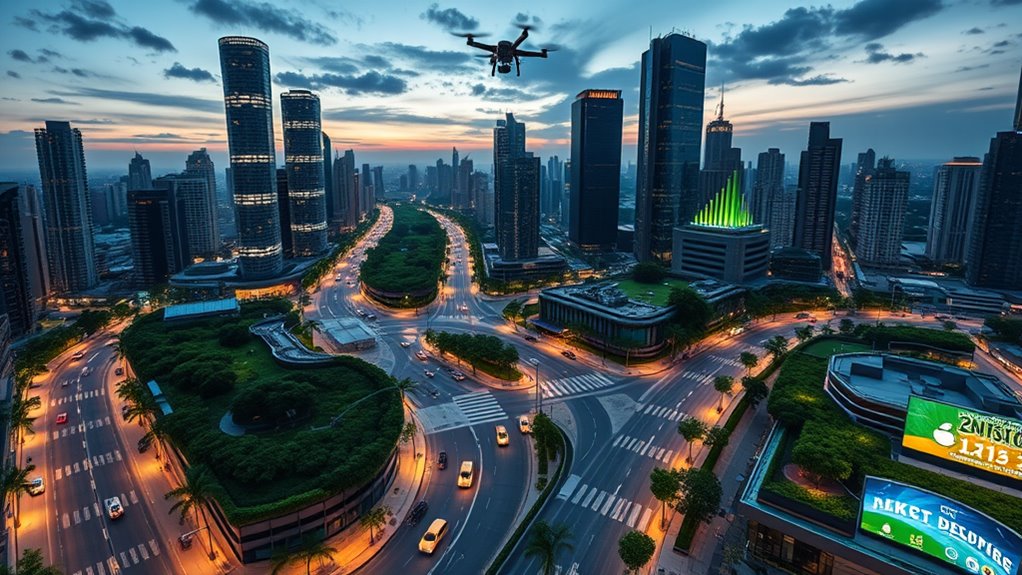
Technology is crucial in developing smarter cities. It improves urban mobility through platforms that integrate transportation options like ride-sharing and public transit. Intelligent waste management systems utilize smart bins to optimize collection routes and reduce costs. Smart energy and water systems improve efficiency as they promote sustainability. Data-driven urban planning enables informed decision-making and effective resource allocation. Climate resilience technologies equip cities to face environmental challenges. Connectivity through IoT integration encourages communication and community engagement. Together, these innovations pave the way for resilient urban environments that meet the demands of modern living, making it worthwhile to explore further.
Urban Mobility Solutions
In many urban areas, the challenge of efficient transportation remains a significant barrier to sustainable development. As cities continue to expand, innovative urban mobility solutions are crucial for maintaining functionality and improving quality of life. The integration of mobility as a service (MaaS) platforms stands at the forefront of this evolution, offering seamless access to various transportation modes, including public transit, ride-sharing, and bike-sharing programs.
Autonomous vehicles are poised to transform urban environments, reducing congestion and optimizing public transport through real-time transit updates and smart traffic management systems. By embracing these technologies, cities can implement congestion reduction strategies that alleviate pressure on existing infrastructure. Additionally, the integration of electric scooters complements traditional public transport, cultivating a multi-modal transport ecosystem that caters to diverse commuter needs.
Pedestrian-friendly design is vital in this paradigm shift, promoting active transportation and improving urban spaces. As cities prioritize bike-sharing programs and electric scooter integration, they create environments that encourage walking and cycling, thereby reducing reliance on single-occupancy vehicles.
In addition, public transport optimization is critical in ensuring that services are efficient, reliable, and responsive to the demands of urban dwellers. By leveraging data analytics and advanced technologies, city planners can create transportation networks that not only meet current needs but are also designed to anticipate future growth. In the end, the effective implementation of these urban mobility solutions will empower cities to thrive in an era marked by rapid change, establishing a foundation for sustainable development and improved urban living.
Smart Energy Management
Smart energy management is vital for the development of sustainable urban environments, particularly through the integration of renewable energy sources. The implementation of smart grid technology plays a fundamental role in optimizing energy distribution and consumption, enabling cities to respond dynamically to changing demands. As cities embrace these innovations, they can markedly improve energy efficiency and reduce their carbon footprint.
Renewable Energy Integration
A growing emphasis on renewable energy integration is transforming urban settings into more sustainable environments. As cities grapple with the pressing need for energy efficiency, solar panel advancements play a pivotal role in utilizing clean energy. These innovations not just increase the efficiency of solar energy capture but additionally reduce the costs associated with implementation, making renewable energy more accessible to municipalities.
Moreover, effective energy storage solutions are fundamental in maximizing the benefits of renewable energy. By storing excess energy generated during peak sunlight hours, cities can mitigate the intermittent nature of solar energy, ensuring a reliable energy supply even during high-demand periods. This capacity to balance energy generation and consumption not only improves grid stability but also positions cities as leaders in the shift to sustainable energy sources.
The integration of renewable energy into urban infrastructures not only enables cities to reduce their carbon footprint but also encourages energy independence. As governments and private sectors collaborate to innovate in renewable technologies, the future of urban living looks increasingly promising, where energy management is not merely reactive but proactively sustainable.
Smart Grid Technology
Transforming the way energy is distributed and consumed, smart grid technology represents a significant leap forward in urban energy management. By integrating advanced communication and automation technologies, smart grids improve the efficiency, reliability, and sustainability of energy distribution systems. These innovations enable real-time monitoring and control, empowering cities to optimize energy usage and reduce wastage.
The following table illustrates key smart grid innovations and their impacts:
| Innovation | Impact |
|---|---|
| Advanced Metering Infrastructure (AMI) | Enables real-time consumption data for consumers and utilities. |
| Demand Response Programs | Adjusts energy usage based on supply conditions, reducing peak demand. |
| Grid Energy Storage Systems | Stores excess energy for use during peak times, improving reliability. |
| Integration of Renewable Sources | Facilitates seamless inclusion of solar and wind energy, promoting sustainability. |
Smart grid technologies not just improve energy distribution efficiency but also facilitate a shift toward a more resilient and sustainable urban ecosystem. As cities embrace these advancements, they position themselves to utilize the full potential of energy management, paving the way for a brighter, more potent future.
Intelligent Waste Management
Intelligent waste management systems are revolutionizing urban sanitation through the implementation of smart bin technology. These bins utilize sensors to monitor fill levels, enabling data-driven collection routes that optimize resource allocation and reduce operational costs. As cities increasingly adopt these innovations, the efficiency of waste management processes stands to improve considerably, contributing to cleaner and more sustainable urban environments.
Smart Bin Technology
In modern urban environments, effective waste management has become increasingly vital for sustainability and public health. Smart bin technology represents a transformative approach to managing urban refuse, leveraging sensor technology to optimize waste collection processes. These intelligent waste receptacles are equipped with advanced sensors that monitor fill levels, enabling real-time data transmission to municipal authorities.
By utilizing this data, city planners can make informed decisions about collection schedules, reducing operational costs and minimizing unnecessary fuel consumption. The deployment of smart bins not just improves the efficiency of waste management systems but also promotes a cleaner urban environment by ensuring timely disposal of waste.
Moreover, these bins can be integrated with digital platforms, allowing citizens to report issues directly, thereby increasing community engagement and accountability. The implementation of smart waste initiatives empowers cities to adopt a proactive stance on waste management, eventually contributing to a more sustainable urban ecosystem.
As cities continue to evolve, the integration of smart bin technology will be pivotal in addressing the challenges of waste management, positioning municipalities at the forefront of innovative urban solutions. Embracing this technology is fundamental for those seeking to wield influence in the field of urban development.
Data-Driven Collection Routes
Efficient waste management requires not solely advanced technology but furthermore strategic planning based on data insights. Data-driven collection routes enable municipalities to optimize their waste management processes markedly. By utilizing automated logistics and predictive analytics, cities can streamline operations, reduce costs, and improve service delivery.
Key benefits of implementing data-driven collection routes include:
- Optimized Routes: Advanced algorithms analyze real-time data to determine the most efficient collection paths.
- Resource Allocation: Predictive analytics allows for better forecasting of waste generation, ensuring appropriate resource deployment.
- Reduced Operational Costs: Streamlined routes decrease fuel consumption and labor costs.
- Improved Environmental Impact: Efficient collection minimizes carbon emissions, contributing to sustainability goals.
- Real-Time Monitoring: Sensors and IoT devices provide live data, enabling immediate adjustments to collection schedules.
As urban populations grow, the need for intelligent waste management solutions becomes imperative. By utilizing the strength of data, cities not only improve their waste management efficiency but furthermore raise their status as forward-thinking urban ecosystems. This strategic approach positions municipalities to meet the evolving demands of modern living while ensuring a cleaner, more sustainable environment.
Enhanced Public Safety
Amid the rapid evolution of urban environments, improved public safety has emerged as a critical focus for city planners and technology developers alike. As urban areas expand and population densities increase, the demand for robust safety measures becomes paramount. Advanced surveillance systems are at the forefront of this initiative, providing real-time monitoring capabilities that empower law enforcement and security personnel. These systems improve situational awareness, allowing for swift identification of potential threats and enabling proactive measures to mitigate risks.
Moreover, the integration of smart technology into emergency response frameworks has transformed the way cities handle crises. Automated alerts and thorough data analytics facilitate rapid decision-making, ensuring that emergency services can deploy resources effectively and efficiently. In high-stakes situations, the ability to coordinate responses with precision can mean the difference between chaos and order.
Utilizing technologies such as artificial intelligence and machine learning, cities can analyze patterns in crime and emergency incidents, allowing for targeted interventions and preventative strategies. This data-driven approach not only improves immediate safety but additionally cultivates a long-term culture of security within urban environments.
Ultimately, the fusion of surveillance systems and intelligent emergency response mechanisms is redefining public safety in smarter cities. By leveraging the capabilities of technology, urban leaders are not only safeguarding their citizens but also strengthening the resilience of their communities against future challenges. In this new era, the paradigm of safety is shifting, and cities that embrace these innovations will certainly emerge as leaders in urban resilience and security.
Data-Driven Urban Planning
The advancements in public safety have laid a foundation for the implementation of data-driven urban planning strategies. By utilizing state-of-the-art technologies, city planners can employ geospatial analysis and predictive modeling to create environments that are not just more efficient but likewise responsive to the evolving needs of their populations. This innovative approach empowers decision-makers to leverage vast amounts of data, transforming it into actionable insights that drive urban development.
Key elements of data-driven urban planning include:
- Geospatial analysis: Utilizing location-based data to identify patterns and trends in urban dynamics.
- Predictive modeling: Forecasting future scenarios based on historical data, guiding resource allocation and infrastructure development.
- Real-time data integration: Incorporating live data feeds to make informed decisions swiftly.
- Public engagement: Actively involving the community in the planning process through data visualization tools.
- Performance metrics: Establishing benchmarks to measure the impact of urban interventions.
Sustainable Water Systems
As cities face increasing pressures from population growth and climate change, the need to shift in the direction of sustainable water systems has never been more critical. Urban water management requires innovative solutions that not only safeguard resources but also improve the resilience of city infrastructures. Sustainable water systems integrate technology and environmental stewardship to optimize water use, ensuring both availability and quality for future generations.
Implementing robust water conservation initiatives is crucial. These initiatives encourage responsible water use among residents and businesses, reducing demand and promoting efficiency. In addition, aquifer recharge programs play a pivotal role in replenishing groundwater supplies, thereby improving local water security. These programs utilize natural processes and advanced technologies to capture and store stormwater, ensuring that cities can withstand periods of drought.
The following table summarizes key components of sustainable water systems:
| Component | Description | Impact |
|---|---|---|
| Water Conservation Initiatives | Programs promoting efficient water use | Reduces overall water demand |
| Aquifer Recharge Programs | Systems for replenishing groundwater | Increases local water availability |
| Smart Metering Technology | Real-time monitoring of water usage | Improves efficiency and accountability |
| Rainwater Harvesting | Capturing and utilizing rainwater | Reduces reliance on municipal sources |
| Wastewater Recycling | Treating and reusing wastewater | Conserves freshwater resources |
Connectivity and IoT Integration
Effective water management is increasingly reliant on advanced connectivity and the integration of Internet of Things (IoT) technologies. The deployment of smart sensors and sturdy wireless networks empowers cities to monitor, manage, and enhance their water resources with unprecedented efficiency. This technological synergy enables real-time data collection, which is essential for informed decision-making and strategic planning.
The benefits of connectivity and IoT integration in smart water systems include:
- Enhanced monitoring: Continuous tracking of water quality and usage patterns through smart sensors.
- Predictive maintenance: Early detection of leaks and system failures, minimizing downtime and repair costs.
- Resource optimization: Data-driven insights facilitate ideal distribution and conservation of water resources.
- Informed policy-making: Access to extensive data supports evidence-based governance and regulatory frameworks.
- Community resilience: Improved responsiveness to environmental changes, ensuring sustainability and reliability of water services.
As cities embrace these technologies, they are not merely adopting tools; they are transforming their operational frameworks. The interconnected nature of smart sensors and wireless networks creates a dynamic ecosystem that encourages innovation and progress. By leveraging IoT capabilities, city planners and water management authorities can make strides toward developing smarter, more sustainable urban environments. In the end, the integration of connectivity and IoT heralds a new era in water management, allowing cities to respond adeptly to the challenges posed by population growth, climate change, and resource scarcity.
Community Engagement Platforms
Community engagement platforms play an fundamental role in promoting collaboration between citizens and local governments in the development of smarter cities. These platforms serve as important conduits for digital feedback, allowing municipalities to utilize the voice of their constituents effectively. By leveraging technology, local governments can solicit input on urban planning, transportation, and public services, transforming passive citizens into active participants in the decision-making process.
The efficacy of community engagement platforms lies in their ability to facilitate citizen collaboration. Empowered by intuitive interfaces and mobile accessibility, residents can easily share their insights and concerns, nurturing a culture of transparency and accountability. This engagement is not merely a formality; it greatly influences policy direction and resource allocation, aligning city initiatives with the actual needs and desires of the populace.
Moreover, these platforms enable real-time monitoring and analysis of citizen sentiments, providing local governments with actionable data. By digesting this digital feedback, authorities can swiftly adapt strategies to improve service delivery and urban infrastructure. This proactive approach not only strengthens community ties but additionally instills a sense of ownership among citizens, which is critical for the long-term sustainability of smarter city initiatives.
Climate Resilience Technologies
Climate resilience technologies are essential in equipping urban areas to withstand the impacts of climate change. As cities grapple with increasing temperatures, rising sea levels, and extreme weather events, these technologies become indispensable in implementing effective climate adaptation strategies. By leveraging innovative solutions, urban environments can improve their capacity to thrive amidst adversity as well as simultaneously nurturing urban biodiversity enhancement.
The following key technologies exemplify the transformative potential of climate resilience initiatives:
- Smart Water Management Systems: Utilizing IoT sensors to monitor water usage and detect leaks, these systems optimize resource allocation and reduce waste.
- Green Infrastructure Solutions: Implementing green roofs, permeable pavements, and urban forests to mitigate heat islands and improve stormwater management.
- Predictive Analytics: Analyzing climate data to anticipate potential hazards, enabling proactive planning and timely responses.
- Renewable Energy Integration: Investing in solar and wind energy to reduce dependency on fossil fuels, promoting energy independence and sustainability.
- Urban Mobility Innovations: Developing electric public transit and bike-sharing programs to reduce carbon footprints and improve air quality.
Frequently Asked Questions
How Can Residents Get Involved in Smart City Initiatives?
Research indicates that cities with robust community engagement initiatives experience a 30% increase in citizen satisfaction. Residents can greatly influence smart city initiatives by actively participating in local forums, surveys, and workshops. Providing citizen feedback is crucial for tailoring projects to meet community needs. By collaborating with city planners and utilizing digital platforms for engagement, residents can assert their influence, ensuring that urban advancements reflect their priorities and improve overall quality of life.
What Are the Costs Associated With Implementing Smart City Technologies?
Implementing smart city technologies involves significant costs, primarily associated with infrastructure investment and ongoing technology maintenance. Initial expenditures can encompass the development of advanced networks, sensors, and data analytics platforms, which are vital for enhancing urban efficiency. In addition, municipalities must allocate funds for regular maintenance and upgrades to guarantee these technologies remain effective and secure. Strategic financial planning is fundamental to optimize resources during achieving desired outcomes in urban development and citizen engagement.
How Do Smart Cities Protect Citizen Data Privacy?
In the domain of safeguarding citizen data privacy, smart cities employ a strategic synergy of data encryption and stringent privacy regulations. By prioritizing protection, they proactively prevent potential breaches and unauthorized access, ensuring citizens' sensitive information remains secure. Moreover, these urban environments cultivate trust through transparency, allowing residents to understand how their data is utilized. In the end, this commitment to privacy not merely empowers individuals but additionally improves the overall integrity of smart city initiatives.
What Role Do Local Governments Play in Smart City Development?
Local governments play a vital role in the development of smart cities by establishing robust policy frameworks that guide technological integration and urban planning. They facilitate community engagement to guarantee that initiatives align with the needs and values of residents. This collaborative approach not merely cultivates trust but additionally empowers citizens to partake in decision-making processes, in the end leading to more sustainable and effective urban environments. Effective governance is essential for maximizing the benefits of smart city initiatives.
How Can Smaller Cities Adopt Smart Technologies Effectively?
Smaller cities can effectively adopt smart technologies by leveraging community partnerships; studies indicate that cities with such collaborations see a 35% increase in successful tech initiatives. By prioritizing technology education among both citizens and local government officials, these cities can promote an informed populace capable of embracing innovative solutions. This strategic approach not just improves operational efficiency but likewise empowers residents, ensuring sustainable growth and a resilient urban environment.
