
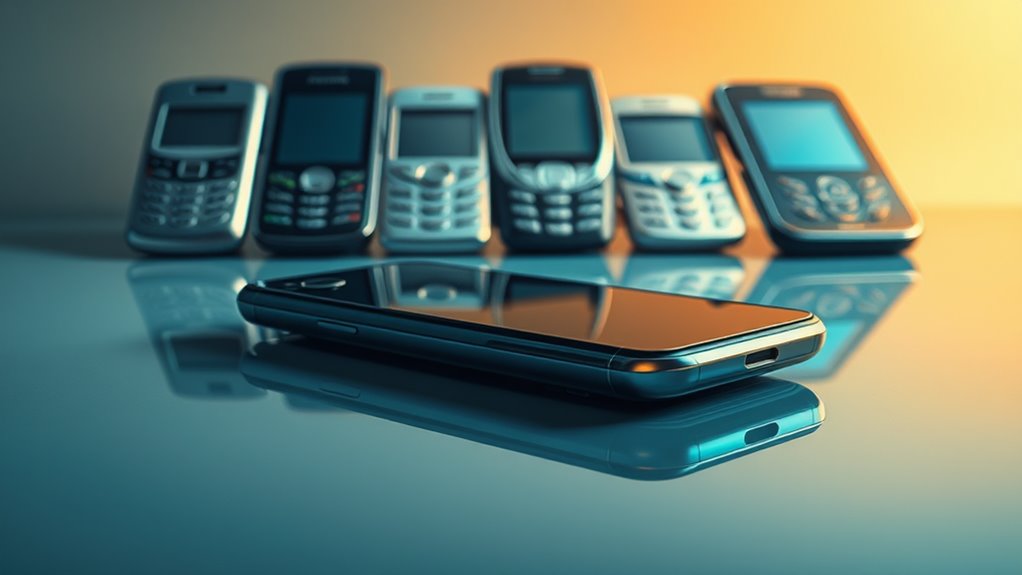
Smartphones have evolved remarkably since the 1980s, shifting from basic 1G systems to sophisticated devices driven by 4G and 5G technologies. The introduction of touchscreens and app ecosystems transformed user interaction, making smartphones vital for daily tasks. Innovations like AI integration have changed these devices into intelligent companions, improving functionality through personalization and real-time analytics. Improved security features, including biometric authentication, have addressed growing privacy concerns. As the market increasingly prioritizes sustainability and ethical practices, future developments may focus on modular designs and advanced connectivity. Exploring upcoming trends will reveal what's next for this dynamic technology and its impact on society.
Early Mobile Communication
The evolution of mobile communication began in the mid-20th century, marking a significant shift in personal connectivity. The inception of mobile networks can be traced back to the 1940s, when the first analog systems emerged, primarily utilized by public safety organizations and military applications. These early systems laid the groundwork for the revolutionary voice technology that would soon follow, enabling users to communicate over significant distances without the constraints of wired connections.
By the 1980s, the introduction of the first commercial mobile networks transformed communication paradigms. The advent of the first generation (1G) networks heralded an era where voice communication became accessible to the masses. These networks employed analog signals, which, although groundbreaking, offered limited capacity and poor sound quality. Nevertheless, they ignited the ambition for a more sophisticated communication infrastructure.
The subsequent evolution into 2G networks in the early 1990s marked a pivotal moment in voice technology. Digital transmission allowed for improved clarity, greater security, and the introduction of text messaging. This advancement set the stage for a swiftly growing mobile ecosystem, where the capability of voice technology began to integrate with burgeoning data capabilities.
As mobile networks continued to evolve, they not only empowered individuals but likewise catalyzed economic growth and innovation across various sectors. This early phase of mobile communication laid the fundamental framework for the smartphones and advanced technologies we rely on today, forging an unbreakable link between connectivity and modern life.
The Rise of Touchscreens
With the advent of digital networks and the proliferation of mobile devices, user interaction began to evolve considerably. The introduction of touchscreens marked a pivotal shift, redefining the user interface and improving touch sensitivity to unprecedented levels. This transformation enabled users to engage more intuitively with their devices, replacing cumbersome physical buttons with a seamless, tactile experience.
The rise of touchscreens has fueled a demand for more sophisticated user interfaces, where gestures and swipes have become the norm. This evolution not only allows for a more engaging experience but also improves efficiency, as users can navigate through applications with fluidity and precision. The rapid development of capacitive touch technology further amplified these capabilities, facilitating multi-touch functionality and enabling complex interactions.
To illustrate the advancements in touchscreen technology, the following table highlights key features across different generations of devices:
| Generation | Key Features |
|---|---|
| First Generation | Resistive touch, limited sensitivity |
| Second Generation | Capacitive touch, multi-touch support |
| Current Generation | High-resolution displays, advanced haptics |
As we look to the future, the integration of artificial intelligence and augmented reality within touchscreens promises to redefine user engagement even further. The continuous improvement of touch sensitivity and the sophistication of user interfaces will certainly empower users, enabling them to utilize the full potential of their smartphones. The rise of touchscreens not only signifies a technological advancement but also a transformation in how influence is wielded through mobile devices.
App Revolution and Ecosystems
The emergence of app stores has transformed how users access and interact with software, establishing a dominant marketplace for mobile applications. This shift has not just nurtured a thriving ecosystem of developers but has additionally led to significant trends in ecosystem integration, allowing for seamless user experiences across devices. As smartphone capabilities continue to expand, comprehending the implications of app revolution and ecosystem dynamics becomes essential for both consumers and industry stakeholders.
App Store Dominance
App stores have fundamentally transformed the environment of software distribution and consumption, creating a vibrant ecosystem that stimulates innovation and accessibility. The emergence of app store competition has reshaped the framework, enabling developers to reach a global audience with unprecedented ease. This competition nurtures a dynamic marketplace, driving the quality and diversity of applications available to consumers.
As businesses and entrepreneurs recognize the potential of mobile monetization, they are increasingly leveraging app stores to generate revenue streams that were once unimaginable. In-app purchases, subscriptions, and ad-based models have become the norm, allowing developers to capitalize on user engagement and optimize profitability. The dominance of major app stores like Apple's App Store and Google Play has established them as gatekeepers, influencing which applications succeed or fail in this highly competitive arena.
Moreover, the sheer volume of available apps has led to a crowded marketplace, where standing out requires strategic marketing and exceptional user experience. The implications of app store dominance extend beyond individual developers; they shape market trends, consumer behavior, and the overall trajectory of the mobile technology sector, underscoring the influence dynamics at play in this continually changing domain.
Ecosystem Integration Trends
Mobile technology has increasingly evolved into a cohesive ecosystem, where seamless integration between applications, devices, and services improves user experience and functionality. The convergence of various platforms nurtures ecosystem interoperability, which is crucial for creating a robust and efficient digital environment. This trend not only improves usability but also enables users to maximize their productivity.
As we look in the direction of the future, several key integration trends are emerging, reflecting the shift in consumer expectations and technological capabilities:
| Trend | Description | Impact on User Experience |
|---|---|---|
| Cross-Platform Functionality | Applications that work seamlessly across devices | Greater flexibility and efficiency |
| AI-Driven Personalization | Customized experiences based on user behavior | Improved relevance and satisfaction |
| Cloud Integration | Unified access to data regardless of location | Streamlined workflow and accessibility |
| IoT Connectivity | Interconnected devices offering holistic control | Improved automation and convenience |
These trends signify a robust transformation in how users interact with technology, establishing a realm where a seamless user experience is paramount. As businesses adapt to these ecosystem integration trends, the potential for innovation and improved user engagement will continue to expand.
Introduction of 4G and Connectivity
The introduction of 4G technology marked a significant leap in mobile internet speed, fundamentally transforming user experiences. This improved connectivity not just facilitated seamless streaming and browsing but likewise catalyzed a new wave of app development, enabling more sophisticated and data-intensive applications. As a result, developers began to leverage the increased bandwidth to create innovative solutions that catered to the evolving needs of consumers.
Enhanced Mobile Internet Speed
With the advent of 4G technology, a significant leap in mobile internet speed and connectivity has transformed the way users access information and interact online. This evolution has been characterized by a dramatic increase in mobile bandwidth, allowing for seamless streaming, rapid downloads, and real-time communication. The improved capacity of 4G networks has redefined user experience, enabling individuals to engage with content in a manner previously thought impossible.
The introduction of 4G has not only accelerated mobile internet speeds but has additionally expanded the range of applications that can be effectively utilized on smartphones. Users can now effortlessly navigate through high-definition video content, engage in complex online gaming, and participate in video conferencing with minimal latency. This improved connectivity empowers users to manage their professional and personal lives more efficiently, cultivating a culture of immediacy and responsiveness.
As the demand for high-speed internet continues to grow, 4G technology has set a benchmark for user satisfaction and has paved the way for future advancements, ensuring that mobile connectivity remains at the forefront of digital innovation. The implications of these developments are profound, improving both productivity and leisure activities in our increasingly connected world.
Impact on App Development
The rapid improvement of internet connectivity through 4G technology has profoundly influenced app development, enabling developers to create more sophisticated and feature-rich applications. This advancement has shifted the focus toward user-centric design, where the end-user experience is paramount. Developers now utilize high-speed connectivity to integrate real-time functionalities, boosting engagement and interaction.
Moreover, the rise of 4G has paved the way for cross-platform compatibility, allowing applications to function seamlessly across diverse devices and operating systems. This capability not only broadens the user base but also guarantees a consistent experience, establishing brand loyalty.
As businesses increasingly prioritize mobile strategies, the implications of 4G extend beyond mere speed; they redefine the very nature of app development. Improved connectivity enables data-heavy applications, such as augmented reality and streaming services, to flourish, pushing the boundaries of what is possible.
In this competitive environment, developers must tap into the strength of 4G to innovate and adapt, guaranteeing their applications not only meet user expectations but also anticipate future needs. The convergence of speed, user-centric design, and cross-platform capabilities heralds a new era in app development, one that is ripe with potential.
The Era of AI Integration
As smartphones continue to evolve, the integration of artificial intelligence (AI) has emerged as a transformative force in improving user experience and functionality. The confluence of AI technologies with smartphone capabilities has redefined user interactions, making devices not merely tools, but intelligent companions. AI personal assistants, fueled by advanced voice recognition advancements, have become indispensable in daily life, enabling users to command their devices with ease and efficiency.
The incorporation of machine learning capabilities into smartphones allows for predictive analytics, which anticipates user needs and preferences, streamlining interactions and improving overall satisfaction. In addition, intelligent user interfaces are designed to adapt to individual usage patterns, thereby creating a personalized experience that resonates with the user's lifestyle.
Moreover, smart camera enhancements leverage AI to optimize image quality through real-time analysis, as augmented reality applications deliver immersive experiences that blend digital and physical worlds seamlessly. Automated task management through AI further empowers users to optimize their time and productivity.
| AI Integration Features | Benefits |
|---|---|
| AI Personal Assistants | Improved user interaction |
| Predictive Analytics | Anticipation of user needs |
| Smart Camera Enhancements | Superior image quality |
| Augmented Reality Applications | Immersive user experiences |
The era of AI integration signifies a pivotal shift in how smartphones function, moving in the direction of a future where devices are smarter, more intuitive, and increasingly aligned with the challenges of modern life. The potential for further advancements in this domain is immense, promising a sophisticated digital environment.
Emergence of Foldable Phones
Foldable phones have emerged as a groundbreaking innovation in the smartphone market, redefining the boundaries of device design and functionality. These devices are not merely a trend; they represent a significant leap in engineering, combining the portability of a smartphone with the expansive display of a tablet. The introduction of foldable designs allows manufacturers to cater to a diverse range of consumer needs, improving the overall user experience.
The strategic application of foldable technology enables users to enjoy larger screens without compromising on portability. This duality empowers professionals and creatives alike, allowing for multitasking capabilities previously unattainable in traditional smartphones. Users can seamlessly shift from a compact device for communication to a wide display for presentations or media consumption, all with a simple fold or unfold.
Moreover, foldable phones have inspired a new wave of creativity within the tech industry. Manufacturers are compelled to innovate, not just in the hardware but likewise in the software, ensuring that applications are optimized to take full advantage of the unique screen configurations. This evolution nurtures a competitive environment, pushing companies to improve their offerings and deliver superior user experiences.
As the market matures, foldable phones are poised to become a staple in the tech ecosystem, appealing to a discerning audience that demands versatility and strength. With ongoing advancements in durability and design, the future of foldable phones promises to raise the standards of mobile technology, eventually transforming how we interact with our devices.
Enhanced Security Features
Recent advancements in smartphone technology have not merely focused on design and functionality but furthermore on improving security features to protect users' data and privacy. As the digital environment evolves, so too does the imperative for robust security measures, particularly as smartphones become indispensable tools for both personal and professional use.
Biometric authentication has emerged as a cornerstone of smartphone security, providing a level of protection that traditional passwords cannot match. Leveraging technologies such as fingerprint scanning and facial recognition, biometric systems allow users to access their devices with unparalleled speed and accuracy whilst ensuring that unauthorized access is effectively thwarted. This evolution not only increases user convenience but also strengthens the security framework necessary for safeguarding sensitive information.
In addition to biometric measures, data encryption plays a pivotal role in securing the information stored on smartphones. By converting data into a coded format that can only be deciphered by authorized users, encryption provides a formidable barrier against potential breaches. Modern smartphones employ advanced encryption standards to protect everything from personal messages to financial transactions, ensuring that users can engage with their devices without the constant fear of data theft.
Together, biometric authentication and data encryption represent a formidable duality in the sphere of smartphone security. As threats continue to evolve, the commitment of manufacturers to integrate these advanced features underscores the growing recognition of the critical importance of protecting user data in an increasingly interconnected world.
Future Trends and Innovations
Anticipating the next wave of advancements, smartphone manufacturers are exploring innovative technologies that will redefine user interaction and functionality. As the demand for improved performance and security escalates, these advancements are vital for maintaining competitive advantage in a saturated market.
One significant trend is the integration of biometric advancements beyond traditional fingerprint scanning. With facial recognition and advanced retinal scanning gaining traction, future smartphones will likely feature multi-layered biometric systems, providing unparalleled security during the simplification of user access. This evolution will not just bolster device protection but will also improve user experience, allowing for seamless interactions.
Moreover, sustainability practices are becoming increasingly essential in the design and manufacturing processes of smartphones. Companies are now prioritizing eco-friendly materials and energy-efficient technologies, aligning their products with the global push for environmental responsibility. The introduction of modular designs, which facilitate easy repairs and upgrades, will further extend device lifespans, minimizing electronic waste.
In addition, the rise of 5G technology is set to transform connectivity, enabling faster data transfer and more robust applications, particularly in augmented reality (AR) and virtual reality (VR) domains. This will enable users to engage with their devices in more immersive ways, improving productivity and entertainment.
As the smartphone environment evolves, the convergence of biometric advancements and sustainability practices will not only raise user experiences but will also cultivate a culture of responsibility within the tech industry. The future of smartphones promises to be both impactful and conscientious, reflecting the demands of an increasingly aware consumer base.
Frequently Asked Questions
How Have Smartphones Impacted Social Interactions and Relationships?
Smartphones have notably transformed social interactions and relationships through the rise of digital communication. They facilitate instant connectivity, reshaping relationship dynamics by enabling constant engagement, yet often at the expense of face-to-face interactions. Although they improve accessibility and cultivate new connections, they can as well lead to superficial engagements, undermining the depth of interpersonal relationships. Consequently, comprehending the dual impact of smartphones is crucial for traversing the intricacies of modern social environments effectively.
What Environmental Concerns Are Associated With Smartphone Production and Disposal?
Although some may argue that technological advancements outweigh environmental concerns, the production and disposal of smartphones pose significant ecological challenges. The extraction of rare minerals often leads to habitat destruction, whereas improper disposal contributes to toxic waste. To mitigate these issues, the industry must prioritize sustainable materials and implement robust recycling programs. By adopting these practices, manufacturers can reduce their ecological footprint and promote a circular economy within the swiftly evolving tech environment.
How Do Smartphones Influence Educational Practices and Learning Methods?
Smartphones greatly impact educational practices by enabling mobile learning, which allows learners to access resources anytime and anywhere. This accessibility promotes digital literacy, crucial for maneuvering an increasingly technology-driven world. As educational institutions integrate smartphones into their curricula, they empower students to engage with interactive content and collaborate effectively. As a result, smartphones serve as pivotal tools that improve learning outcomes, preparing individuals for success in both academic and professional environments.
What Are the Health Implications of Excessive Smartphone Use?
Excessive smartphone use raises significant health concerns, particularly regarding screen addiction and its detrimental effects on mental health. Prolonged engagement with screens can lead to anxiety, depression, and diminished attention spans, undermining cognitive function and overall well-being. Moreover, the constant barrage of notifications can disrupt focus and promote a culture of distraction. Addressing these issues requires proactive strategies to encourage healthier behaviors and improve productivity, eventually ensuring that technology serves as an empowering tool rather than a hindrance.
How Do Different Cultures Perceive and Use Smartphones Differently?
Different cultures exhibit distinct perceptions and usage patterns of smartphones, shaped by their unique cultural norms. In collectivist societies, smartphones often serve as tools for social cohesion, facilitating group communication and shared experiences. Conversely, individualistic cultures may emphasize personal expression and autonomy through devices. These variations influence not just the frequency of smartphone use but likewise the types of applications embraced, reflecting broader societal values and expectations regarding technology's role in daily life.
