
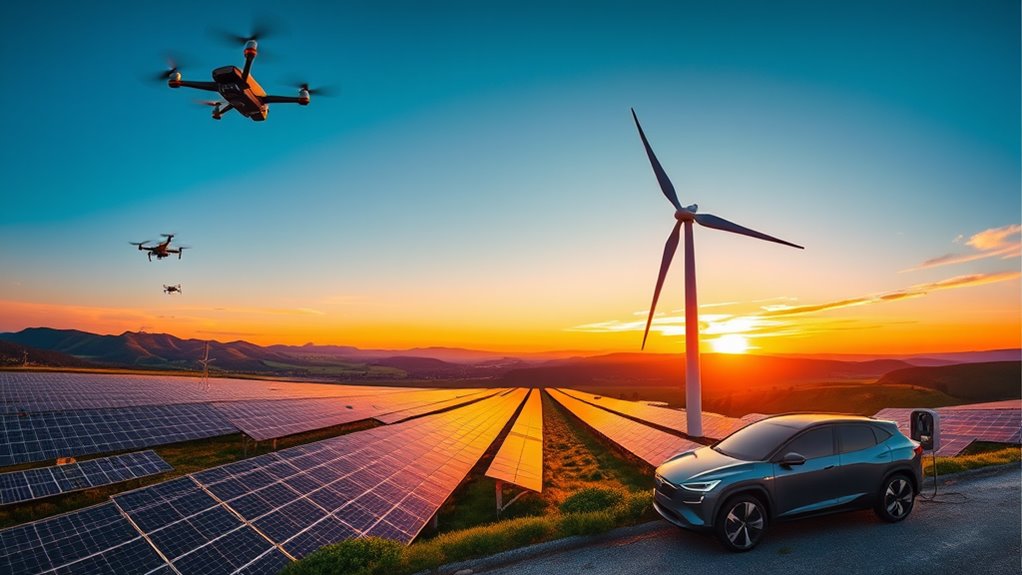
Technology is transforming the domain of renewable energy by enhancing efficiency and reducing costs. Innovations in solar, like bifacial cells and perovskite materials, greatly increase energy outputs as well as lowering production expenses. Wind energy benefits from smart turbines and advanced grid integration, optimizing performance and reliability. Moreover, electric vehicles and vehicle-to-grid technology allow for better energy distribution and stability. AI and data analytics are further streamlining energy management, making systems more responsive to demand. These advancements are shaping a more sustainable energy future, laying the groundwork for ongoing developments and opportunities in the sector.
Innovations in Solar Technology
As the demand for sustainable energy solutions grows, innovations in solar technology have emerged as a critical focal point in the quest for clean energy. The evolution of photovoltaic advancements has propelled solar efficiency to unprecedented levels, transforming the environment of renewable energy. Modern solar panels are designed with advanced materials and state-of-the-art manufacturing processes that greatly improve their energy conversion rates, allowing for greater energy capture even in suboptimal sunlight conditions.
One of the most notable developments in this field is the emergence of bifacial solar cells, which collect sunlight from both sides of the panel. This innovation increases energy output by as much as 30%, optimizing land use and making solar installations more economically viable. Moreover, the integration of smart technology into solar systems allows for real-time monitoring and optimization of energy production, ensuring maximum efficiency and minimal downtime.
In addition, research into perovskite solar cells has opened up new possibilities for the future of solar energy. These materials promise to lower production costs and increase efficiency beyond traditional silicon-based cells. As a result, the potential for widespread adoption of solar technology becomes more feasible, empowering consumers to take control of their energy needs.
Wind Energy Advancements
Recent advancements in wind energy technology are greatly enhancing the efficiency and effectiveness of wind energy generation. Smart turbine technology is leading the way by optimizing performance and reducing maintenance costs, whereas improved grid integration techniques are facilitating better energy distribution. Together, these innovations promise to bolster the role of wind energy in the global renewable environment.
Smart Turbine Technology
The emergence of smart turbine technology is revolutionizing the wind energy sector, improving efficiency and reliability in energy generation. By integrating advanced sensors and data analytics, these intelligent systems optimize turbine performance, greatly increasing turbine efficiency. Smart turbines can continuously monitor operational parameters and environmental conditions, enabling real-time adjustments to maximize energy output.
One of the most transformative aspects of smart turbine technology is its capacity for predictive maintenance. Rather than relying on routine inspections, operators can leverage data-driven insights to anticipate equipment failures before they occur. This proactive approach not only reduces downtime but also minimizes costly repairs, ensuring that turbines operate at peak efficiency throughout their lifespan.
Furthermore, the ability to collect and analyze vast amounts of operational data allows for continuous improvement in turbine design and functionality. As a result, energy providers can achieve greater reliability and sustainability in their operations, aligning with global energy demands. The integration of smart turbine technology is not merely an improvement; it represents a paradigm shift toward a more robust, efficient, and resilient wind energy environment, poised to meet the challenges of a swiftly evolving energy market.
Enhanced Grid Integration
With the increasing penetration of wind energy into the energy grid, improved grid integration has become a crucial focus for energy providers and policymakers alike. Improved grid integration is essential for maximizing the potential of wind energy during ensuring reliability and efficiency. Key strategies involve the implementation of demand response systems and microgrid development, which empower consumers and bolster energy resilience.
| Strategy | Description | Impact on Wind Integration |
|---|---|---|
| Demand Response | Adjusting consumer demand to match supply | Balances variability of wind energy |
| Microgrid Development | Localized energy systems with renewable sources | Increases energy independence |
| Advanced Forecasting | Utilizing AI for wind patterns | Improves grid management |
| Energy Storage Solutions | Batteries and other storage technologies | Stabilizes output from wind farms |
Energy Storage Solutions
Energy storage solutions are critical for enhancing the reliability and efficiency of renewable energy systems. Recent advancements in battery technology, coupled with innovative grid integration strategies, are paving the way for more effective energy management. Furthermore, ongoing efforts in cost reduction are making these technologies increasingly accessible, thereby accelerating the shift to a sustainable energy future.
Advancements in Battery Technology
Recent innovations in battery technology are revolutionizing energy storage solutions, paving the way for more efficient and sustainable use of renewable resources. The emergence of solid-state batteries marks a significant advancement, offering improved energy density, faster charging capabilities, and augmented safety compared to traditional lithium-ion batteries. These next-generation batteries utilize a solid electrolyte, which not only increases the lifespan but also mitigates the risks associated with liquid electrolytes.
Moreover, the growing emphasis on lithium recycling is transforming the lifecycle of battery materials, ensuring that valuable resources are reused and reducing environmental impact. This circular approach not only boosts sustainability but also secures a stable supply chain for future battery production.
| Technology Type | Key Advantages | Current Challenges |
|---|---|---|
| Solid State Batteries | Higher energy density, safety | Production scalability |
| Lithium Recycling | Resource conservation, sustainability | Cost-effectiveness |
| Traditional Lithium-Ion | Established technology, availability | Limited lifespan |
As the demand for potent and efficient energy storage solutions escalates, these advancements in battery technology will be pivotal in utilizing the full potential of renewable energy sources.
Grid Integration Strategies
The integration of advanced energy storage solutions into the electrical grid is becoming increasingly important as the reliance on renewable sources, such as solar and wind, grows. Energy storage systems, including batteries and pumped hydro storage, provide critical flexibility that improves grid resilience. By storing excess energy generated during peak production periods and releasing it during high demand, these solutions guarantee a stable supply, effectively mitigating the intermittency that characterizes renewable energy sources.
Moreover, implementing demand response strategies allows consumers to participate actively in energy management, further strengthening grid efficiency. When demand peaks, stored energy can be deployed swiftly, minimizing reliance on fossil fuels and reducing strain on the grid. This dynamic interaction not only improves reliability but additionally empowers users to take control of their energy consumption, leading to a more sustainable and economically viable system.
As technological advancements continue to evolve, optimizing energy storage for grid integration is paramount. The future of renewable energy hinges on these robust strategies, paving the way for a more resilient electrical grid that meets the demands of an increasingly energy-hungry world.
Cost Reduction Innovations
Innovations aimed at reducing costs in energy storage solutions are consistently emerging, greatly enhancing the economic viability of renewable energy systems. The integration of advanced technologies is revolutionizing energy storage, making it more accessible and efficient. Companies are focusing on developing cost-effective materials, such as new battery chemistries that utilize abundant resources like sodium and aluminum, which can considerably lower production costs.
Moreover, improvements in manufacturing efficiency are critical to this transformation. Automation and innovative production techniques allow for increased output as well as reducing labor costs and material waste. This paradigm shift not solely drives down the price of energy storage solutions but additionally accelerates the deployment of renewable energy systems on a global scale.
As the demand for reliable energy storage grows, these innovations position energy storage as a cornerstone of a sustainable energy future. By utilizing state-of-the-art technology and optimizing production processes, the renewable energy sector can achieve greater scalability and reliability. In the end, these advancements are empowering industries and consumers alike, encouraging a strong shift in the direction of a cleaner, more resilient energy environment. The future of energy storage is not just a technical evolution; it is a transformative force in the quest for sustainability.
Smart Grid Technologies
Smart grid technologies are revolutionizing the way electricity is generated, distributed, and consumed, integrating advanced digital communication tools to improve efficiency and reliability. By leveraging real-time data and automation, smart grids enable both utilities and consumers to optimize energy use, finally leading to a more sustainable energy environment.
One of the most significant advantages of smart grids is their ability to facilitate demand response programs, which dynamically adjust energy consumption based on supply conditions. Through these programs, consumers can voluntarily reduce or shift their energy usage during peak periods, ensuring grid stability and minimizing costs. This shift not only increases the operational flexibility of the grid but encourages users to engage actively in energy management.
Moreover, smart grid technologies enable the integration of decentralized energy resources, such as solar panels and wind turbines, into the existing infrastructure. This decentralization improves grid resilience by distributing electricity generation across various locations, reducing reliance on centralized plants and decreasing vulnerability to outages. As more consumers adopt renewable energy solutions, the smart grid framework becomes crucial for managing the intricacies associated with diverse energy sources.
Electric Vehicles and Renewable Energy
As the adoption of electric vehicles (EVs) accelerates, their synergy with renewable energy sources presents a transformative opportunity for the energy environment. This intersection not only mitigates carbon emissions but additionally improves energy efficiency through innovative technologies. The integration of EVs with renewable energy systems is revolutionizing how we think about energy consumption, storage, and distribution.
A sturdy charging infrastructure is crucial to realize the full potential of this synergy. By developing widespread charging networks powered by renewable sources, we can guarantee that EVs operate on clean energy, reducing reliance on fossil fuels. Moreover, the vehicle-to-grid (V2G) technology allows EVs to serve as mobile energy storage units, providing a dynamic approach to grid management.
Consider the significant implications:
- Peak Load Management: EVs can discharge energy back into the grid during peak demand, stabilizing energy supply.
- Improved Energy Storage: With thousands of EVs on the road, we create a vast reservoir of stored energy.
- Incentivized Green Energy Use: Charging during off-peak hours when renewable generation is abundant promotes sustainability.
- Reduced Infrastructure Strain: A decentralized energy model lessens the load on traditional energy plants, improving resilience.
The future of energy lies in embracing this synergy, where electric vehicles not only transport us but additionally empower our energy systems, creating a sustainable and sturdy infrastructure for generations to come.
AI and Data Analytics in Energy
How can artificial intelligence (AI) and data analytics reshape the energy sector? The integration of AI and advanced data analytics offers unprecedented opportunities to optimize energy production, consumption, and management. By utilizing vast amounts of data, energy companies can implement predictive maintenance strategies that considerably reduce downtime and operational costs. Predictive maintenance utilizes machine learning algorithms to analyze equipment performance, anticipating potential failures before they occur. This proactive approach not only improves reliability but also extends the lifespan of critical assets.
Furthermore, AI-driven energy forecasting capabilities empower companies to make informed decisions regarding energy generation and distribution. By analyzing historical usage patterns and external factors such as weather conditions, AI models can accurately predict energy demand, enabling firms to adjust their output dynamically. This level of precision not only minimizes waste but also maximizes efficiency, aligning with the overarching goals of sustainability.
As energy systems evolve to incorporate more renewable sources, the need for sophisticated analytics becomes even more pronounced. AI can seamlessly manage the variability associated with renewables like solar and wind, optimizing grid operations and ensuring stability. By utilizing these technologies, energy providers can achieve a competitive edge, driving down costs while improving service reliability.
Frequently Asked Questions
What Are the Costs Associated With Transitioning to Renewable Energy Sources?
Shifting to renewable energy sources involves significant costs that must be thoroughly evaluated through cost analysis. Initial investment hurdles, such as the procurement of technology, infrastructure development, and workforce training, can pose substantial financial challenges. Nevertheless, these upfront expenses can be mitigated over time through energy savings and government incentives. In the end, a thorough grasp of these costs is crucial for stakeholders aiming to capitalize on the long-term benefits of sustainable energy solutions.
How Can Individuals Contribute to Renewable Energy Initiatives?
Individuals can act as the architects of change in renewable energy, laying the foundation for a sustainable future. By embracing personal energy solutions, such as solar panels or energy-efficient appliances, one can minimize their carbon footprint. Furthermore, engaging in community initiatives, like local clean energy projects or advocacy for policy reforms, empowers individuals to collectively drive progress. Together, these actions create a robust framework for a greener, more resilient energy environment.
What Role Do Government Policies Play in Renewable Energy Development?
Government policies play a critical role in renewable energy development by establishing robust regulatory frameworks and providing policy incentives that encourage investment. These frameworks create a stable environment for businesses, ensuring compliance and facilitating innovation. Additionally, targeted incentives, such as tax credits and grants, stimulate market growth and nurture competition. By prioritizing renewable energy through strategic policies, governments can effectively drive the shift towards sustainable energy sources concurrently promoting economic growth and energy security.
How Does Renewable Energy Impact Job Creation in the Economy?
Renewable energy greatly impacts job creation and economic growth by generating diverse job opportunities across various sectors. The shift to renewable sources stimulates demand for skilled labor in manufacturing, installation, and maintenance, thereby promoting workforce development. Furthermore, investment in green technologies improves local economies, leading to increased employment rates and sustainable business practices. As nations prioritize renewable energy, the sector's expansion will be essential in driving robust economic performance and resilience in the labor market.
What Challenges Do Renewable Energy Technologies Face in Rural Areas?
"Where there's a will, there's a way." Nevertheless, renewable energy technologies in rural areas face significant challenges, primarily in grid integration and resource availability. Limited infrastructure can hinder effective connection to the main energy grid, resulting in inefficiencies. Moreover, the variability of renewable resources, such as solar and wind, can pose difficulties in ensuring a consistent energy supply. Addressing these challenges is essential for the successful implementation of renewable energy solutions in rural communities.
