
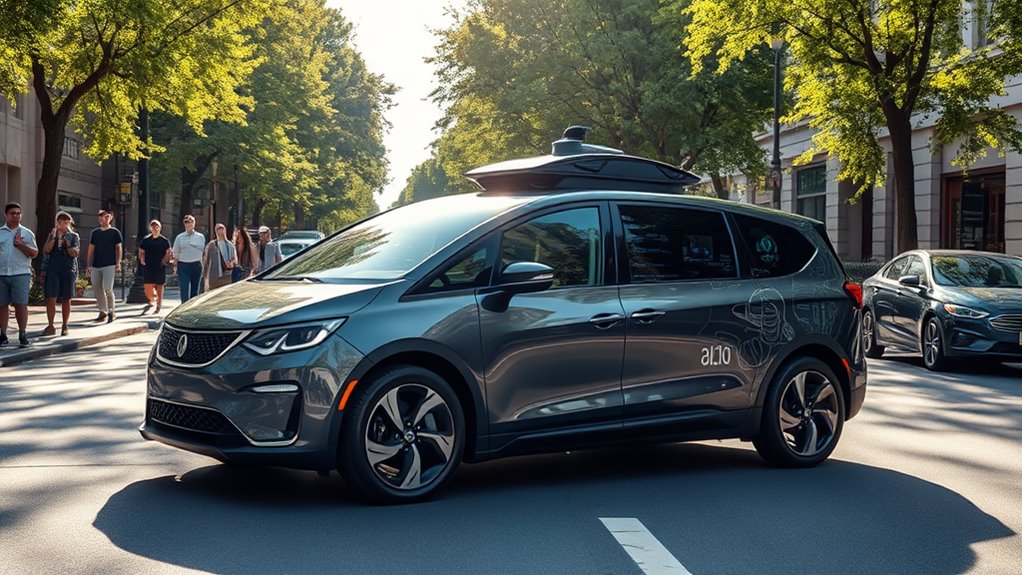
Self-driving cars are reshaping transportation by driving changes in urban planning and traffic patterns. They encourage repurposing parking spaces for public use and support mixed-use developments, enhancing community interaction. Furthermore, autonomous vehicles optimize traffic flow and improve safety through advanced algorithms, potentially reducing accidents. They additionally promote accessibility for underserved populations, ensuring equitable mobility options. Environmentally, they can lower emissions if integrated with electric energy sources, contributing to better air quality. As the terrain of transportation evolves, comprehending these impacts can illuminate the future possibilities of this transformative technology.
Impact on Urban Planning
The advent of self-driving cars promises to transform urban planning, presenting a paradigm shift in how cities are designed and organized. As autonomous vehicles become ubiquitous, the implications for zoning regulations and the utilization of public spaces are profound. Traditional urban models, heavily reliant on personal vehicle ownership and the associated infrastructure, will require a reevaluation.
Self-driving cars necessitate a departure from conventional zoning regulations that prioritize parking spaces and roadways. With reduced need for parking facilities, urban planners can repurpose these areas to create lively public spaces that encourage community interaction and improve quality of life. Parks, plazas, and pedestrian pathways can flourish, encouraging social engagement and promoting healthier lifestyles.
Furthermore, the integration of self-driving technology into urban environments challenges the status quo of spatial organization. Cities can embrace mixed-use developments, where residential, commercial, and recreational spaces coexist harmoniously, unencumbered by the limitations of car-centric designs. This reimagining of urban layouts not merely supports economic vitality but additionally improves accessibility for all citizens.
In this new paradigm, public spaces evolve into dynamic hubs of activity, enriched by the seamless movement of autonomous vehicles. As cities adapt to these changes, the potential for sustainable growth and innovation becomes apparent. Finally, the strategic implementation of self-driving cars will empower urban planners to create more efficient, inclusive, and aesthetically pleasing environments, aligning with the aspirations of a formidable, future-focused society.
Changes in Traffic Patterns
As self-driving cars increasingly populate our roads, significant changes in traffic patterns are anticipated. The integration of autonomous vehicles promises to transform how we navigate our urban environments, with profound implications for traffic congestion and route optimization. Improved algorithms and real-time data processing capabilities enable these vehicles to communicate with one another, facilitating smoother traffic flow and reducing bottlenecks.
The potential for self-driving cars to adapt dynamically to real-time conditions empowers them to identify the most efficient routes. This capability minimizes unnecessary detours and optimizes travel times, in the end alleviating the burden of traffic congestion. Additionally, as these vehicles become more prevalent, traditional patterns of vehicle ownership may shift, resulting in fewer cars on the road, further mitigating traffic-related issues.
Below is a table summarizing key changes in traffic patterns as a result of self-driving cars:
| Change | Description |
|---|---|
| Traffic Congestion | Decrease in congestion through optimized vehicle flow |
| Route Optimization | Vehicles selecting the most efficient paths in real-time |
| Car Ownership Trends | Shift towards shared mobility solutions |
| Traffic Signal Efficiency | Improved synchronization of signals with vehicle data |
| Parking Space Utilization | Reduced need for parking as autonomous vehicles drop-off |
Safety and Risk Management
Steering through the intricacies of self-driving technology necessitates a robust approach to safety and risk management. As the automotive environment shifts to embrace autonomous vehicles, the imperative to address collision prediction and liability concerns becomes paramount. The integration of advanced algorithms and machine learning capabilities empowers self-driving cars to analyze vast amounts of data in real-time, enhancing their ability to foresee potential hazards. This predictive prowess not only improves operational safety but also mitigates risks associated with human error, a leading cause of traffic incidents.
However, the shift to autonomy is fraught with challenges. Stakeholders must grapple with liability concerns that arise when accidents occur involving autonomous vehicles. The complexity of attributing fault—whether to the manufacturer, software developer, or vehicle owner—complicates traditional legal frameworks. Clear and thorough risk management strategies will be crucial to navigate these murky waters and build public trust in self-driving technologies.
In addition, proactive measures must be implemented to guarantee that safety standards are not just met but exceeded. Continuous monitoring and iterative testing of self-driving systems can greatly reduce the likelihood of malfunctions or misjudgments on the road. By prioritizing safety and developing sophisticated risk management protocols, the industry can establish a foundation for autonomous vehicles that not only meets regulatory requirements but also instills confidence among users. In this evolving paradigm, the balance between innovation and safety will dictate the future trajectory of transportation.
Accessibility and Inclusivity
Self-driving technology holds the potential to transform accessibility and inclusivity in transportation, particularly for individuals with disabilities and those living in underserved communities. By integrating adaptive features into autonomous vehicles, we can create a paradigm shift in how we approach public transportation. This innovation is not merely a technological advancement; it represents a crucial step toward an equitable society where mobility is a right, not a privilege.
Consider the following improvements that self-driving cars can offer:
- Voice-activated controls: Empowering users to command their travel with ease and confidence.
- Wheelchair accessibility: Ensuring seamless entry and exit for individuals with mobility challenges.
- Real-time navigation assistance: Providing customized routes that accommodate diverse needs, eliminating barriers to access.
- Integrated support systems: Offering personalized assistance for those requiring additional help, ensuring no one is left behind.
These advancements have the potential to change public transportation, making it more inclusive and efficient. Envision a future where individuals with disabilities can travel independently, without reliance on others, thereby promoting autonomy and dignity. Moreover, self-driving technology can bridge the gap for residents in underserved areas, providing reliable transportation options that were previously unattainable. By prioritizing accessibility and inclusivity in the design of autonomous vehicles, we stand on the threshold of a transformative era in mobility that empowers all citizens, regardless of their circumstances. The time for action is now; let us utilize this technology to create a more inclusive world.
Environmental Implications
The environmental implications of self-driving cars are significant and multifaceted, presenting both opportunities and challenges in the quest for sustainable transportation. As autonomous vehicles (AVs) increasingly integrate into our roads, their potential to reshape urban environments and reduce carbon emissions cannot be understated. Improved energy efficiency is a hallmark of these vehicles, as they are designed to optimize driving patterns, minimize stop-and-go traffic, and lower energy consumption overall.
However, the shift to self-driving technology also poses potential risks. The expected rise in vehicle ownership could lead to an increase in overall mileage driven, resulting in heightened carbon emissions if these cars are fueled by fossil fuels. As a result, the environmental impact of AVs is contingent upon the energy sources that energize them. Moving to electric and renewable energy sources is vital to utilizing the full environmental potential of self-driving technology.
Moreover, the increased efficiency of autonomous vehicles can facilitate smarter urban planning and public transportation integration, thereby reducing reliance on personal cars. This shift can lead to lower traffic congestion and improved air quality, demonstrating that when managed effectively, self-driving cars can be a catalyst for a more sustainable future.
Frequently Asked Questions
How Will Self-Driving Cars Affect Public Transportation Systems?
The advent of autonomous shuttles is poised to greatly impact public transit systems. By integrating these vehicles into existing frameworks, cities can improve efficiency, reduce congestion, and provide on-demand services that cater to diverse populations. This evolution may lead to a reallocation of resources, allowing traditional public transit to focus on high-density routes as autonomous shuttles serve lower-demand areas. In the end, this transformation could redefine urban mobility and optimize overall transportation networks.
What Are the Insurance Implications of Self-Driving Vehicles?
"An ounce of prevention is worth a pound of cure." As self-driving vehicles become prevalent, the insurance environment must adapt considerably. Key implications include redefining liability coverage and determining accident responsibility. Traditional models, which hold drivers accountable, may shift in the direction of manufacturers or software developers, fundamentally altering risk assessments and insurance premiums. Insurers will need to develop innovative policies that reflect these changes, ensuring equitable protection for all stakeholders involved in autonomous vehicle use.
How Do Self-Driving Cars Communicate With Each Other?
Self-driving cars utilize vehicle-to-vehicle communication to improve safety and efficiency on the road. This technology enables vehicles to exchange real-time data regarding speed, direction, and potential hazards. Coupled with advanced sensor technology, such as radar and LIDAR, these vehicles can detect their surroundings and anticipate actions taken by neighboring cars. This synergy not just mitigates collisions but additionally optimizes traffic flow, in the end redefining the dynamics of modern transportation systems.
What Legal Challenges Do Self-Driving Cars Face?
Self-driving cars encounter significant legal challenges, primarily revolving around liability issues and the establishment of robust regulatory frameworks. Determining fault in accidents involving autonomous vehicles complicates traditional liability models, raising questions about manufacturer responsibility versus operator negligence. Additionally, the lack of standardized regulations across jurisdictions hinders the deployment and integration of these technologies. Addressing these legal hurdles is crucial for promoting public trust and facilitating the widespread adoption of autonomous transportation solutions.
How Will Job Markets Be Impacted by Autonomous Vehicles?
The advent of autonomous vehicles is poised to considerably impact job markets, primarily through job displacement in traditional driving roles. Nevertheless, this technological evolution likewise presents opportunities for the emergence of new careers, particularly in fields such as vehicle maintenance, programming, and data analysis. As industries adapt, a proactive approach to workforce development will be crucial, ensuring that displaced workers are equipped with the skills necessary to thrive in this evolving environment.
