
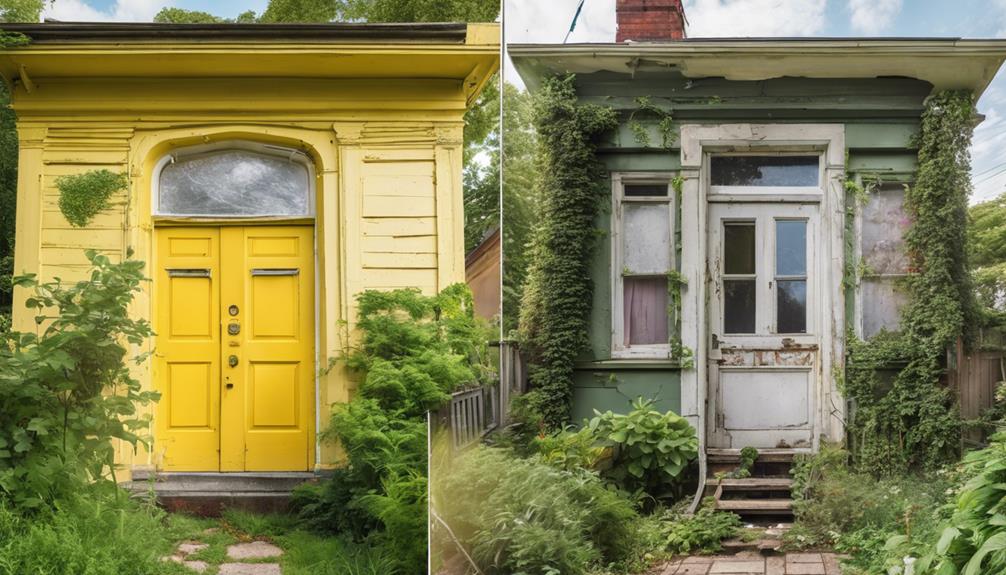
When buying a fixer-upper, they prioritize setting realistic renovation goals and inspecting the property before investing. Getting pre-approved for financing is also vital to avoid costly surprises. They research neighborhood trends to make sure the area is on the upswing. Meanwhile, they avoid falling for cosmetic fixes and ignore necessary permits at their own peril. They plan for living arrangements during renovation and factor in resale value to maximize returns. And if the project becomes too challenging, they know when to walk away. As they navigate the complex world of fixer-uppers, they'll discover more essential dos and don'ts that can make or break their investment.
Set Realistic Renovation Goals
When buying a fixer-upper, they typically set themselves up for success by first defining a realistic renovation scope and timeline. This means ditching the Dream Timeline, where everything magically comes together in a month, and embracing the essential realities of construction delays and permit issues. It's vital to have a clear understanding of what needs to be done, how long it'll take, and how much it'll cost.
Budget Realities are an important part of this process. It's easy to get swept up in the excitement of renovation and start imagining lavish kitchens and marble countertops. But, as the saying goes, 'you gotta know when to hold 'em and know when to fold 'em.' Be honest about what you can afford and prioritize accordingly. Remember, it's better to have a solid, functional kitchen than a showstopper that breaks the bank.
A realistic renovation plan also means being flexible. Things won't always go as planned, and that's okay. Having a clear plan in place will help you navigate the inevitable setbacks and keep your project on track. So, take a deep breath, roll up your sleeves, and get ready to turn that fixer-upper into your dream home. With a solid plan and a dose of reality, you'll be sipping coffee in your newly renovated kitchen in no time.
Inspect Before You Invest
Inspect Before You Invest
Frequently, buyers of fixer-uppers get caught up in the excitement of renovation and overlook the essential step of inspecting the property before investing. They envision the perfect kitchen, the dreamy master bedroom, and the Instagram-worthy backyard, but they forget to look beyond the surface. Don't let the thrill of renovation cloud your judgment – inspecting the property is vital to avoiding costly surprises down the line.
A thorough inspection can reveal property flaws that could make or break your renovation budget. Think structural issues, outdated electrical systems, and hidden defects like asbestos or termite damage. These are not things you want to discover after you've signed on the dotted line. A professional inspection can give you a clear picture of the property's condition, helping you negotiate the price or even walk away if necessary.
Get Pre-Approved for Financing
Getting pre-approved for financing is an essential step in the fixer-upper buying process, as it gives buyers a clear understanding of their budget and lending options. Think of it as getting a golden ticket to the fixer-upper party – without it, you're stuck outside, wondering what could've been. So, before you start swooning over that charming, yet dilapidated, Victorian, get your finances in check.
First, check those credit scores – a good score can mean the difference between a decent interest rate and a whopping one. Don't worry, it's not as painful as a trip to the dentist, and it's definitely worth it in the long run. Next, research your loan options. Are you a fan of fixed rates or do you prefer the flexibility of an adjustable rate? Do you qualify for an FHA loan or a VA loan? Knowing your options will help you make an informed decision and avoid any financial surprises down the line.
Getting pre-approved also gives you an edge in the competitive fixer-upper market. Sellers are more likely to take you seriously if you can prove you've got the funds to back up your offer. Plus, it'll save you time and energy in the long run – no need to waste your time on a property that's out of your budget. So, take the time to get pre-approved, and you'll be well on your way to snagging that perfect fixer-upper.
Research Neighborhood Trends
She scours online real estate platforms, talks to local agents, and drives through neighborhoods to get a pulse on the local market, uncovering trends that can make or break her fixer-upper investment. After all, a diamond in the rough is only valuable if it's surrounded by other gems, not rough-around-the-edges neighbors. She's on the hunt for signs of a thriving local economy, like new businesses popping up, road construction, or a bustling downtown area. A strong economy usually means a strong housing market, which can increase her property's value over time.
Next, she zooms in on school zones. Even if she doesn't have kids, she knows that good schools are a major selling point for future buyers. She researches the local schools' ratings, talking to parents and teachers to get the inside scoop. A fixer-upper in a great school district can be a goldmine, especially if she's willing to put in the elbow grease to make it shine. On the flip side, a bad school district can be a major turnoff, even if the house itself is a gem. By doing her due diligence, she can avoid a money pit and find a fixer-upper that's truly a diamond in the making. With her research in hand, she's ready to make an informed offer and start renovating her way to a profitable flip.
Don't Fall for Cosmetic Fixes
When buying a fixer-upper, it's easy to get caught up in the excitement of a property's potential. However, savvy buyers know that a fresh coat of paint and some new fixtures can't mask underlying issues. They make sure to look beyond the surface-level renovations and focus on the home's functionality to avoid costly surprises down the road.
Focus on Functionality
By concentrating on the underlying systems and structures, buyers can avoid getting seduced by a property's superficial charm and focus on the essential repairs that will make it a functional home. It's easy to get distracted by a property's 'wow' factor, but remember, a fancy chandelier won't keep you warm on a cold winter night if the heating system is shot.
When evaluating a fixer-upper, it’s important to assess the functional layout and space efficiency of the property. Can you envision a logical flow from room to room? Are the rooms proportional to your needs? A functional layout is key to a comfortable living space, so don’t sacrifice it for a trendy feature wall. Additionally, consider the property’s space efficiency – can you fit all your essentials without feeling cramped or cluttered? By prioritizing these fundamental aspects, buyers can create a home that’s both beautiful and functional. So, take off those rose-tinted glasses and get real about what makes a house a home. Beyond layout and space efficiency, home buying factors to consider include the property’s structural integrity and potential renovation costs. A thorough inspection can reveal hidden issues that may impact your budget and timeline. Balancing aesthetic aspirations with practical necessities ensures a wise investment in a home that truly suits your lifestyle.
Look Beyond the Facade
Beyond the fresh coat of paint and stylish decorations, buyers must inspect the underlying structure and systems to uncover potential issues. It's easy to get caught up in the excitement of a fixer-upper's potential, but don't let the superficial charm blind you to the reality. A beautiful facade can hide some serious design flaws, and it's your job to dig deeper.
| Facade Fix | Hidden Potential (or Problem) |
|---|---|
| Freshly painted walls | Water damage or structural issues |
| New kitchen appliances | Outdated electrical system |
| Trendy light fixtures | Insufficient natural light |
| Refinished hardwood floors | Termite damage or uneven foundation |
Don't fall for the cosmetic fixes that are meant to distract you from the real issues. Instead, look beyond the surface level and inspect the home's bones. Check for signs of water damage, structural integrity, and outdated systems. A little detective work now can save you from a world of headaches (and financial woes) down the line. Remember, a fixer-upper's hidden potential is only as good as the foundation it's built on.
Check for Structural Damage
How does the property's foundation look, and are there any signs of sagging or uneven floors that could indicate structural damage? It's time to get down to business and inspect the property's underlying structure. After all, you don't want to end up with a money pit on your hands. Start by checking for foundation cracks, which can be a major red flag. If you notice any, it's important to determine their severity and whether they're mere cosmetic issues or signs of a more significant problem.
Next, take a closer look at the property's load-bearing walls. Are they sturdy and intact, or do you notice any signs of weakness or damage? Remember, these walls are literally holding the property together, so it's vital to make sure they're in good condition. Take note of any cracks, water damage, or signs of rot, as these can be indicative of more significant issues.
Don't be afraid to get a little dirty and crawl into tight spaces to get a better look. It's better to be thorough now than to discover costly problems down the line. And trust us, you don't want to be stuck with a repair bill that's more expensive than the property itself. By taking the time to inspect the property's structure, you'll be better equipped to make an informed decision and avoid any potential pitfalls. So, get out your flashlight and let's get digging (not literally, please)!
Consider Hiring a Contractor
When contemplating a fixer-upper, it's essential to determine the extent of the repairs needed. A contractor can help assess the damage, prioritize what needs to be done, and provide a realistic estimate for the renovations. By bringing in a professional, buyers can get a clearer picture of what they're getting themselves into and budget accordingly.
Assessing the Damage
They walk into the fixer-upper, clipboard in hand, prepared to uncover the hidden problems lurking behind the peeling paint and creaky floors. As they begin their assessment, they're not looking for cosmetic issues – they're on the hunt for hidden defects that could break the bank (or their spirit). A vital examination of the property is essential, and it's important to leave no stone unturned. From inspecting the foundation to scrutinizing the electrical system, every detail matters. A damage report will help identify potential issues, from leaky faucets to structural damage. Don't be afraid to get a little messy – crawl through attics, venture into crawl spaces, and peek behind walls. The more information gathered, the better equipped they'll be to negotiate the price or plan for renovations. And remember, it's always better to be safe than sorry – uncovering hidden defects now can save them from a world of headaches (and expenses) down the line.
Prioritizing Repairs Needed
With a challenging damage report in hand, it's time to tackle the intimidating task of prioritizing repairs, a process that may require enlisting the expertise of a contractor to guarantee a clear understanding of what needs to be done first. After all, you don't want to waste time and money on cosmetic fixes when there are critical systems that need attention. Think plumbing, electrical, and HVAC – the hidden dangers that can cause harm or even lead to a costly rebuild.
Here's a breakdown of what to prioritize:
| Repairs | Urgency Level | Why It Matters |
|---|---|---|
| Fixing a leaky roof | High | Water damage and structural issues |
| Replacing faulty wiring | High | Fire hazards and electrical shocks |
| Repairing a cracked foundation | Medium | Structural integrity and future costs |
Budgeting for Renovations
Having identified the necessary repairs, homeowners must now allocate sufficient funds to tackle these projects, a task that often requires the guidance of a seasoned contractor to create a realistic budget and timeline. It's time to get down to business and crunch some numbers. A good contractor will help homeowners prioritize expenses, estimate costs, and identify potential cost-savers. But even with the best planning, unexpected expenses can arise, which is where contingency planning comes in. It's essential to set aside a portion of the budget for emergency funding, just in case. Think of it as a rainy day fund for renovations. Aim to save 10-20% of the total budget for contingencies, and you'll be better prepared to tackle those pesky surprises. By working with a contractor and building in some flexibility, homeowners can avoid financial stress and make sure their fixer-upper becomes the dream home they envisioned. Remember, it's always better to be over-prepared than stuck with a half-finished renovation and a drained bank account.
Budget for Unexpected Costs
Renovators often underestimate the financial impact of unexpected expenses, which can quickly drain a fixer-upper's budget and leave owners scrambling to cover surprise costs. It's like that old adage: "Expect the best, but plan for the worst." Contingency planning is key to avoiding cost overruns that can blow your budget to smithereens. Think of it as an insurance policy for your wallet.
When creating your budget, pad it with a 10-20% buffer for unexpected expenses. This will give you some wiggle room when things don't go according to plan – and let's face it, they often don't. It's better to be safe than sorry, and having a cushion will reduce the stress and financial strain that comes with surprise costs.
Don't Ignore Necessary Permits
They secure the necessary permits to avoid costly rework, fines, and even project shutdowns, ensuring their fixer-upper renovation stays on track. It's not the most vital part of the process, but trust us, it's worth the hassle. Think of permits as the ultimate party poopers – they might put a damper on your renovation excitement, but they're there to keep you safe and compliant.
The permit process can be a labyrinth, but it's essential for code compliance. Without the proper permits, you risk getting slapped with fines, or worse, having to tear out finished work because it doesn't meet code. Ouch! That's like having to redo a puzzle you thought you finished – frustrating and time-consuming.
Don't be that homeowner who tries to sneak in some DIY electrical work without a permit. Newsflash: the authorities will find out, and you'll be facing some serious consequences. Instead, take the time to get the necessary permits, and rest easy knowing your renovation is up to code. It might add some extra time and cost to your project, but it's a small price to pay for peace of mind. So, don't ignore those permits – they're your ticket to a successful, stress-free renovation.
Plan for Living Arrangements
When buying a fixer-upper, homeowners shouldn't overlook the importance of planning for living arrangements during the renovation process. They'll need to figure out where they'll live while the work is being done, which can be a significant challenge. By considering temporary housing options, rent-back agreements, and staying on-site, they can minimize disruptions and make the experience less stressful.
Temporary Housing Options
Buying a fixer-upper often means displaced living arrangements, so identifying temporary housing options becomes an essential part of the planning process. You'll want to think beyond the typical Hotel Alternatives, like the Holiday Inn or Marriott, and explore more creative Rental Options.
Here are some temporary housing options worth exploring:
- Airbnb apartments or houses that can be rented by the month
- Local vacation rentals that offer more amenities than a hotel room
- Friend or family member's spare bedroom or guest house (just don't overstay your welcome!)
- A temporary rental property, like a furnished apartment or house
- Even an RV or trailer, if you're feeling adventurous!
Rent-Back Agreements
Essentially, after securing temporary housing, homeowners can negotiate a rent-back agreement, which allows them to remain in their current home for a short period after closing, thereby providing a smoother move-out process. This agreement can be a win-win for both buyers and sellers, as it gives the seller more time to move out while also giving the buyer some wiggle room to finalize their own moving plans. Basically, it's like a 'get out of jail free' card, minus the jail part (and the card). Sellers can enjoy some extra time to sort out their moving logistics, and buyers can avoid the stress of having to rush into their new fixer-upper. One of the seller benefits is that they can use the rent-back agreement to their advantage by negotiating a longer lease period or more favorable terms. Lease options can also be explored, allowing sellers to rent back their property for an extended period, giving them more time to find their next dream home.
Staying On-Site
Their fixer-upper dreams may come with a dose of reality: where will they live during the renovation process? For some, on-site living is the only way to go, but it's essential to plan for the logistics. Before making the decision, consider the following:
- Will you have access to utility hookups, or will you be roughing it like a pioneer?
- Can you tolerate the sound of power tools at 7 am, or do you need a quieter space to function?
- Are you prepared to navigate a maze of construction debris to get to the kitchen?
- Will you have a functional bathroom, or will it be a "surprise" every time you need to use it?
- Can you handle the constant dust and dirt that comes with renovation?
On-site living can be challenging, but with the right mindset and preparation, it can also be an adventure. Just remember to prioritize your sanity and plan for the unexpected. With a little creativity and flexibility, you can survive (even thrive!) during the renovation process.
Factor in Resale Value
Most fixer-upper buyers overlook that they're not just acquiring a home to live in, but also an investment that should appreciate in value over time. It's crucial to factor in resale value when purchasing a fixer-upper, or you might end up stuck with a money pit that's hard to sell.
To determine the potential resale value, conduct a thorough market analysis. Research the neighborhood, local economy, and recent sales of similar properties. Take into account the demographics of future buyers and what they'll be looking for in a home. Will they desire a backyard for kids or a home office for remote work?
Here's a breakdown of what to take into account:
| Feature | Resale Value Impact | Future Buyer Priorities |
|---|---|---|
| Location | High | Commute time, schools, and safety |
| Number of bedrooms | Medium | Space for growing families |
| Outdoor spaces | Low-Medium | Entertainment and relaxation |
| Energy efficiency | Medium-High | Cost savings and eco-friendliness |
| Modern amenities | High | Convenience and luxury |
Know When to Walk Away
When dealing with a fixer-upper, it's important to know when to cut your losses and walk away from a potential money pit that's beyond repair or not worth the investment. It's easy to get caught up in the excitement of renovation, but it's essential to stay level-headed and recognize the deal breakers. Emotional attachment can be a major obstacle, but it's vital to separate your feelings from the facts.
Here are some red flags that should signal it's time to walk away:
- Foundation issues: If the house is sinking, shifting, or has significant structural damage, it's time to run for the hills.
- Major water damage: Waterlogged walls, ceilings, or floors can lead to mold, rot, and a whole lot of trouble.
- Electrical or plumbing nightmares: If the wiring is outdated, or the pipes are corroded, it's a recipe for disaster.
- Pest infestations: Termites, rodents, or other unwanted critters can cause irreparable damage and drive you crazy.
- Zoning or permitting issues: If the property has legal issues or zoning restrictions, it can be a headache you don't need.
Frequently Asked Questions
Can I DIY Electrical and Plumbing Work to Save Money?
"Abraham Lincoln wouldn't dare DIY electrical and plumbing work, even if he wanted to save a pretty penny! When it comes to fixing up a new pad, safety concerns should be top priority. Unless she's a licensed pro, she shouldn't be messing with wires and pipes. It's not worth the risk of electrocution or flooding! Make sure to get local permits and hire a certified expert to avoid a shockingly bad situation."
How Do I Determine the Property's Potential Resale Value?
She wants to know how to determine the property's potential resale value – basically, will she make a profit or cry herself to sleep at night. To figure this out, she'll need to research neighborhood trends, like what's hot and what's not, and snoop around comparable sales in the area. It's like being a real estate detective, minus the cool hat and trench coat. By doing her homework, she'll get a sense of the property's resale value and avoid making a financial faux pas.
Are There Any Tax Benefits to Buying a Fixer-Upper?
"She's not just a pretty face, folks! A fixer-upper can also be a savvy investment, thanks to some sweet tax benefits. She can snag tax credits for energy-efficient upgrades and renovation deductions for those fancy new fixtures. It's like the government is saying, 'Hey, thanks for fixing up this old girl! Here's a little something to help you out.'"
Can I Renovate a House With a History of Termite Damage?
She can renovate a house with a history of termite damage, but it's important to tackle the issue head-on. A thorough termite treatment is necessary to prevent further destruction. Additionally, it's essential to assess the structural integrity of the property to make sure it's safe to renovate. If the damage is extensive, she might need to replace entire sections of the house. But with the right expertise and caution, she can transform the house into a stunning home, sans unwanted critters.
Do I Need to Hire an Architect for the Renovation Project?
She's wondering if she needs to hire an architect for the renovation project. Well, it depends on her design vision and budget constraints. If she's got a clear idea of what she wants and it's a minor facelift, she might be okay with a contractor. But if she's dreaming of a major overhaul or needs help managing permits, an architect's expertise will be worth every penny – and headache saved!
