
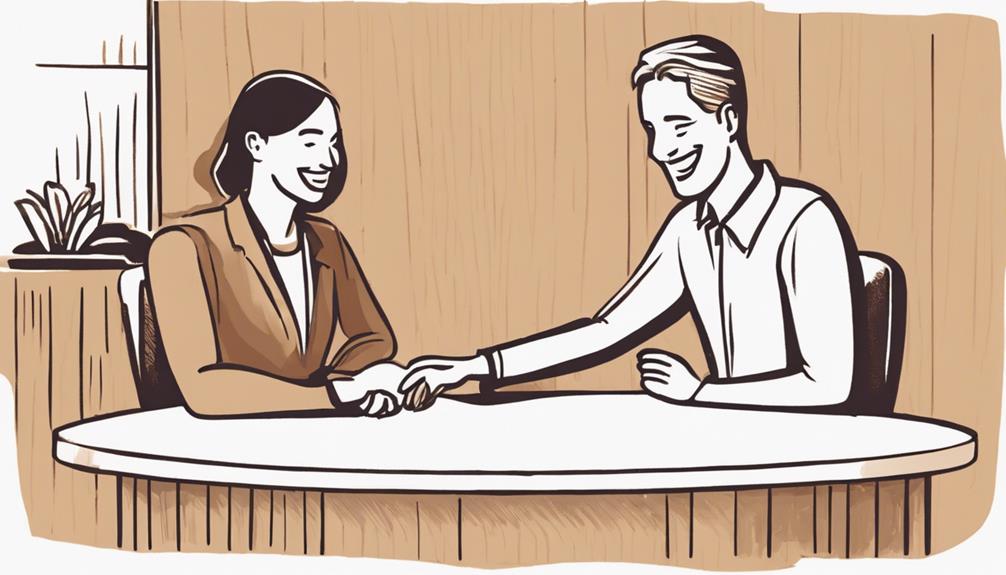
A genuine smile is the hallmark of a skilled negotiator, as it has the power to disarm even the toughest adversaries, establish trust, and set the tone for a collaborative and constructive conversation. It radiates warmth and approachability, conveying a willingness to listen and fostering a sense of common ground. By combining a smile with positive body language, such as open posture and mirroring techniques, negotiators can build rapport and create a bond with their counterparts. As they navigate the negotiation process, they'll find that a calm demeanor and confidence can defuse tension and lead to mutually beneficial outcomes, and by doing so, they'll uncover the secrets to turning adversaries into allies.
The Power of Positive Body Language
When negotiating, a person's body language can speak louder than their words, and adopting positive nonverbal cues can greatly increase their chances of success. It's not just about what you say, but how you say it – and even more importantly, how you carry yourself while saying it. An open posture, where you stand or sit up straight with your shoulders back and chest out, can exude confidence and authority. It's like wearing a superhero cape, minus the awkwardness of actually wearing a cape.
Mirroring techniques are another powerful tool in the negotiation toolbox. By subtly mimicking the other person's body language, you can create a sense of rapport and build a connection. It's not about being a copycat, but about showing the other person that you're on the same wavelength. For example, if they cross their legs, you cross your legs too. If they lean forward, you lean forward as well. It's a clever way to build a bond without even realizing you're doing it.
Building Trust With a Genuine Smile
A genuine smile can disarm even the toughest of negotiators, instantly building trust and creating a sense of warmth that can diffuse tension and foster a collaborative atmosphere. It's not about flashing a cheesy, insincere grin, but rather about radiating a genuine, warm, and welcoming energy that puts others at ease. When we smile, our facial cues convey friendliness, approachability, and a willingness to listen – all essential ingredients for building trust.
A genuine smile can create an authentic connection with the other party, making them more receptive to our message and more likely to collaborate. It's a subtle yet powerful way to establish common ground and break down barriers. By smiling, we signal that we're open to finding a mutually beneficial solution, rather than trying to "win" the negotiation.
Defusing Tension With a Calm Demeanor
She carries her calm demeanor into the negotiation room, a soothing balm that helps to neutralize the tension that can quickly escalate into conflict. This is not to say that she's oblivious to the underlying emotions at play; rather, she's acutely aware of them, thanks to her high emotional intelligence. By remaining calm, she creates a safe space for the other party to express themselves, reducing the likelihood of defensiveness and increasing the chances of a constructive conversation.
| Tension Triggers | Calm Responses |
|---|---|
| Raised voices | A gentle, measured tone |
| Aggressive body language | Open, relaxed postures |
| Confrontational language | Empathetic, active listening |
When faced with a tense situation, she doesn't take the bait. Instead, she acknowledges the other party's concerns, validating their emotions without necessarily agreeing with their position. This empathetic approach helps to diffuse tension, creating a more conducive environment for conflict resolution. By staying calm and composed, she's able to think more clearly, respond more thoughtfully, and ultimately, negotiate more effectively. It's a powerful combination that has earned her a reputation as a master negotiator – one who can turn even the most volatile situations into opportunities for growth and mutual benefit.
Confidence Is Key to Success
With her calm demeanor firmly in place, confidence radiates from her every word and action, a potent catalyst that sets the tone for a successful negotiation. It's not just about faking it until you make it; genuine confidence stems from a deep understanding of one's strengths, weaknesses, and goals. This self-awareness is cultivated through self-reflection exercises that help identify areas for improvement and solidify one's negotiation strategy.
A confident negotiator exudes an aura of credibility, making their proposals more persuasive and their arguments more compelling. But confidence isn’t just about projecting an image; it’s also about adopting a growth mindset that allows for flexibility and adaptability during the negotiation process. This mindset shift enables negotiators to pivot when necessary, capitalize on opportunities, and navigate unexpected twists and turns. Understanding why the first offer matters is also crucial in negotiations, as it sets the anchor point for the discussion and can heavily influence the final outcome. A confident negotiator leverages this principle to establish a strong starting position while remaining open to adjustments based on new information. By balancing assertiveness with adaptability, they create a dynamic exchange that fosters collaboration and leads to mutually beneficial agreements.
Some key takeaways to boost confidence in negotiation include:
- Preparation is key: Thoroughly research the other party's needs, interests, and limitations to anticipate their concerns and develop targeted solutions.
- Know your worth: Clearly define your goals, limits, and alternatives to make sure you're negotiating from a position of strength.
- Embrace uncertainty: View unexpected challenges as opportunities to learn and grow, rather than threats to your confidence.
Turning Adversaries Into Allies
Three savvy negotiators in particular have mastered the art of turning adversaries into allies, leveraging their skills to forge unexpected alliances that drive mutually beneficial outcomes. They've cracked the code on finding common ground, even in the most unlikely of places. Take, for instance, the famous "Pepsi Challenge" of the 1970s, where PepsiCo's CEO, Donald Kendall, managed to convince Soviet Premier Nikita Khrushchev to let Pepsi into the Soviet market. Who would've thought that a capitalist and a communist would find common ground over a cold can of soda?
These negotiators understand that it's not about winning or losing, but about creating mutual benefits that satisfy both parties. They're masters of finding the sweet spot where both sides can walk away feeling like they've gotten a good deal. It's all about building relationships, establishing trust, and being willing to listen. By doing so, they're able to turn what would've been a heated standoff into a collaborative partnership.
The key is to focus on interests, not positions. What are the underlying needs and desires of the other party? What are their pain points, and how can you help alleviate them? By asking the right questions and actively listening, you can uncover hidden opportunities for mutual gain. And when you do, the results can be nothing short of remarkable. So, the next time you're faced with an adversary, remember: a smile, a willingness to listen, and a focus on common ground can be the keys to turning them into a valuable ally.
Frequently Asked Questions
Can I Still Negotiate Effectively if I'm Introverted or Shy?
She wonders if being introverted or shy means negotiation skills are doomed from the start. Fear not, quiet types! Introvert strengths, like active listening and thoughtful consideration, can be major assets in negotiation. It's not about being the loudest, but about exuding quiet confidence. By leveraging these traits, she can negotiate effectively, even if she's not the life of the party. Who knows, her calm demeanor might just disarm her opponents!
How Do I Avoid Coming Across as Insincere or Manipulative?
She's worried about coming across as insincere or manipulative – a legit concern, especially when trying to sweet-talk her way to a deal. To avoid this, she focuses on projecting an authentic tone, speaking from the heart rather than reciting a scripted sales pitch. Meanwhile, her body language does the talking, conveying confidence and friendliness without crossing into over-the-top territory.
What if the Other Party Is Not Smiling or Responding Positively?
When the other party's scowl could curdle milk, she doesn't take it personally. Instead, she defuses tension by acknowledging their frustration, saying something like, "I can see why you'd feel that way." Then, she mirrors their emotions, subtly nodding or making a sympathetic sound. This helps shift the atmosphere, making them more receptive to her proposals. By doing so, she turns a potential standoff into a collaborative conversation.
Can Negotiation Techniques Be Used in Personal Relationships Too?
Imagine a dinner table where conversations flow like a well-rehearsed dance, with each family member pirouetting around sensitive topics. Negotiation techniques can indeed be used in personal relationships, like Family Dynamics and Romantic Partnerships, to create harmony. By employing active listening and creative compromise, one can turn potential conflicts into laughter-filled understanding. It's not about "winning" but about finding common ground, making relationships stronger, and enjoying those dinner conversations.
How Do I Balance Being Friendly With Being Firm in Negotiations?
She's got a dilemma – how to be friendly without being a pushover in negotiations! It's all about tone setting, folks. She needs to walk in with a warm smile, but not a "please-take-advantage-of-me" grin. Boundary making is key; she must establish clear limits while still being approachable. Think of it as being firm, yet fuzzy – like a cute, cuddly bear that won't back down. With practice, she'll master the art of friendly firmness and get what she wants!
