
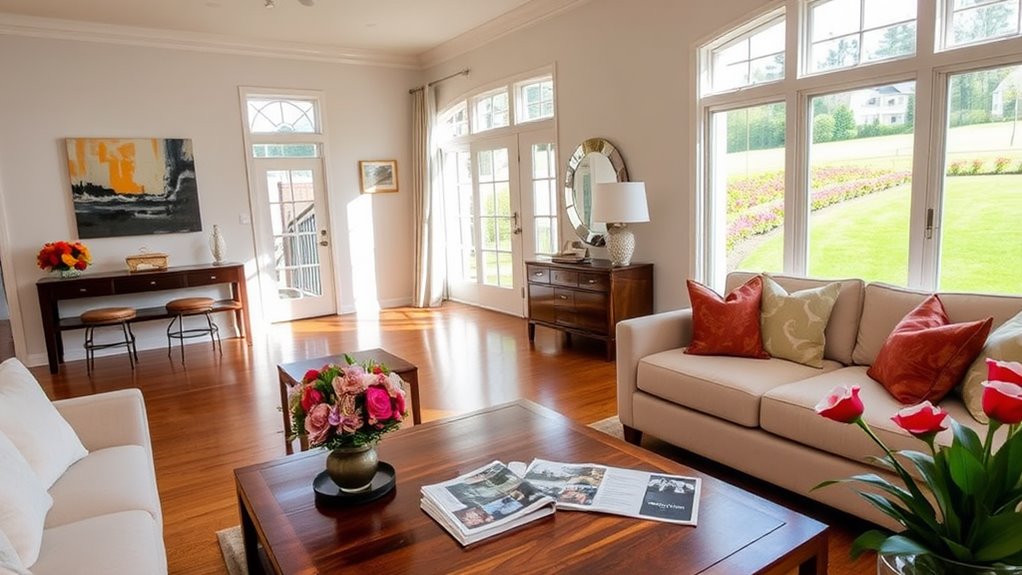
To sell your home quickly in a competitive market, start by grasping current market trends and pricing strategies. Set an attractive price based on thorough market analysis to engage serious buyers. Improve your property's curb appeal through simple landscaping and maintenance updates. Staging the home effectively can make a significant difference in attracting potential buyers. Utilize professional photography and list your home on various online platforms to increase visibility. Host successful open houses and be flexible with showings to accommodate buyer schedules. For best results, consider collaborating with a skilled real estate agent who can refine your selling strategy. More insights await you.
Understand the Market Trends
Comprehending market trends is crucial for homeowners looking to sell quickly, as it can greatly influence pricing and buyer interest. A thorough market analysis is the foundation upon which successful selling strategies are constructed. By grasping the nuances of the current real estate environment, homeowners can gain insights into what buyers are seeking, thereby allowing them to position their property more effectively.
Analyzing recent sales data, inventory levels, and buyer demographics can provide critical information that informs pricing strategies. For instance, if a significant number of homes in the neighborhood have sold at premium prices, this could indicate a strong demand that a seller can leverage. Conversely, if the market shows signs of saturation, it may necessitate a more cautious approach to pricing.
Moreover, recognizing seasonal trends can additionally impact the timing of a sale. Certain periods may yield a more favorable market climate, where competition is less fierce and buyer activity is heightened. Homeowners should remain vigilant and adapt their strategies accordingly, ensuring they are not just reactive but proactive in their approach.
Ultimately, grasping market trends empowers homeowners with the knowledge required to make informed decisions. By mastering market analysis and employing effective pricing strategies, sellers can improve their chances of achieving a timely and profitable sale, thereby maintaining a sense of control throughout the process.
Set the Right Price
Setting the right price is one of the most critical steps in selling your home quickly and effectively. An accurately priced property attracts potential buyers and sets the stage for successful price negotiation. To determine the ideal price point, you must conduct thorough local comparisons, analyzing similar properties in your area that have recently sold, are currently on the market, and those that failed to sell. This data will provide invaluable insights into pricing trends and buyer expectations.
Engage with real estate professionals who can offer comparative market analyses (CMAs), as their expertise can help you identify the sweet spot for pricing your home. Avoid the temptation to overprice your property, as this can deter serious buyers and prolong the selling process. Instead, aim for a competitive price that reflects both the market conditions and the unique features of your home.
Consider the psychological aspect of pricing; properties priced just below a round number (e.g., $299,000 instead of $300,000) can attract more attention. This strategy can improve your visibility and increase the likelihood of receiving multiple offers, which can empower you during price negotiation.
Enhance Curb Appeal
After establishing an effective price for your home, the next step is to improve its curb appeal. Curb appeal is essential in attracting potential buyers and creating a lasting first impression. By implementing strategic improvements, you can greatly increase interest in your property.
Consider these impactful landscaping tips and entryway upgrades to boost your home's exterior:
| Element | Enhancement |
|---|---|
| Landscaping | Trim overgrown bushes, plant colorful flowers, and lay fresh mulch to create a polished look. |
| Entryway Upgrades | Install a new front door, add stylish house numbers, and confirm your welcome mat is clean and inviting. |
| General Maintenance | Wash driveways, clean windows, and repair any visible damage to confirm your home looks well-maintained. |
Investing time and resources into these enhancements can yield substantial returns. A well-manicured lawn and a welcoming entryway can make a distinct difference, increasing the perceived value of your home.
As you implement these improvements, keep in mind that consistency is key. Confirm that your home's exterior reflects the same care and attention as the interior. By taking control of your curb appeal, you boost your property's attractiveness and position yourself favorably in a competitive market. A visually appealing home is not just a selling point; it signals to buyers that they are making a wise investment.
Stage Your Home Effectively
Staging your home effectively can greatly improve its appeal to potential buyers, often resulting in a quicker sale and a higher selling price. To take control of this essential process, start by focusing on key aspects of home decor that resonate with buyers. Consider a neutral palette that allows prospective occupants to envision their own style within your space. This simple yet impactful choice can create an inviting atmosphere that feels expansive and welcoming.
Next, implement decluttering tips to improve the overall presentation of your home. Begin by removing personal items and excess furniture that can distract from your home's best features. Aim to create a clean and organized environment that feels spacious and allows buyers to easily visualize their potential life within the space. This step is crucial, as clutter can impede a buyer's ability to connect emotionally with your home.
Pay attention to lighting as well, ensuring that each room is well-lit to accentuate its best attributes. Consider adding mirrors to reflect light and create an illusion of depth. Additionally, invest in minor repairs and touch-ups, such as painting walls or fixing leaky faucets, to present a well-maintained property.
Finally, thoughtfully arrange your furniture to promote an open flow throughout the home. This allows buyers to move comfortably from one space to another, reinforcing the idea of a functional and livable environment. By effectively staging your home, you enable yourself to influence the buyer's perception and make a lasting impression.
Utilize Professional Photography
High-quality photography plays a vital role in attracting potential buyers and can markedly influence their first impression of your home. In today's competitive market, investing in professional real estate photography is merely an option; it's a requirement. Exceptional images can create a compelling narrative, transforming your property into a desirable lifestyle choice through visual storytelling.
When selecting a photographer, consider the following factors to guarantee your investment yields the desired results:
| Criteria | Importance | Tips |
|---|---|---|
| Experience | Guarantees quality and expertise | Review portfolios thoroughly |
| Equipment | Affects image quality | Look for high-end cameras and lenses |
| Editing Skills | Improves final presentation | Inquire about post-production services |
| Style Compatibility | Matches your home's vibe | Discuss your vision with the photographer |
| Pricing | Balances cost and value | Get multiple quotes for comparison |
Utilizing professional photography allows potential buyers to visualize themselves in your space, increasing the likelihood of a quick sale. High-quality images showcase your home's best features, from architectural details to inviting living areas. Remember, the goal is to create an emotional connection that compels viewers to take the next step.
In a market where first impressions are significant, leveraging professional real estate photography can be the difference between a swift sale and a prolonged listing. By focusing on visual storytelling, you present your home attractively while also empowering potential buyers to envision their future within your walls.
Market Your Property Online
In the current digital era, effectively marketing your property online is essential for reaching a broader audience and facilitating a quicker sale. A robust online presence enables you to take control of your selling process, guaranteeing that your property stands out in a competitive market.
Begin by leveraging social media platforms. Websites like Facebook, Instagram, and Twitter are influential tools for showcasing your home to potential buyers. Create engaging posts that highlight the unique features of your property, complemented by high-quality images. Utilize targeted advertising options to reach specific demographics, ensuring that your message resonates with the right audience.
In addition to social media, consider offering virtual tours. This innovative approach allows prospective buyers to explore your home remotely, giving them an immersive experience that static images simply cannot provide. By incorporating 3D walkthroughs or video tours, you not only engage potential buyers but additionally streamline the showing process, allowing interested parties to assess your property at their convenience.
To maximize your online marketing efforts, list your property on reputable real estate websites. Confirm that your listing includes detailed descriptions, key features, and, significantly, those enthralling photographs and virtual tours. These platforms improve your visibility and attract serious buyers who are actively searching for homes.
Host Successful Open Houses
Open houses serve as a valuable complement to your online marketing efforts, providing potential buyers with the opportunity to experience your property firsthand. To guarantee your open house is effective, implement strategic open house strategies that maximize guest engagement and create a memorable experience.
- Set the Right Atmosphere: Ascertain that your home is clean, well-lit, and inviting. Consider subtle scents, such as freshly baked cookies, to create a warm ambiance.
- Engage with Guests: Be approachable and ready to answer questions. Initiate conversations to gauge their interest and provide insights into your home's features.
- Provide Informative Materials: Offer brochures or fact sheets detailing key information about the home, the neighborhood, and local amenities. This empowers guests to make informed decisions.
By carefully planning your open house, you take control of the narrative surrounding your property. Confirm that the timing is strategic, ideally on weekends when potential buyers are more available. Promote your open house through various channels, including social media and local community boards, to attract a larger audience.
During the event, actively engage with guests and encourage them to envision themselves living in your home. Utilize feedback to refine your approach for future showings. Remember, a successful open house not only showcases your property but enhances rapport with potential buyers, increasing your chances of a quick sale in a competitive market.
Be Flexible With Showings
Being flexible with showings is crucial in attracting potential buyers and facilitating a quick sale. In a competitive market, your ability to accommodate various schedules can greatly improve your home's visibility. Many buyers have demanding work hours or other commitments, so offering flexible scheduling is vital to ensuring that your property is accessible when they are available to visit.
To optimize showing availability, consider utilizing online scheduling tools that allow potential buyers and their agents to book appointments at their convenience. This approach not only streamlines the process but also conveys your willingness to work with interested parties, promoting a positive impression.
Additionally, be prepared to accommodate last-minute requests. Although it's important to maintain your routine, the ability to pivot and allow for spontaneous showings can lead to increased interest and potentially quicker offers. Inform your listing agent of your availability and any preferred times, ensuring they communicate this to prospective buyers.
Furthermore, maintaining a clean and welcoming environment will allow for effortless shifts during showings, regardless of the time frame. By prioritizing showing flexibility, you position your home as an attractive option for buyers who may otherwise overlook properties that are difficult to visit.
Consider Pre-Inspections
Considering pre-inspections can be a strategic move for sellers aiming to expedite their home sale. By identifying potential issues early, sellers can address concerns proactively, enhancing buyer confidence and streamlining negotiations. Selecting a qualified inspector is essential to guarantee a thorough evaluation and provide an accurate assessment of the property's condition.
Benefits of Pre-Inspections
A pre-inspection can provide significant advantages for homeowners looking to sell their property quickly. By undertaking a home inspection before listing, sellers can proactively address potential issues that could deter buyers. This not just streamlines the selling process but also improves buyer confidence, leading to more competitive offers.
- Identifies critical repairs: A pre-inspection highlights necessary repairs, allowing you to fix issues before buyers discover them.
- Improves negotiation leverage: With a clear comprehension of your home's condition, you can confidently negotiate terms and pricing based on the inspection results.
- Builds trust with buyers: Providing a recent home inspection report can reassure potential buyers, making them feel more secure in their investment.
In a competitive market, knowledge is strength. A pre-inspection enables sellers to take control of the selling process, ensuring they are well-prepared to address any concerns that buyers may have. By demonstrating transparency and commitment to the property's condition, sellers can cultivate a more favorable environment for negotiations, eventually facilitating a quicker sale.
Choosing a Qualified Inspector
Selecting a qualified inspector is critical for maximizing the benefits of a pre-inspection. A thorough pre-inspection can uncover potential issues, allowing you to address them before listing your home. This proactive approach not just improves your property's appeal but can as well expedite the sale process.
When choosing an inspector, focus on their qualifications and reputation. Look for inspectors who are certified by recognized organizations and have significant experience in your local market. Familiarity with regional building codes and common issues specific to your area can provide additional insights.
To aid in your selection process, consider the following table:
| Criteria | Importance |
|---|---|
| Home Inspector Qualifications | Confirm they are certified and experienced. |
| Reviews and Testimonials | Gauge past client satisfaction. |
| Sample Reports | Assess clarity and thoroughness. |
| Availability | Verify they can meet your timeline. |
| Cost | Balance quality with affordability. |
Finding reputable inspectors can empower you as a seller, confirming your home is market-ready and attractive to potential buyers. Prioritize due diligence, and you will improve your chances of a swift sale.
Work With a Real Estate Agent
Engaging a real estate agent can greatly improve your chances of selling your home quickly and effectively. A skilled agent brings invaluable real estate expertise and can navigate the intricacies of the market, ensuring you maximize your property's potential. By collaborating with a professional, you gain a partner who understands local trends and buyer preferences, which is essential in a competitive environment.
Consider the following advantages of working with a real estate agent:
- Strategic Pricing: An agent will help you determine the ideal listing price based on market analysis, ensuring your home attracts serious buyers without undervaluing your investment.
- Targeted Marketing: Agents utilize various platforms and networks to promote your property, enhancing visibility and engagement among prospective buyers.
- Expert Negotiation: With strong agent negotiation skills, your agent can effectively advocate on your behalf, helping you secure the best possible offer.
Choosing the right agent is a significant decision that empowers you as a seller. Look for an individual with a proven track record in your specific market, someone who communicates transparently and aligns with your goals. This partnership enables you to maintain control over the sale process as well as benefiting from the agent's knowledge and resources. In the end, enlisting a real estate professional not just streamlines your selling experience but also positions you for success in achieving a swift and lucrative sale.
Frequently Asked Questions
How Long Does It Typically Take to Sell a Home?
In the intricate dance of real estate, the average selling time for a home can vary widely, often resembling the ebb and flow of tides. Typically, it ranges from a few weeks to several months, influenced by market fluctuations and local demand. Homeowners seeking control over this process must remain vigilant, adjusting their strategies to align with current trends, ensuring their property stands out in the ever-changing marketplace, thereby minimizing time on the market.
What Are Common Mistakes to Avoid When Selling?
When selling a home, avoiding common mistakes is essential for success. One significant error is neglecting effective pricing strategies; overpricing can deter potential buyers whereas underpricing may lead to financial loss. Furthermore, failing to implement staging tips can diminish a property's appeal. Ensuring your home is well-presented and competitively priced empowers you to attract serious buyers and secure favorable offers, ultimately enhancing your control over the selling process.
Should I Make Major Renovations Before Selling?
Research indicates that homeowners can recoup up to 80% of their investment on kitchen upgrades and bathroom remodels. Nonetheless, before committing to major renovations, consider the local market dynamics and the potential return on investment. Focus on strategic improvements that raise your home's appeal without overextending your budget. A well-planned approach allows you to maintain control over your selling strategy, ensuring that upgrades align with buyer expectations and market demands.
How Can I Improve My Home's Energy Efficiency?
Improving your home's energy efficiency is a strategic move that can boost comfort and reduce utility costs. Start by conducting energy audits to identify areas needing attention. Common improvements include insulation upgrades, which can greatly reduce heat loss and gain. Consider sealing gaps around windows and doors to prevent drafts. Moreover, investing in energy-efficient appliances contributes to lower energy consumption, ultimately promoting a more sustainable living environment as well as improving the home's overall value.
What Are Closing Costs I Should Anticipate?
Ah, the elusive closing costs—those hidden treasures that spring upon unsuspecting sellers. A thorough closing cost breakdown typically includes fees such as appraisal, title insurance, and attorney charges. Effective negotiation strategies can help mitigate these costs, empowering you to maintain control over your financial outcome. Comprehending these expenses in advance equips you to navigate the closing process with confidence, ensuring you're prepared for every financial twist that may arise.
