
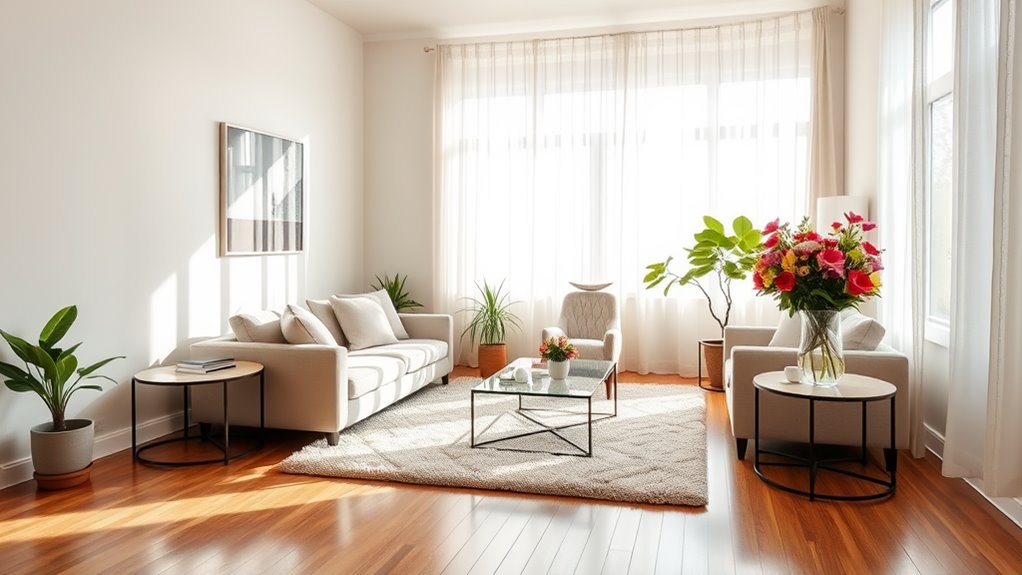
To prepare your home for a successful sale, start by decluttering and depersonalizing spaces, allowing potential buyers to envision themselves in the environment. Address necessary repairs to improve marketability. Improve curb appeal with fresh landscaping and a welcoming entryway. Conduct a thorough deep cleaning of your entire home, focusing on kitchens and bathrooms. Stage your home with neutral decor and optimize lighting to create a warm atmosphere. Finally, set a competitive price based on market analysis and consider hiring a professional photographer to capture high-quality images that attract buyers. More insights await you to maximize your selling potential.
Declutter and Depersonalize
One of the most crucial steps in preparing your home for sale is to declutter and depersonalize. This process not only improves the visual appeal of your space but also allows potential buyers to picture themselves living in it. By removing unnecessary items, you create a more inviting atmosphere that highlights the property's features rather than your personal belongings.
Start by evaluating each room and identifying items that can be eliminated or stored away. Aim for a minimalist decor approach, which focuses on simplicity and functionality. This means stripping down surfaces, clearing countertops, and ensuring that furniture arrangements are open and accessible. A well-organized space conveys a sense of order, which can be psychologically appealing to buyers.
In addition to decluttering, it is crucial to depersonalize your home. Personal touches such as family photos, unique art pieces, or personalized decor can create emotional connections that may hinder a buyer's ability to envision themselves in the space. Replace these with neutral decor that appeals to a broader audience. Consider using calming colors and generic artwork to establish a welcoming environment.
Ultimately, the goal of decluttering and depersonalizing is to create a blank canvas for potential buyers, allowing them to visualize their own lives within your home. By taking control of this process, you greatly increase your chances of a successful sale and a smoother change to your next chapter.
Make Necessary Repairs
Making necessary repairs is a vital step in preparing your home for sale. Start by identifying key issues that could deter potential buyers, and prioritize important fixes to guarantee your property is in ideal condition. Furthermore, enhancing curb appeal through minor improvements can greatly impact first impressions and attract more interest.
Identify Key Issues
Before listing your home, it is essential to conduct a thorough assessment to identify key issues that may deter potential buyers. A proactive approach to identifying and addressing these concerns can greatly improve your home's appeal and marketability. Start by performing a detailed home inspection, either independently or by hiring a qualified professional. This will help you uncover any underlying problems, such as plumbing leaks, electrical issues, or structural concerns that could raise red flags for buyers.
Additionally, consider soliciting buyer feedback from recent open houses or showings. This information can provide valuable insights into what potential buyers perceive as drawbacks, enabling you to make informed decisions about necessary repairs. Targeting areas that consistently arise in feedback will empower you to address issues that could hinder a successful sale.
Prioritize Essential Fixes
Addressing necessary repairs is crucial in preparing your home for sale, as it can greatly improve its overall appeal and value. By prioritizing vital fixes, you can create a solid foundation for a successful sale while maintaining control over your budget considerations and timeline planning.
The following table outlines common repairs and their potential impacts:
| Repair Type | Impact on Sale |
|---|---|
| Minor Plumbing Issues | Increases buyer confidence |
| Electrical Upgrades | Improves safety perception |
| Cosmetic Touch-Ups | Boosts aesthetic appeal |
Identify repairs that could deter potential buyers and allocate resources wisely. Create a budget that reflects both the urgency of repairs and your financial capabilities. For instance, although plumbing issues may require immediate attention, cosmetic upgrades can often be scheduled at your convenience, allowing for effective timeline planning.
#
Enhance Curb Appeal
Curb appeal serves as the first impression for potential buyers, making it essential to improve this aspect of your home before listing it for sale. Start by evaluating the condition of your front door, as it is a focal point of your home's exterior. A fresh coat of paint or a new door handle can create an inviting entryway. Make certain that the door is free of scratches or dents, signaling that the home has been well cared for.
Next, examine your outdoor lighting. Effective lighting not only improves safety but likewise adds charm during evening hours. Replace outdated fixtures with modern designs that complement your home's style. Verify all lights are functional and clean, as this attention to detail reflects your commitment to maintaining the property.
Additionally, address any necessary repairs to the exterior, such as fixing cracked walkways, repainting shutters, or tending to landscaping. These improvements provide a polished look that can greatly increase interest from buyers. By taking control of these elements, you set the stage for a successful sale, attracting potential buyers who envision themselves living in a well-maintained and inviting home.
## Enhance Curb Appeal
To attract potential buyers, enhancing your home's curb appeal is crucial. Fresh landscaping ideas, coupled with a clean and decluttered exterior, can greatly improve first impressions. These simple yet effective steps can set your property apart in a competitive market.
Fresh Landscaping Ideas
Revitalize your home's exterior with fresh landscaping ideas that greatly improve curb appeal. An attractive setting not just boosts the aesthetic of your property but additionally creates a welcoming atmosphere for potential buyers. Here are four effective strategies to reflect upon:
- Incorporate Native Plants: Choose native plants that thrive in your local climate, requiring less maintenance and water. This not just conserves resources but additionally supports local wildlife.
- Seasonal Flowers: Plant seasonal flowers for lively color throughout the year. Reflect upon a mix of perennial and annual blooms to guarantee a continuous display, appealing to buyers regardless of the season.
- Layered Planting: Create depth by layering plants of varying heights. Taller plants at the back and shorter ones in the front add dimension and visual interest.
- Defined Pathways: Establish clear, inviting pathways using stones or mulch. This guides visitors through your setting while showcasing your home's entryway.
Clean and Declutter Exterior
How can a clean and clutter-free exterior transform the first impression of your home? The exterior of your property is the first thing potential buyers will see, making its presentation vital for a successful sale. To improve curb appeal, start by removing any unnecessary items from your yard, such as toys, tools, or old outdoor furniture that may detract from the overall aesthetic. A tidy exterior conveys a sense of care and attention, inviting buyers to envision themselves living in the space.
Next, focus on your entryway charm. Confirm the front door is clean, well-painted, and adorned with tasteful décor that reflects your home's style. Consider adding potted plants or flowers to frame the entryway, creating an inviting atmosphere.
Lastly, maintain your landscaping. Regularly mow the lawn, trim hedges, and clear walkways of debris. These simple tasks not just improve the visual appeal but additionally demonstrate that your home has been well-maintained. By investing time in cleaning and decluttering your exterior, you can create a significant first impression that resonates positively with potential buyers. A well-kept yard can make your property stand out in a competitive market, drawing in buyers who appreciate attention to detail. Simple upgrades like adding fresh mulch or colorful plants can further enhance curb appeal. Following these house hunting tips can help ensure your home makes a lasting impression from the very first glance.
Deep Clean Your Home
Even though a fresh coat of paint and minor repairs can improve your home's appeal, a thorough deep cleaning is vital to create a welcoming environment for potential buyers. A clean home reflects your attention to detail and aids buyers in envisioning themselves living in the space. To achieve this, consider employing an extensive deep cleaning checklist to guarantee no area is overlooked.
Here are four important steps to guide your deep cleaning efforts:
- Kitchen Deep Cleaning: Focus on appliances, cabinets, and countertops. Use effective spot cleaning techniques to target grease and stains.
- Bathroom Refresh: Scrub tiles, grout, and fixtures. Attention to detail here can elevate perceived value.
- Living Areas: Dust surfaces, vacuum carpets, and wipe down furniture. Confirm windows are clean to allow natural light to improve the space.
- Bedrooms: Organize closets and remove personal items. A tidy bedroom space can create a sense of tranquility for prospective buyers.
Stage Your Home Effectively
A carefully cleaned home sets the stage for successful staging, which is key to attracting potential buyers. To maximize your home's appeal, focus on a cohesive color palette and thoughtful furniture arrangement. These elements work harmoniously to create an inviting atmosphere that allows potential buyers to envision themselves living in your space.
When staging your home, consider the following strategies to improve its appeal:
| Color Palette | Furniture Arrangement |
|---|---|
| Neutral tones create a calming effect, making spaces feel larger and more inviting. | Arrange furniture to promote flow and conversation, avoiding overcrowded spaces. |
| Use accent colors sparingly to highlight architectural features or focal points. | Confirm key rooms, like the living room and dining area, are the main focus of arrangement. |
| Incorporate soft textures to add warmth, making the environment feel welcoming. | Create distinct areas within open spaces to define functionality without barriers. |
Optimize Lighting
Effective lighting can transform the atmosphere of your home, making it more appealing to potential buyers. A well-lit space not only improves aesthetics but also creates an inviting ambiance that buyers find irresistible. To optimize lighting effectively, consider the following strategies:
- Maximize Natural Light: Open drapes and shades to allow sunlight to flood your rooms. Natural light can make spaces feel larger and more welcoming.
- Layer Your Lighting: Incorporate multiple sources of ambient lighting, such as ceiling fixtures, floor lamps, and table lamps. This approach creates depth and allows for adjustments based on the time of day or mood.
- Use Warm Bulbs: Select warm white bulbs for your fixtures. These bulbs mimic the softness of natural light and contribute to a cozy atmosphere, which is essential for making a positive impression on buyers.
- Highlight Key Features: Direct lighting toward architectural details, artwork, or other focal points in your home. This draws attention to the unique aspects of your property and showcases its potential.
Set the Right Price
Determining the right price for your home is a vital step in the selling process that can greatly impact buyer interest and the speed of the sale. Setting a competitive price requires a sharp comprehension of current market trends and effective pricing strategies customized to your specific property.
Begin by conducting a thorough assessment of recent sales in your neighborhood. Look for comparable homes—often referred to as "comps"—that have similar features, square footage, and conditions. This will provide insight into the price range that buyers are willing to pay. Furthermore, consider the broader market trends, such as buyer demand and inventory levels, which can greatly influence the ideal pricing strategy.
Once you have gathered this data, evaluate your home's unique attributes, such as upgrades, location, and curb appeal. These factors can justify a higher asking price. Nonetheless, be cautious not to overprice your home, as this can deter potential buyers and prolong the sale process. Conversely, pricing it too low may lead to undervaluation and lost profits.
Implementing a pricing strategy that factors in both market conditions and your home's distinct features is vital. This may involve setting a price slightly below a round number to attract more interest, or using psychological pricing techniques to create perceived value. By strategically pricing your home, you can exert control over the sale process, maximizing both buyer engagement and your ultimate return on investment.
Hire a Professional Photographer
Capturing your home's best features through high-quality imagery can greatly improve its appeal to potential buyers. In a competitive real estate market, investing in a professional photographer can make a significant difference. Here are four reasons why hiring a professional is crucial for showcasing your property effectively:
- Expertise in Photo Composition: Professionals understand the principles of composition, guaranteeing that every angle highlights your home's strengths. They know how to frame each shot to draw attention to key features, creating a narrative that resonates with buyers.
- Advanced Lighting Techniques: Good lighting can transform a room. Professional photographers utilize advanced lighting techniques to create a warm and inviting atmosphere, making spaces appear larger and more welcoming.
- High-Resolution Images: Quality matters. Professionals provide high-resolution images that stand out in online listings, giving potential buyers a clear and detailed view of your property.
- Post-Processing Skills: After the shoot, professional photographers employ post-processing techniques to improve your images. This includes color correction, sharpening, and even virtual staging, all of which guarantee your home looks its absolute best.
Market Your Home Strategically
With regard to selling a home, strategic marketing can make all the difference in attracting potential buyers and achieving a desirable sale price. A well-crafted marketing plan allows you to showcase your property's unique features and reach your target audience effectively.
Begin by utilizing the strength of social media. Platforms like Facebook, Instagram, and Twitter can amplify your listing's visibility, enabling you to engage with a broader audience. Use high-quality images and compelling descriptions to capture attention. Consider creating dedicated posts or stories that highlight key aspects of your home, such as the kitchen's modern appliances or the spacious backyard.
In addition to social media, incorporating virtual tours into your marketing strategy is crucial. Virtual tours provide an immersive experience, allowing potential buyers to explore your home remotely. This convenience can greatly improve interest, especially for out-of-town buyers or those with busy schedules. Make sure to promote these virtual tours across all your platforms, directing traffic to your listing.
Moreover, enlist the help of real estate websites and local community groups to further increase exposure. Tailor your messaging to resonate with prospective buyers, emphasizing the benefits of the neighborhood and nearby amenities.
Ultimately, a strategic marketing approach combines the latest digital tools with traditional methods to maximize your home's appeal. By taking control of your marketing efforts, you position your home as a desirable option in a competitive market, thereby increasing your chances for a successful sale.
Frequently Asked Questions
How Long Does the Home Selling Process Typically Take?
The home selling timeline can vary considerably based on several factors, including market conditions and the specific property. Typically, the entire process from listing to closing can take anywhere from 30 to 90 days. The typical closing duration, once an offer is accepted, is usually around 30 days, allowing for inspections, appraisals, and financing arrangements. Comprehending these timelines enables sellers to maintain control and effectively manage their expectations throughout the process.
Should I Disclose All Home Issues to Potential Buyers?
Disclosing all home issues to potential buyers is essential for maintaining buyer trust. Transparency cultivates a positive relationship and can mitigate concerns during the home inspection process. Although it may be tempting to withhold certain details, doing so might lead to complications later, such as failed negotiations or legal repercussions. By being forthright about any issues, you empower buyers to make informed decisions, in the end enhancing the likelihood of a smooth transaction.
How Do I Choose the Right Real Estate Agent?
Choosing the right real estate agent is akin to selecting a captain for a sinking ship; you wouldn't want just anyone at the helm. Focus on their real estate expertise by conducting thorough agent interviews. Evaluate their track record, local market knowledge, and communication style. Prioritize those who can seamlessly align with your goals, ensuring you maintain control throughout the process. After all, your home deserves a navigator who truly understands the waters ahead.
What Are the Costs Associated With Selling a Home?
Selling a home incurs various costs that can considerably impact your net proceeds. Key expenses include closing costs, which typically range from 2% to 5% of the sale price, covering fees such as title insurance and property taxes. Furthermore, staging expenses may arise if you choose to improve your home's appeal, further optimizing its marketability. Comprehending these costs empowers you to budget effectively and retain control over your selling process.
Can I Sell My Home As-Is Without Making Repairs?
Certainly, selling your home "as is" can attract potential buyers seeking simplicity and speed. Nevertheless, this approach often results in a reduced sale price, as many buyers might factor in necessary repairs and renovations. By presenting your property without making repairs, you may deter discerning buyers who prefer move-in-ready homes. In the end, comprehending the implications of an as-is sale allows you to make informed decisions about your selling strategy and pricing expectations.
