
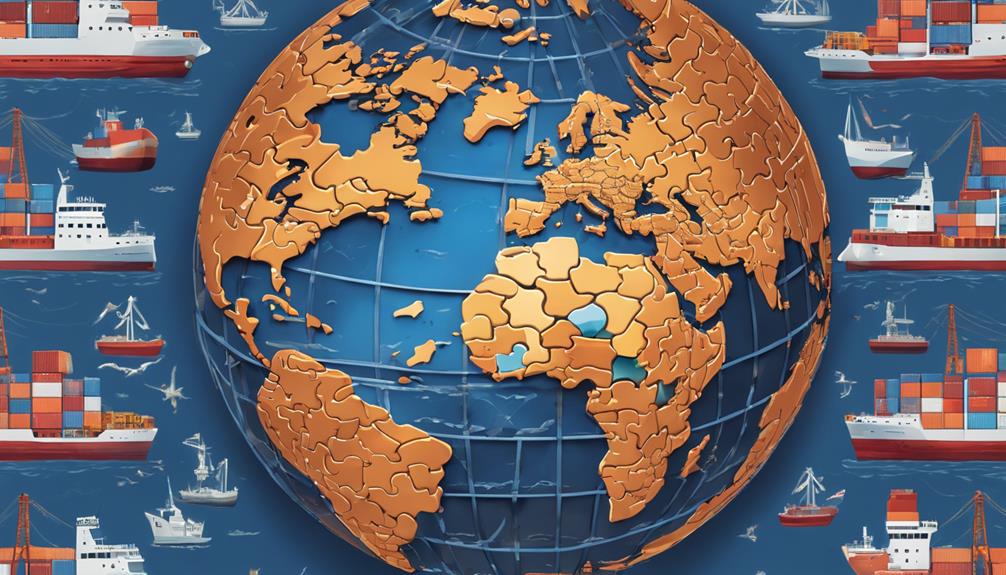
International trade deals have far-reaching implications that extend beyond mere economic transactions, shaping global commerce, jobs, the environment, and cultural exchange in profound ways. They can foster economic growth, create jobs, and increase consumer choice, but also lead to layoffs, industry realignment, and environmental concerns. To navigate these complexities, businesses and governments must understand the intricacies of trade agreements, tariffs, and regulations. By doing so, they can mitigate risks, capitalize on opportunities, and create a more stable and predictable trade environment. As the global trade landscape continues to evolve, it's essential to stay informed about the implications and opportunities that arise.
Defining International Trade Agreements
International trade agreements are formal arrangements between two or more countries that establish the terms and conditions governing their commercial exchanges. These agreements provide a framework for countries to facilitate trade, investment, and economic cooperation. At its core, a trade agreement defines the rules and regulations that govern trade between participating countries, guaranteeing a level playing field for all parties involved.
Trade definitions are a critical component of international trade agreements. These definitions clarify the scope of products, services, and investments covered under the agreement. They also outline the rules of origin, tariffs, and other trade facilitation measures. A well-structured agreement framework ensures that trade is conducted in a transparent, predictable, and stable environment, fostering economic growth and development.
The agreement framework typically includes provisions on market access, trade facilitation, dispute settlement, and cooperation mechanisms. It may also address issues like intellectual property protection, labor standards, and environmental concerns. By establishing a clear and predictable trade environment, international trade agreements encourage businesses to invest, innovate, and expand their operations globally. As countries continue to negotiate and conclude new trade agreements, a deeper understanding of these complex arrangements is essential for businesses, policymakers, and individuals alike.
Benefits of Trade Liberalization
By removing trade barriers, countries can access a wide range of economic benefits, from increased competition and innovation to improved productivity and lower prices. Trade liberalization leads to increased consumer choice, as foreign goods and services become more readily available, offering consumers a broader range of options at competitive prices. This, in turn, stimulates economic diversification, as countries focus on producing goods and services in which they have a comparative advantage.
Trade liberalization also fosters a more competitive business environment, encouraging firms to innovate and invest in research and development to stay ahead of the competition. This leads to improved productivity, as companies adopt more efficient production methods and technologies. Additionally, trade liberalization can lead to lower prices, as countries specialize in producing goods and services at a lower cost, making them more affordable for consumers.
In addition, trade liberalization can lead to increased foreign investment, as countries with open economies become more attractive to foreign investors. This can lead to job creation, economic growth, and improved living standards. Overall, trade liberalization can have a positive impact on a country's economy, leading to increased consumer choice, economic diversification, and improved productivity. By reducing trade barriers, countries can reap these benefits and improve the overall well-being of their citizens.
Tariffs and Trade Barriers
Tariffs and other trade barriers, imposed by governments to restrict imports and protect domestic industries, can have far-reaching consequences for international trade and economic growth. These measures can limit the flow of goods and services across borders, leading to increased trade costs and reduced economic efficiency. By restricting imports, tariffs can also limit consumer choice and drive up prices, ultimately affecting the overall standard of living.
There are several ways in which tariffs and trade barriers can impact international trade:
- Increased Trade Costs: Tariffs and other trade barriers can drive up the cost of trade, making it more expensive for businesses to import goods and services.
- Reduced Trade Volumes: By restricting imports, tariffs can lead to reduced trade volumes, ultimately affecting economic growth and development.
- Stricter Border Control: Tariffs and trade barriers can result in stricter border control measures, leading to increased bureaucracy and delays at the border.
In addition to these consequences, tariffs and trade barriers can also lead to retaliatory measures from other countries, sparking a trade war that can have devastating effects on the global economy. Therefore, it is essential for governments to carefully consider the implications of imposing tariffs and trade barriers, and to explore alternative measures that can protect domestic industries without restricting international trade.
Impact on Job Markets Worldwide
The implementation of tariffs and trade barriers can have a ripple effect on job markets worldwide, as reduced trade volumes and increased trade costs can lead to layoffs and hiring freezes in industries that rely heavily on international trade. This, in turn, can cause labor shifts, as workers may need to adapt to new job requirements or seek employment in other sectors. For instance, a decline in exports may lead to a decrease in manufacturing jobs, while an increase in imports may create new opportunities in logistics and transportation.
Industry realignment is also a likely consequence of international trade deals. As companies adjust to new trade rules, they may need to restructure their operations, leading to changes in the job market. Some industries may experience growth, while others may contract. For example, a trade agreement that reduces tariffs on agricultural products may lead to an increase in jobs in the agricultural sector, while a sector that relies heavily on imported goods may see a decline in employment.
The impact of international trade deals on job markets can be far-reaching, affecting not only the industries directly involved in trade but also those that provide supporting services. As trade policies continue to evolve, it's essential for workers, businesses, and governments to be aware of the potential consequences and adapt accordingly. By understanding the implications of international trade deals, stakeholders can better navigate the changing landscape and make informed decisions to mitigate any negative effects on the job market.
Environmental Regulations and Trade
As governments worldwide implement environmental regulations to combat climate change and pollution, international trade deals must now balance economic interests with growing concerns about the planet’s ecological well-being. This shift in focus has significant implications for trade agreements, which must reconcile the need for economic growth with the imperative to protect the environment. As a result, nations are increasingly incorporating environmental policies and global trade considerations into their negotiations, ensuring that economic development does not come at the expense of sustainability. This approach encourages businesses to adopt greener practices while also fostering international cooperation on climate action. By aligning trade agreements with environmental goals, countries can promote both economic prosperity and ecological responsibility.
One of the key challenges under these circumstances is ensuring that environmental regulations are not used as a pretext for protectionism. Governments must work together to establish common eco-friendly standards that promote sustainable development and climate justice. This can be achieved through:
- Harmonizing environmental regulations: Countries can work together to establish common standards for environmental protection, reducing the risk of regulatory arbitrage and ensuring a level playing field for businesses.
- Incorporating environmental provisions: Trade agreements can include provisions that promote sustainable development, such as requirements for environmental impact assessments and the use of renewable energy sources.
- Encouraging eco-friendly practices: Governments can provide incentives for businesses to adopt eco-friendly practices, such as tax breaks for companies that invest in renewable energy or reduce their carbon footprint.
Effects on Small Businesses Owners
Small business owners, who often rely on international trade to stay competitive, face unique challenges in adapting to environmental regulations and provisions in trade agreements. These agreements can create barriers to entry for small businesses, making it difficult for them to compete with larger corporations. One major hurdle is access to capital, as small businesses may not have the financial resources to invest in compliance with new regulations. This can limit their ability to participate in international trade, hindering their growth and competitiveness.
Furthermore, small business owners often lack the business networks and connections that larger corporations have, making it harder for them to navigate complex trade agreements. They may not have the same level of expertise or resources to understand the intricacies of trade deals, which can lead to missed opportunities and lost revenue. Additionally, small businesses may struggle to comply with regulations that are designed with larger corporations in mind, putting them at a disadvantage.
To overcome these challenges, small business owners need access to resources and support that can help them navigate international trade agreements. This can include training programs, mentorship, and access to capital. Governments and organizations can play an essential role in providing these resources, helping small businesses to thrive in the global market. By supporting small businesses, we can promote economic growth, innovation, and job creation, ultimately benefiting the entire economy.
Trade Deals and Economic Growth
When it comes to trade deals and economic growth, researchers have found a substantial correlation between the two. They've discovered that trade agreements can significantly enhance a country's GDP, leading to increased economic growth patterns. By examining the data, it's clear that trade deals can have a profound impact on a nation's economic well-being.
Trade Agreements Boost
Trade agreements turbocharge economic growth by increasing exports, creating jobs, and attracting foreign investment. When countries enter into trade agreements, they create an environment conducive to economic expansion. By reducing trade barriers and tariffs, these agreements increase trade incentives, fostering economic synergies between participating nations.
The benefits of trade agreements are multifaceted:
- Increased exports: With reduced trade barriers, countries can export more goods and services, leading to increased revenue and economic growth.
- Job creation: As trade increases, so does the demand for labor, resulting in job creation and improved employment opportunities.
- Foreign investment: Trade agreements attract foreign investment, as investors seek to capitalize on the improved trade environment and increased economic growth.
GDP Growth Patterns
As economies engage in international trade, their GDP growth patterns often exhibit a notable surge, reflecting the increased economic activity and investment stimulated by trade agreements. This surge is a direct result of the increased demand for goods and services, leading to a boost in production and employment. Over time, this growth can lead to sectoral shifts, where certain industries experience rapid expansion, while others may decline. For instance, a country with a trade agreement in the technology sector may see a significant increase in tech-related jobs and investment, while its manufacturing sector may slow down.
However, it's important to recognize that GDP growth patterns are not immune to economic cycles. During times of economic downturn, trade agreements can help cushion the impact by providing a steady stream of exports and imports. Conversely, during periods of rapid growth, trade agreements can amplify the effects, leading to higher GDP growth rates. Understanding these dynamics is vital for policymakers to make informed decisions about trade agreements and their potential impact on the economy. By recognizing the interplay between trade deals and GDP growth patterns, countries can better navigate the complexities of international trade and make the most of its benefits.
Global Supply Chain Disruptions
As global supply chains face increasing disruptions, companies are recognizing the need to adapt their strategies to mitigate these risks. One key approach is trade route diversification, which involves spreading supply chains across multiple regions to reduce dependence on a single route. By building supply chain resilience, businesses can better withstand disruptions and guarantee the continuous flow of goods and services.
Trade Route Diversification
Global supply chain disruptions have prompted companies to rethink their logistics, leading to a surge in trade route diversification efforts. As businesses seek to minimize risks and reduce dependence on single shipping lanes, they're exploring alternative routes and modes of transportation. This shift is driven by the need for greater flexibility and agility in responding to disruptions.
To achieve this, companies are leveraging digital tools such as Trade Maps to visualize and analyze their supply chains. These visual representations help identify vulnerabilities and opportunities for diversification. Additionally, shipping hubs are being reevaluated, with companies seeking to distribute their risk by using multiple hubs rather than relying on a single point of entry.
Some key strategies companies are employing to diversify their trade routes include:
- Rerouting through alternative ports: This helps to avoid congested ports and reduces the risk of delays.
- Diversifying mode of transportation: Companies are exploring air, land, and sea options to reduce dependence on a single mode.
- Regionalizing supply chains: By producing and distributing goods closer to their final destination, companies can reduce their reliance on long-distance shipping lanes.
Supply Chain Resilience
Companies face unprecedented challenges in maintaining supply chain resilience, as the frequency and severity of disruptions continue to rise. Global supply chains are increasingly vulnerable to natural disasters, pandemics, and geopolitical tensions, which can lead to widespread disruptions and significant financial losses. To mitigate these risks, companies are adopting robust risk management strategies to identify and address potential vulnerabilities in their supply chains.
One key approach is vendor diversification, which involves partnering with multiple suppliers to reduce dependence on any one vendor. This helps to guarantee business continuity in the event of a disruption. Additionally, companies are investing in digital technologies, such as artificial intelligence and blockchain, to enhance supply chain visibility and agility. By leveraging these tools, businesses can quickly respond to disruptions and make informed decisions to minimize their impact. Effective supply chain resilience is critical for companies operating in today's complex and interconnected global economy. By prioritizing risk management and vendor diversification, companies can better navigate supply chain disruptions and maintain a competitive edge.
Cultural Exchange and Trade
How do cultural exchange programs influence the trade relationships between nations? They play a significant role in fostering understanding and cooperation between countries, which can lead to increased trade and economic growth. Cultural exchange programs can take many forms, including artistic collaborations, educational exchanges, and language training programs.
- Artistic Collaborations: Artistic collaborations between nations can lead to the creation of new and innovative products, services, and experiences. For example, a joint film production between the US and China could result in a movie that appeals to a global audience, promoting cultural understanding and generating revenue.
- Language Training: Language barriers can be a significant obstacle to trade. Cultural exchange programs that provide language training can help bridge this gap, enabling businesses to communicate more effectively with their international partners.
- Educational Exchanges: Educational exchanges can provide students with valuable international experience, preparing them for careers in global business and trade. These exchanges can also facilitate the sharing of knowledge and ideas, driving innovation and economic growth.
Navigating Trade Agreement Complexities
Through a maze of rules, regulations, and tariffs, businesses must maneuver the complexities of trade agreements to successfully operate across international borders. One of the primary challenges lies in understanding the intricacies of trade facilitation, which aims to simplify and streamline customs procedures, reducing delays and increasing efficiency. Effective trade facilitation can greatly reduce transaction costs and increase trade volumes.
Another vital aspect of maneuvering trade agreement complexities is agreement interpretation. With multiple parties involved, misunderstandings can arise, leading to disputes and trade disruptions. Businesses must stay up-to-date with the latest developments and interpretations to guarantee compliance and avoid costly mistakes.
To illustrate the complexities, consider the following examples:
| Trade Agreement Complexity | Impact on Businesses |
|---|---|
| Tariff Classification | Incorrect classification can result in higher tariffs, affecting profit margins. |
| Rules of Origin | Misunderstanding origin rules can lead to non-compliance and penalties. |
| Dispute Resolution | Failure to understand dispute resolution mechanisms can result in lengthy and costly legal battles. |
| Technical Barriers | Non-compliance with technical standards can limit market access and restrict trade. |
Frequently Asked Questions
Can Trade Agreements Lead to a Loss of National Sovereignty?
She wonders if trade agreements can compromise national sovereignty. Indeed, they can. When governments sign trade deals, they often surrender some control over domestic policies to international rules. This can lead to regulatory capture, where corporate interests influence policy decisions. Additionally, such agreements may push against constitutional limits, limiting a nation's ability to make its own laws. By ceding power to international bodies, countries risk eroding their autonomy.
How Do International Trade Deals Affect Local Food Systems?
Like a patchwork quilt, local food systems are woven together by tradition, culture, and community. But when international trade deals enter the picture, this delicate fabric can unravel. Imported goods can flood markets, threatening food security and cultural heritage. Small-scale farmers struggle to compete, and unique local flavors are lost in the fray. As trade agreements shape the food landscape, it's imperative to take into account the intricate web of relationships within local food systems.
Are Trade Deals Only Beneficial to Large Multinational Corporations?
Do trade deals only benefit large multinational corporations? Not necessarily. While it's true that these corporations often reap significant rewards, trade deals can also create jobs and stimulate local economies. However, critics argue that the benefits often come at a cost, such as tax avoidance schemes that deprive governments of much-needed revenue. Ultimately, the impact of trade deals depends on the specific terms and how they're enforced.
Can Trade Agreements Exacerbate Income Inequality Within Countries?
As trade agreements take center stage, a pressing concern lurks in the shadows: do they widen the income gap within nations? The answer, shrouded in uncertainty, slowly reveals itself. When trade deals favor low-skilled labor, a skill mismatch emerges, pushing wages downward. Meanwhile, wage stagnation sets in, as companies prioritize profits over fair compensation. The result? A growing chasm between the haves and have-nots, threatening social cohesion.
Do Trade Deals Prioritize Economic Growth Over Social Welfare?
She wonders if trade deals prioritize economic growth over social welfare. In many cases, they do. Negotiators often focus on boosting GDP, neglecting human rights and fair labor standards. This can lead to exploitation of workers, particularly in developing countries. The pursuit of profit trumps social responsibility, widening the gap between the rich and the poor. It's essential to rebalance trade agreements, ensuring they protect the most vulnerable and promote equitable growth.
