
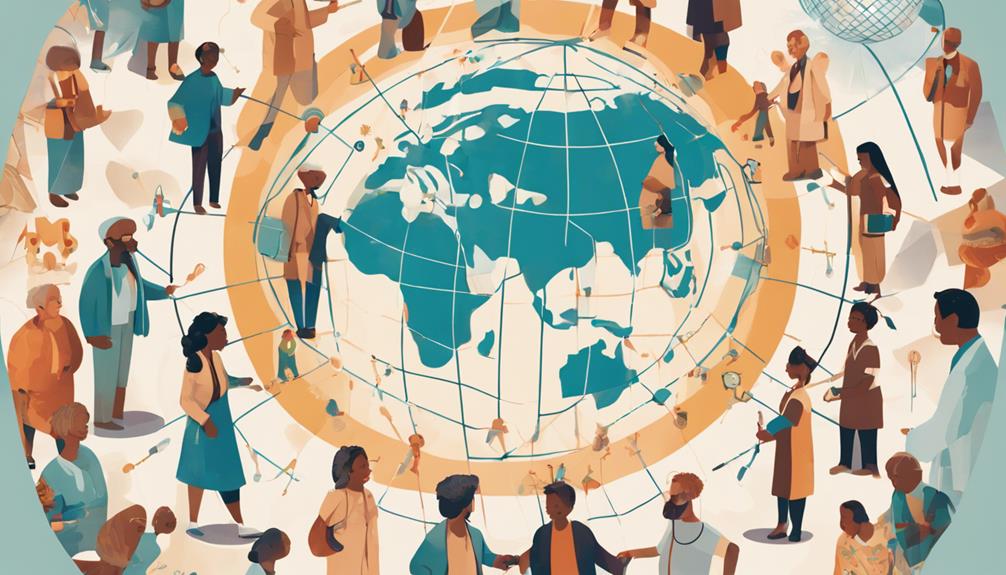
Global health initiatives have revolutionized healthcare systems worldwide, yielding significant improvements in disease prevention, healthcare access, and economic development. Infectious disease rates have declined globally, and access to essential medicines has increased, leading to improved health outcomes and life expectancy. Health inequalities, however, still affect vulnerable populations. Initiatives prioritizing healthcare workforce capacity building, disease surveillance, and sustainable funding are essential for long-term success. Effective collaboration and innovation can further harness the full potential of global health initiatives, driving economic growth, social mobility, and human capital development. As the impact continues to unfold, much remains to be discovered about their transformative power. To maximize their impact, policymakers must integrate healthcare reforms and future strategies that address emerging health challenges and ensure equitable access to care. Strengthening partnerships between governments, private sectors, and non-governmental organizations can foster resilience in healthcare systems and enhance global preparedness for future health crises. By investing in innovation and sustainable healthcare models, global health initiatives can continue to drive progress and improve quality of life for communities worldwide.
Strengthening Health Systems Worldwide
Global health organizations are working tirelessly to strengthen health systems worldwide, recognizing that strong healthcare infrastructure is essential for delivering quality medical care and achieving better health outcomes. A critical component of this effort is effective Health Governance, which involves setting clear policies, allocating resources, and ensuring accountability. This enables healthcare systems to respond efficiently to the needs of the population, making it possible to prevent and manage health crises.
In addition to vital governance, Digital Infrastructure is an essential element in strengthening health systems. This includes the development of electronic health records, telemedicine platforms, and data analytics systems. These digital tools enable healthcare providers to access patient information, consult with specialists, and track disease trends in real-time. This leads to more accurate diagnoses, targeted interventions, and improved health outcomes. Moreover, digital infrastructure facilitates the exchange of information between healthcare facilities, researchers, and policymakers, allowing for more coordinated and effective responses to health challenges. By prioritizing Health Governance and Digital Infrastructure, global health organizations can build resilient health systems that are better equipped to meet the needs of populations worldwide.
Impact on Infectious Disease Rates
By strengthening health systems, effective governance and digital infrastructure have led to a noteworthy decline in infectious disease rates worldwide, as healthcare providers can now respond swiftly to outbreaks and track disease transmission in real-time. This has been made possible through enhanced disease surveillance, which enables healthcare professionals to identify and respond to emerging threats quickly. As a result, the spread of infectious diseases has slowed, and the world has witnessed a remarkable drop in disease-related morbidity and mortality.
However, vaccine hesitancy remains a key obstacle in the fight against infectious diseases. Misinformation and misconceptions about vaccines have led to a decline in vaccination rates, creating pockets of vulnerability in communities. This is particularly concerning in the context of diseases like measles, where vaccination rates need to be extremely high to prevent outbreaks. Global health initiatives must prioritize addressing vaccine hesitancy through education and awareness campaigns, as well as by improving access to accurate information about vaccines.
Despite these challenges, the progress made in reducing infectious disease rates is undeniable. The World Health Organization (WHO) reports that deaths from infectious diseases like malaria, tuberculosis, and HIV/AIDS have declined significantly over the past decade. Continued investment in health systems, digital infrastructure, and disease surveillance will be essential in sustaining this progress and ultimately achieving a world where infectious diseases are a thing of the past.
Access to Essential Medicines Improved
Strengthening health systems has enabled the rapid scale-up of essential medicine distribution, allowing millions of people to access life-saving treatments for chronic diseases. This increased access has been driven by global health initiatives that prioritize medicine affordability and pharmaceutical innovations. As a result, people in low- and middle-income countries can now obtain essential medicines at a lower cost, improving health outcomes and reducing mortality rates.
One key strategy has been to negotiate lower prices with pharmaceutical companies, making medicines more affordable for governments and individuals. This has been achieved through bulk purchasing, price negotiations, and the development of generic alternatives. Additionally, initiatives have focused on improving supply chain management, ensuring that medicines reach those who need them most. Pharmaceutical innovations have also played a significant role, with the development of new, more effective treatments for diseases such as cancer, diabetes, and hypertension.
The impact of these efforts has been significant, with millions of people now able to access essential medicines. This has led to improved health outcomes, reduced morbidity, and increased life expectancy. Moreover, increased access to essential medicines has also had a positive impact on economic productivity, as people are able to return to work and contribute to their communities. Overall, the improvement in access to essential medicines is a confirmation of the power of global health initiatives in driving positive change and improving health outcomes worldwide.
Addressing Health Inequalities Globally
They recognize that health inequalities persist globally, and it's essential to identify the root causes. Healthcare access disparities, inequitable resource distribution, and cultural barriers to care are key points that need to be addressed. By examining these points, global health initiatives can develop targeted strategies to reduce health inequalities and promote health equity.
Disparities in Healthcare Access
Across the globe, a staggering proportion of people lack access to essential healthcare services, perpetuating health inequalities that disproportionately affect vulnerable populations. This limited access is a significant obstacle in addressing health inequalities globally. It's particularly pronounced in rural areas, where healthcare facilities and healthcare professionals are scarce. Social determinants, such as poverty, education, and occupation, also play a significant role in shaping healthcare access.
Some of the key factors contributing to disparities in healthcare access include:
- Limited availability of healthcare facilities and services in rural areas
- High out-of-pocket expenses for healthcare, making it unaffordable for many
- Limited health literacy, leading to delayed or inadequate healthcare seeking
- Social and cultural barriers, such as language and cultural differences, that hinder access to healthcare
- Discrimination based on race, ethnicity, or socioeconomic status that limits access to quality healthcare
Inequitable Resource Distribution
Inequitable distribution of healthcare resources, including finances, infrastructure, and personnel, exacerbates health inequalities globally, disproportionately affecting already vulnerable populations. This uneven allocation of resources perpetuates a cycle of disadvantage, where those who need care the most have limited access to it. Resource scarcity in low-income countries further widens the gap, as they struggle to provide even basic healthcare services. Power dynamics also play a significant role, with wealthy nations often dictating the global health agenda, leaving marginalized communities with limited influence over their own healthcare needs.
The consequences are far-reaching, with poor health outcomes, increased mortality rates, and a perpetuation of poverty. Inequitable resource distribution also leads to a brain drain, as healthcare professionals seek better opportunities in more developed countries, leaving their home countries with even fewer resources. To address health inequalities, it's essential to acknowledge and address these power imbalances, ensuring that resource allocation is more equitable and responsive to the needs of vulnerable populations. By doing so, we can work towards a more just and equitable global health system.
Cultural Barriers to Care
Seventy percent of the world's population, or approximately 5.7 billion people, experience cultural barriers that hinder their access to healthcare, further exacerbating existing health inequalities globally. These cultural barriers can manifest in various ways, making it essential to understand and address them. One significant obstacle is language nuances, which can lead to miscommunication between healthcare providers and patients. This can result in misunderstandings about care expectations, treatment options, and medication regimens.
Some cultural barriers to care include:
- Limited health literacy, making it difficult for individuals to navigate healthcare systems
- Different care expectations, such as varying perceptions of illness and treatment
- Language barriers, leading to miscommunication and misunderstandings
- Cultural beliefs and practices that may conflict with Western medicine
- Limited access to healthcare providers who understand and respect cultural differences
Sustainability of Global Health Efforts
Global health initiatives face significant challenges in sustaining their efforts over time, as they often rely on short-term funding and lack a clear plan for long-term viability. This can lead to a lack of continuity in their programs, making it difficult to achieve meaningful and lasting impact. To overcome these challenges, global health initiatives must prioritize sustainability in their operations.
One key aspect of sustainability is environmental stewardship. Global health initiatives must guarantee that their operations are environmentally sustainable, minimizing their carbon footprint and promoting eco-friendly practices. This not only helps to reduce their environmental impact but also sets a positive example for the communities they serve. For instance, initiatives can adopt renewable energy sources, reduce waste, and promote sustainable agriculture practices.
Financial prudence is another vital factor in sustaining global health efforts. Initiatives must develop and implement sound financial management strategies to ensure they can continue to deliver their programs over the long term. This includes diversifying funding sources, building reserves, and investing in cost-effective solutions. By being financially prudent, global health initiatives can reduce their dependence on short-term funding and ensure they have the resources needed to achieve their goals. By prioritizing environmental stewardship and financial prudence, global health initiatives can build a strong foundation for sustainability, enabling them to make a lasting impact on the health and wellbeing of communities around the world.
Effectiveness of Disease Prevention
Disease prevention strategies have proven to be an essential component of global health initiatives, as they empower communities to take proactive measures against the spread of infectious diseases. By focusing on prevention, global health initiatives can reduce the burden on healthcare systems, alleviate the economic impact of disease outbreaks, and most importantly, save lives.
The effectiveness of disease prevention strategies can be attributed to several key factors, including:
- Improved vaccine coverage: increasing access to vaccines, especially in low-income countries, has been instrumental in reducing the incidence of vaccine-preventable diseases.
- Digital literacy: leveraging digital platforms to disseminate accurate health information has enhanced public awareness and understanding of disease prevention measures.
- Community engagement: involving local communities in disease prevention efforts has fostered a sense of ownership and responsibility, leading to increased uptake of prevention strategies.
- Surveillance and monitoring: strengthening disease surveillance and monitoring systems enables early detection and response to disease outbreaks, thereby preventing their spread.
- Addressing vaccine hesitancy: targeted efforts to address misconceptions and concerns surrounding vaccination have improved vaccine uptake and reduced the risk of disease outbreaks.
Healthcare Workforce Capacity Building
Strengthening healthcare workforce capacity is critical to delivering effective healthcare services, as it enables healthcare professionals to respond efficiently to emerging health threats and provide high-quality patient care. Global health initiatives have recognized the importance of building a robust healthcare workforce and have invested heavily in capacity-building programs. These programs focus on enhancing the skills and knowledge of healthcare professionals, ensuring they possess the necessary skillsets to tackle complex health challenges.
One of the significant benefits of healthcare workforce capacity building is improved staff retention. When healthcare professionals feel equipped to handle the demands of their job, they're more likely to stay in their roles, reducing turnover rates and the associated costs. Additionally, capacity-building programs help align healthcare professionals' skillsets with the needs of the healthcare system, ensuring they can provide high-quality patient care. This alignment is critical, enabling healthcare professionals to respond effectively to emerging health threats and address health disparities.
Global health initiatives have also recognized the importance of continuous professional development, providing opportunities for healthcare professionals to update their skills and knowledge. This not only enhances their ability to provide high-quality patient care but also helps them stay abreast of the latest medical advancements and technologies. By investing in healthcare workforce capacity building, global health initiatives can help guarantee that healthcare systems have the necessary human resources to respond to emerging health threats and provide high-quality patient care.
Long-term Economic Development Benefits
They argue that investing in global health initiatives can have a profound impact on long-term economic development benefits. By improving healthcare outcomes, countries can expect to see increased productivity growth, as a healthier workforce is more efficient and effective. Additionally, better health outcomes can lead to improved human capital, as people are able to reach their full potential and contribute to their economies in meaningful ways.
Increased Productivity Growth
Global health initiatives have been instrumental in fostering a surge in productivity growth, which is a key driver of long-term economic development. By reducing the burden of diseases, these initiatives have enabled workers to be more efficient, leading to an economic boom. A healthier workforce is more productive, and this increased productivity has a direct impact on the overall economy.
Some key benefits of increased productivity growth include:
- Improved workforce efficiency, leading to higher output and better quality work
- Reduced absenteeism and presenteeism, resulting in significant cost savings
- Increased competitiveness, as businesses can produce high-quality goods and services at a lower cost
- Enhanced innovation, as a healthy workforce is more likely to be creative and innovative
- Faster economic growth, as increased productivity leads to higher GDP and economic expansion
Improved Human Capital
Investments in global health initiatives yield a significant dividend in human capital, as a healthier population acquires better education, skills, and training that can drive long-term economic development. This improved human capital translates to a more productive workforce, capable of contributing to the economy in meaningful ways. As people live healthier lives, they're more likely to pursue higher education and acquire specialized skills, leading to increased economic empowerment. This, in turn, fuels social mobility, as individuals from disadvantaged backgrounds have greater opportunities to climb the economic ladder.
Furthermore, a healthier population is more likely to start businesses, innovate, and take calculated risks, which are essential for driving economic growth. The impact of improved human capital is felt across generations, as educated and skilled individuals invest in their children's education and health, creating a virtuous cycle of economic development. By prioritizing global health initiatives, governments and organizations can unleash the full potential of their human capital, paving the way for sustainable economic growth and development.
Frequently Asked Questions
What Role Do Non-Governmental Organizations Play in Global Health Initiatives?
In the 19th century, Florence Nightingale pioneered humanitarian work, paving the way for modern non-governmental organizations (NGOs). Today, NGOs play a crucial role in global health initiatives. They leverage their capacity to reach marginalized communities, leveraging funding strategies like crowdfunding and partnerships to amplify their impact. By doing so, NGOs complement government efforts, ensuring healthcare access to those who need it most.
How Do Global Health Initiatives Address Mental Health Concerns?
She notes that global health initiatives recognize mental health as a vital aspect of overall well-being. However, they often struggle to address mental health concerns due to persistent mental stigma and access barriers. Initiatives are working to reduce stigma by promoting awareness and education, while also increasing access to mental health services, particularly in low-resource settings. By tackling these challenges, global health initiatives can better support individuals' mental health needs.
Can Global Health Initiatives Be Tailored to Local Cultural Contexts?
As the world's cultural tapestry weaves together diverse threads, global health initiatives must follow suit. Can they be tailored to local cultural contexts? The answer lies in embracing cultural sensitivity, where initiatives don't impose a one-size-fits-all approach. Instead, they listen to the community's whispers, engaging with local voices to craft solutions that resonate deeply. By doing so, they can guarantee that their efforts are woven into the fabric of the community, fostering trust and driving meaningful change.
What Is the Impact of Global Health Initiatives on Healthcare Costs?
She explores the impact of global health initiatives on healthcare costs, asking whether they can help reduce expenses. In many cases, they do. By investing in preventative measures and improving healthcare infrastructure, global health initiatives can lead to significant cost savings. Additionally, they often bring economic benefits, such as reducing the financial burden of diseases and increasing productivity. This, in turn, can have a positive ripple effect on local economies.
Do Global Health Initiatives Prioritize Treatment Over Prevention?
Like a seesaw, healthcare teeters between treatment and prevention. Do global health initiatives prioritize the former over the latter? Unfortunately, yes. The disease burden is often so overwhelming that treatment takes center stage, leaving prevention in the shadows. This approach exacerbates health disparities, as vulnerable populations bear the brunt of illness. By shifting focus towards prevention, initiatives can address the root causes of disease, ultimately reducing healthcare costs and promoting health equity.
