
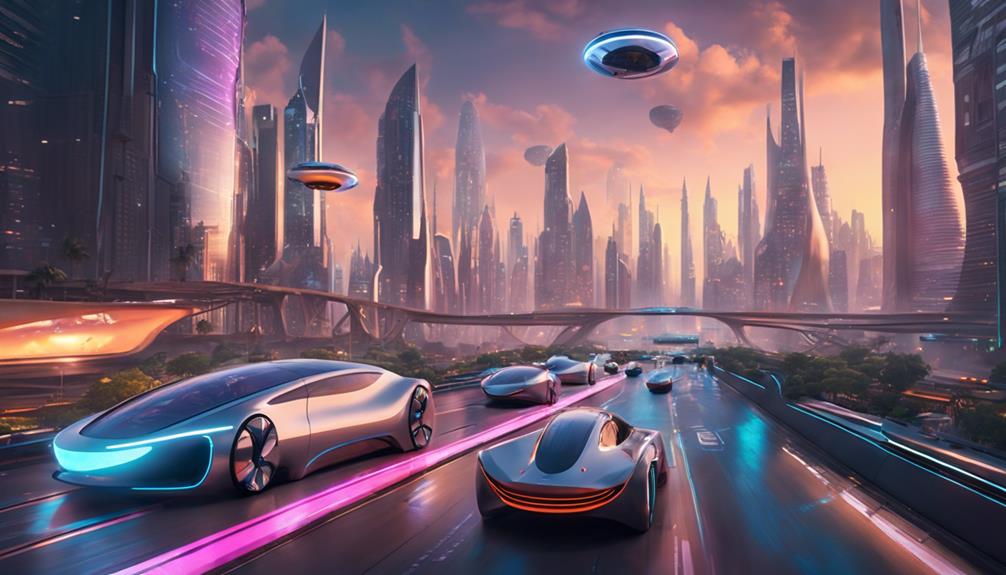
The future of transportation is taking shape, driven by innovations in electric vehicles, autonomous cars, hyperloop systems, urban air mobility, and smart infrastructure. Electric vehicles are gaining traction with expanding charging networks and battery swapping tech. Autonomous cars promise to revolutionize travel, but concerns around cybersecurity and job displacement must be addressed. Hyperloop systems are poised to transform logistics, while urban air mobility is set to reduce travel times and emissions. Smart infrastructure is integrating these modes for seamless travel options. As these innovations converge, they'll reshape the transportation landscape, and there's more to come in this exciting journey.
Electric Vehicles Take the Wheel
Increasingly, electric vehicles are emerging as a pivotal alternative to traditional gas-powered cars, with many countries investing heavily in EV infrastructure and incentives to encourage their adoption. As a result, EVs are becoming more accessible and convenient for consumers. One of the significant advancements in EV technology is battery swapping, which allows drivers to replace their depleted batteries with fully charged ones in a matter of minutes. This innovation addresses the range anxiety issue, making long road trips more feasible.
Moreover, the expansion of charging networks is playing an essential role in promoting EV adoption. Governments and private companies are investing heavily in building extensive networks of charging stations, providing drivers with more opportunities to recharge their vehicles on the go. The growth of fast-charging networks, in particular, is helping to reduce charging times, making EVs more practical for daily use. With the ability to charge their vehicles quickly and easily, drivers are more likely to opt for electric vehicles over traditional gas-powered cars.
As EV technology continues to advance, it's likely that we'll see even more innovations that address the limitations of electric vehicles. With the ongoing development of battery swapping and charging networks, EVs are poised to become an increasingly popular choice for consumers. As the world shifts towards a more sustainable future, electric vehicles are taking the wheel, leading the charge towards a cleaner, greener transportation system.
Autonomous Cars Hit the Road
As autonomous vehicle technology reaches new heights, self-driving cars are taking to the roads, promising to revolutionize the way we travel. With major companies like Waymo, Tesla, and GM investing heavily in autonomous tech, it's clear that this is more than just a pivotal trend. Autonomous vehicles are being touted as the solution to numerous transportation woes, from reducing traffic congestion to increasing safety on the roads.
However, as with any emerging technology, there are concerns that need to be addressed. Cybersecurity concerns, for instance, are a major hurdle that autonomous vehicle manufacturers need to overcome. With self-driving cars relying on complex software and sensor systems, the risk of hacking and data breaches is very real. Companies are working to develop robust security protocols, but it's an ongoing challenge.
Another pressing concern is job displacement. As autonomous vehicles become more widespread, there's a risk that human drivers will be replaced by machines. This could have significant social and economic implications, particularly for industries that rely heavily on human drivers, such as trucking and taxi services. While autonomous vehicles promise to bring many benefits, it's pivotal that policymakers and industry leaders work together to mitigate the negative impacts on workers and communities.
Hyperloop Systems Gain Momentum
Hyperloop systems, touted as the future of high-speed transportation, are gaining traction globally, with companies like Virgin Hyperloop One and Hyperloop Transportation Technologies making significant strides in developing this revolutionary technology. The concept is simple: propel vehicles through vacuum tubes at speeds of up to 700 miles per hour, reducing travel times and increasing efficiency. The benefits are numerous, including reduced emissions, increased productivity, and enhanced connectivity between cities.
One of the key advantages of hyperloop systems is their potential for cargo transport. With the ability to move goods at unprecedented speeds, hyperloop technology could revolutionize the logistics industry, reducing delivery times and increasing the global supply chain's overall efficiency. This could have a significant impact on the economy, as businesses would be able to respond more quickly to changing market demands.
Virgin Hyperloop One has already made significant progress in developing its hyperloop technology, with successful test runs and partnerships with governments and private companies around the world. Hyperloop Transportation Technologies is also making strides, with its own test tracks and partnerships in place. As the technology continues to advance, it's clear that hyperloop systems are poised to play a major role in the future of transportation, transforming the way we move people and goods around the world.
Urban Air Mobility Takes Flight
Cities are on the cusp of a revolution in transportation, as urban air mobility technology prepares to take to the skies, promising to transform the way people and goods move within metropolitan areas. This innovative concept involves the use of electric or hybrid-electric vertical takeoff and landing (eVTOL) aircraft to transport passengers and cargo within cities. With the ability to bypass congested roads, urban air mobility has the potential to greatly reduce travel times, emissions, and noise pollution. Companies and governments worldwide are investing in the development of this technology, aiming to create safe and efficient aerial transportation networks. Inspiring stories from around the globe highlight successful test flights and innovative infrastructure projects that are bringing urban air mobility closer to reality. As regulations and air traffic management systems evolve, these advancements could soon make airborne commuting a daily convenience for millions.
As urban air mobility takes shape, city planners and regulators are working to integrate this new mode of transportation into existing infrastructure. This includes developing air traffic management systems that can handle the increased volume of air traffic, as well as designing vertiports and landing pads that can accommodate the unique needs of eVTOL aircraft. City planning will also need to adapt to accommodate the new infrastructure, with considerations for noise mitigation, zoning, and emergency response procedures.
The benefits of urban air mobility are vast, with the potential to increase productivity, reduce congestion, and enhance quality of life for urban residents. As the technology continues to advance and regulations are put in place, it's likely that urban air mobility will become a reality in cities around the world. With its promise to transform the way we move within cities, urban air mobility is an exciting development in the future of transportation.
Smart Infrastructure Gets Connected
Roads, highways, and interchanges are getting a digital makeover, with smart infrastructure technologies transforming the way they're designed, built, and maintained. This digital transformation is driven by the need for efficient, safe, and sustainable transportation systems. Smart infrastructure technologies, such as sensors, IoT devices, and data analytics, are being integrated into roads and highways to improve traffic flow, reduce congestion, and enhance safety.
One key area of focus is Intelligent Intersections, which use real-time data and advanced algorithms to optimize traffic signal control. This results in reduced waiting times, lower emissions, and a decrease in accidents. Additionally, Resilient Networks are being developed to ensure that transportation systems can withstand and recover from natural disasters, cyberattacks, and other disruptions. These networks use advanced materials, such as self-healing concrete, and redundant systems to minimize downtime and guarantee continuous operation.
Smart infrastructure is also enabling the widespread adoption of electric vehicles (EVs) and autonomous vehicles (AVs). With the installation of EV charging stations and dedicated lanes for AVs, cities are preparing for a future where transportation is clean, efficient, and safe. Moreover, smart infrastructure is facilitating the integration of different transportation modes, such as public transit, ride-sharing, and bike-sharing, to provide users with seamless and convenient travel options. As the transportation landscape continues to evolve, smart infrastructure will play a critical role in shaping the future of mobility.
Frequently Asked Questions
Will Self-Driving Trucks Replace Human Truck Drivers Entirely?
As the sun sets on the open road, a lone driver's silhouette fades into the horizon, a relic of a bygone era. Will self-driving trucks replace human truck drivers entirely? It's a question that sparks debate. While autonomous trucks promise increased efficiency, they also threaten job displacement on a massive scale. Regulatory frameworks will need to adapt to mitigate this risk, ensuring a smoother shift to a future where humans and machines share the road.
How Will Hyperloop Systems Handle Inclement Weather Conditions?
Hyperloop systems will need to counteract inclement weather conditions to guarantee safe and efficient travel. To do this, they'll employ advanced technologies like vibration dampening to minimize the impact of strong winds or earthquakes. Additionally, atmospheric pressurization will help maintain a stable internal environment, shielding passengers from extreme temperatures and air pressure changes. By integrating these features, hyperloop systems can promise a smooth ride, even in harsh weather conditions.
Are Flying Taxis Environmentally Friendly Compared to Traditional Cars?
Did you know that a single flying taxi can reduce carbon emissions by up to 90% compared to a traditional car? Flying taxis are indeed environmentally friendly, boasting a markedly lower carbon footprint. Additionally, they produce minimal noise pollution, making them a quieter alternative to traditional air travel. As they continue to develop, flying taxis might just revolutionize urban transportation, providing a cleaner, greener, and more peaceful ride.
Will Smart Traffic Lights Prioritize Emergency Vehicle Passage?
She expects smart traffic lights to prioritize emergency vehicle passage, reducing response times in life-or-death situations. By integrating priority scheduling, these advanced systems can detect approaching emergency vehicles and adjust traffic signals accordingly. This coordinated approach will minimize traffic congestion, allowing ambulances, fire trucks, and police cars to reach their destinations quickly and safely.
Can Autonomous Vehicles Detect and Respond to Road Rage?
In addition, autonomous vehicles are being designed to detect and respond to road rage by leveraging emotional intelligence. They can recognize aggressive driving behaviors, such as tailgating or weaving in and out of lanes, and adjust their own speed and distance accordingly. Furthermore, they're programmed to respect social norms, like maintaining a safe distance and yielding to other drivers, to promote a calmer and more courteous driving environment.
