
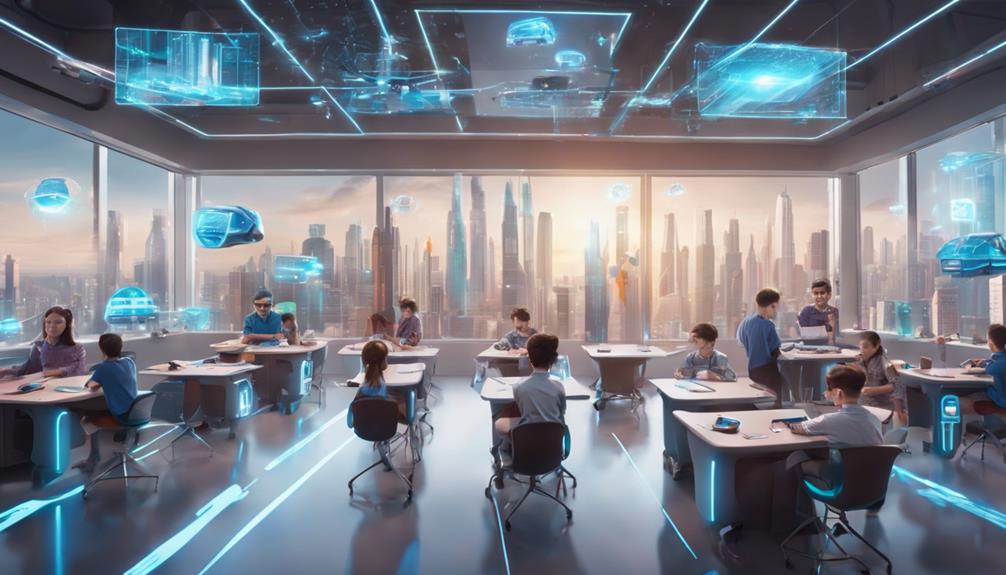
Technology is transforming the education landscape at an unprecedented rate, with emerging trends and innovations poised to revolutionize the way we learn, teach, and interact in the classroom. Personalized learning pathways, gamified assessments, and AI-powered tutoring systems are becoming the new norm. Virtual and augmented reality are developing soft skills and increasing engagement. Online learning is breaking geographical barriers, providing cost-effective education options. Emerging tech is leveraging gamification, blockchain, and adaptive learning systems to tailor experiences to individual needs. As education continues to evolve, the future holds endless possibilities for innovative applications of technology to shape the learning experience.
Revolutionizing the Learning Experience
By harnessing the power of technology, educators are revolutionizing the learning experience, transforming traditional classrooms into immersive, interactive, and highly personalized environments. This shift is driven by the need to engage students more effectively, improve learning outcomes, and better prepare them for success in an increasingly complex world.
One key strategy is the creation of Personalized Pathways, which enable students to learn at their own pace and focus on topics that resonate with their individual interests and strengths. This approach acknowledges that every student learns differently and that a one-size-fits-all approach is no longer sufficient. By leveraging digital tools and resources, educators can create customized learning plans that cater to each student's unique needs and abilities.
Another innovative approach is the use of Gamified Assessments, which transform traditional tests and quizzes into engaging, interactive experiences. By incorporating game design elements, such as rewards, challenges, and feedback loops, educators can make assessments more enjoyable and motivating for students. This not only improves student engagement but also provides valuable insights into their knowledge and skills, enabling educators to identify areas where additional support is needed. As technology continues to evolve, it's likely that we'll see even more innovative approaches to learning emerge, further transforming the education landscape.
AI in the Classroom
Artificial intelligence is being integrated into educational settings, enabling teachers to focus on what they do best: providing emotional support and guidance, while AI handles tasks like grading, feedback, and lesson planning. This shift allows educators to devote more time to personalized instruction, building stronger relationships with students, and creating engaging lesson plans. AI-powered Teacher Assistants can analyze vast amounts of data, identifying areas where students need extra support, and providing Intelligent Feedback that's both timely and relevant.
Here are just a few ways AI is transforming the classroom:
- Personalized Learning Paths: AI creates customized learning plans tailored to each student's strengths, weaknesses, and learning style.
- Automated Grading: AI accurately grades assignments, freeing up teachers to focus on more critical tasks.
- Intelligent Tutoring Systems: AI-powered tutoring systems offer one-on-one support, providing real-time feedback and guidance.
- Enhanced Accessibility: AI helps make learning materials more accessible to students with disabilities, ensuring equal opportunities for all.
Virtual and Augmented Reality
Virtual and augmented reality technologies are revolutionizing the educational landscape, immersing students in interactive, experiential learning environments that simulate real-world situations. By leveraging VR and AR, educators can create engaging, memorable, and effective learning experiences that enhance student outcomes.
| Benefits | Applications |
|---|---|
| Develops Soft Skills | Virtual role-playing exercises for communication, collaboration, and leadership skills |
| Increases Engagement | Interactive 3D models for STEM education, making complex concepts more accessible |
| Enhances Retention | Virtual fieldtrips to historical sites, museums, or other places, making learning more experiential |
| Fosters Empathy | Immersive experiences that simulate real-world scenarios, promoting understanding and compassion |
| Saves Resources | Cost-effective alternatives to traditional fieldtrips, reducing logistical and financial burdens |
Through VR and AR, students can explore historical events, visit distant lands, or dissect virtual cadavers, all from the comfort of their classrooms. These technologies are particularly effective in developing soft skills, such as communication, collaboration, and leadership, which are essential for success in the modern workforce. By incorporating virtual and augmented reality into their curricula, educators can prepare students for an increasingly complex and interconnected world. As VR and AR technologies continue to evolve, it's likely that their impact on education will only continue to grow.
The Rise of Online Learning
The internet's widespread adoption has precipitated a seismic shift in the education sector, with online learning emerging as a viable alternative to traditional brick-and-mortar institutions. This shift is driven by the need to increase accessibility and break down geographical barriers to education. Online learning platforms have made it possible for students to access high-quality educational content from anywhere in the world, at any time.
Some key benefits of online learning include:
- Increased accessibility: Students with disabilities, those living in remote areas, and those with conflicting schedules can now access education that was previously out of reach.
- Global outreach: Online learning platforms can reach a global audience, allowing students to learn from experts and peers from diverse backgrounds.
- Personalized learning: Online platforms can offer tailored learning experiences that cater to individual learning styles and needs.
- Cost-effectiveness: Online learning can reduce the financial burden of traditional education, making it a more affordable option for many students.
The rise of online learning has also led to a significant reduction in accessibility barriers. Students can now access educational resources that were previously limited by geographical location or financial constraints. Additionally, online learning has enabled global outreach, allowing educators to reach a broader audience and creating a more connected global community of learners. As online learning continues to evolve, it's likely to play an increasingly important role in shaping the future of education.
Emerging Tech in Education
As educators and developers continue to harness the power of technology, innovative tools like augmented reality, blockchain, and AI-powered adaptive learning systems are transforming the educational landscape. These emerging technologies are revolutionizing the way students learn, teachers teach, and educational institutions operate.
One of the most significant trends in emerging tech is the rise of gamification platforms. By incorporating game design elements into learning experiences, educators can increase student engagement, motivation, and retention. Gamification platforms can also provide real-time feedback and assessment, making it easier for teachers to track student progress.
Another area of growth is the use of blockchain technology to issue and verify credentials. Blockchain credentials provide a secure, transparent, and tamper-proof way to verify academic achievements and skills. This technology has the potential to revolutionize the way we think about credentialing, making it easier for students to showcase their skills and for employers to verify qualifications.
AI-powered adaptive learning systems are also gaining traction. These systems use machine learning algorithms to tailor learning experiences to individual students' needs and abilities. By providing personalized learning pathways, AI-powered adaptive learning systems can help students learn more efficiently and effectively.
As emerging tech continues to evolve, it's likely that we'll see even more innovative applications in education. From virtual reality field trips to AI-driven tutoring platforms, the possibilities are endless. One thing is certain: emerging tech is changing the face of education, and it's an exciting time to be a part of it.
Frequently Asked Questions
Will Education Technology Replace Human Teachers in the Future?
Will education technology replace human teachers in the future? It's unlikely. While technology can enhance learning, it can't replicate the human touch that teachers provide. A teacher's presence boosts student engagement and motivation, and their empathy and emotional intelligence help students navigate complex issues. Additionally, high teacher morale is important for effective teaching, and replacing teachers with tech could lead to a decline in morale, ultimately harming students.
How Will Student Data Privacy Be Protected in Online Learning?
A recent study by the National Education Association found that online learning platforms collect extensive student data, raising concerns about privacy. To address this, educators and policymakers must give priority to data encryption to safeguard sensitive information. Additionally, regulatory frameworks, such as the Family Educational Rights and Privacy Act (FERPA), need to be strengthened to guarantee compliance. By implementing robust encryption and regulatory measures, student data privacy can be effectively protected in online learning environments.
Will Personalized Learning Lead to Unequal Educational Opportunities?
Will personalized learning lead to unequal educational opportunities? This concern is valid, as personalized learning may exacerbate existing social mobility issues. If not implemented carefully, it can widen learning gaps between students from different socio-economic backgrounds. Those with access to better resources and technology may receive more tailored support, leaving others behind. This could further entrench social inequalities, making it imperative to guarantee equitable access to personalized learning tools and opportunities.
Can Education Technology Bridge the Gap for Underprivileged Students?
She believes that education technology can bridge the gap for underprivileged students, but it's important to guarantee digital inclusion. This means providing access to devices and internet connectivity, as well as addressing the skills gap. By doing so, education technology can promote learning equity, allowing these students to reach their full potential. It's not a replacement for human interaction, but a supplement to level the playing field.
Will There Be a Digital Divide in Access to Education Technology?
Some might argue that access to education technology is already widespread, but she counters that this assumption overlooks rural inequality. In reality, many rural areas lack reliable internet, exacerbating socio-economic disparities. As a result, there will indeed be a digital divide in access to education technology, with underprivileged students falling further behind their urban counterparts. This gap will only continue to grow unless targeted efforts are made to address these disparities. Bridging this divide requires investment in infrastructure and policies that ensure equitable access to digital learning tools. Recognizing the role of education in economy, policymakers must prioritize funding for rural schools, enabling students to develop the skills necessary for a competitive workforce. Without such interventions, the gap in educational opportunities will persist, limiting economic mobility for underprivileged communities.
