
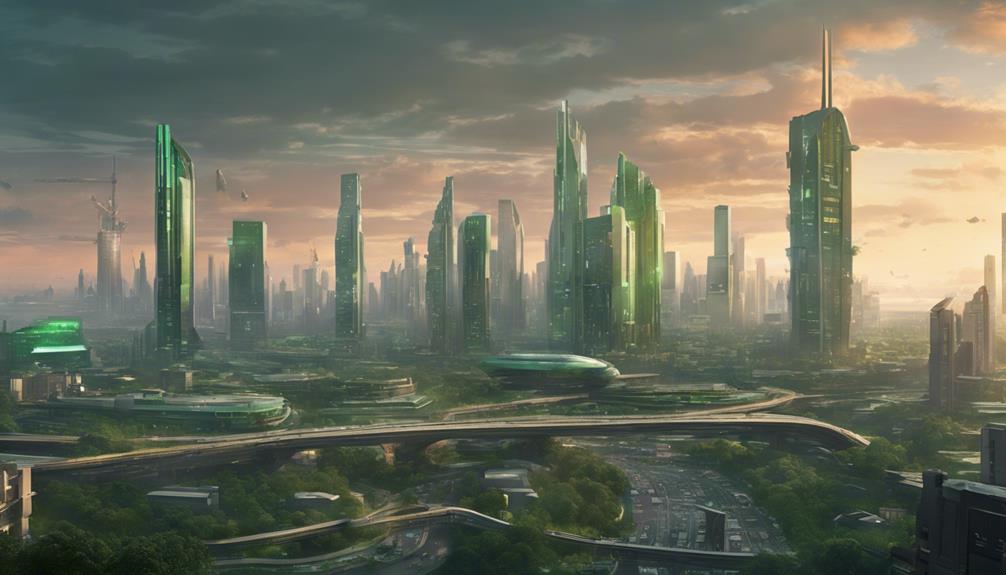
Urbanization is transforming cities worldwide, with the global urban population projected to reach 6.4 billion by 2050, mostly in Asia and Africa. Cities are emerging as innovation hubs, driving economic growth, and fostering collaboration between academia, industry, and government. Cultural diversity intensifies, leading to new forms of expression and exchange. Urbanization also brings infrastructure challenges, environmental concerns, and social inequality. To address these issues, cities need to adopt sustainable infrastructure, inclusive zoning, and collaborative governance models. As urbanization continues to reshape cities, understanding these transformations is essential for building a more equitable, sustainable, and connected urban future – and there's much more to discover.
Urban Population Growth Projections
By 2050, the global urban population is projected to reach 6.4 billion, with over 90% of this growth occurring in Asia and Africa. This rapid urbanization will have significant implications for cities, as they struggle to accommodate the influx of new residents. One of the major concerns is urban sprawl, where cities expand outward, consuming surrounding land and resources. This can lead to inefficient use of infrastructure, increased commuting times, and a loss of natural habitats.
As cities grow, they'll need to manage their population density more effectively. High population density can put a strain on resources, infrastructure, and services, leading to reduced quality of life for residents. On the other hand, well-managed density can foster a more efficient use of resources, promote walkability, and create thriving community centers. To achieve this, cities will need to adopt innovative urban planning strategies, such as mixed-use development, green spaces, and compact, connected neighborhoods.
The challenge of accommodating a growing urban population will require cities to be creative and adaptable. They'll need to balance the need for growth with the need to preserve natural resources, protect the environment, and secure the well-being of their citizens. By understanding the implications of urban population growth, cities can proactively plan for a sustainable, resilient, and thriving future.
Cities as Innovation Hubs
Cities are increasingly emerging as hubs for innovation, driving economic growth and competitiveness through cutting-edge technologies, entrepreneurial spirit, and collaborative ecosystems. These innovation hubs are characterized by the presence of startup accelerators, which provide resources, mentorship, and funding to early-stage startups. This support enables entrepreneurs to develop and refine their ideas, leading to the creation of new products, services, and industries.
The tech ecosystems in these cities are also thriving, with a high concentration of startups, venture capitalists, and established tech companies. This ecosystem allows for the free flow of ideas, talent, and resources, creating a virtuous cycle of innovation and growth. For instance, cities like San Francisco, New York, and Singapore have emerged as global tech hubs, attracting top talent and investment from around the world.
The innovation hubs are also fostering collaboration between academia, industry, and government. Universities and research institutions are working closely with companies to develop new technologies and solutions, while governments are providing support through policies and funding. This collaborative approach is driving innovation in areas such as artificial intelligence, clean energy, and healthcare, addressing some of the world's most pressing challenges.
As cities continue to evolve as innovation hubs, they are poised to drive economic growth, create new opportunities, and improve the quality of life for their citizens. By leveraging their unique strengths and advantages, cities can establish themselves as leaders in the global innovation landscape.
Cultural Diversity and Exchange
As cities grow, they become melting pots of cultures, fostering a unique cultural fusion that redefines urban identity. This urban mosaic of identities is a hallmark of modern cities, where diverse communities coexist and interact, giving rise to global neighborhoods. In these vibrant hubs, cultural exchange and cross-pollination are the norm, enriching the urban experience.
Cultural Fusion in Cities
Diverse cultural traditions converge in urban centers, fueling a vibrant exchange of ideas, customs, and artistic expressions. This cultural fusion is particularly evident in the food traditions of cities, where culinary practices from around the world blend together to create unique flavors and dishes. Street food vendors, restaurants, and markets showcase the diversity of urban cuisine, offering everything from traditional ethnic dishes to innovative fusion cuisine.
Artistic expressions also thrive in urban environments, as creatives from different cultural backgrounds come together to produce works that reflect the city's eclectic spirit. Graffiti murals, public installations, and performance art pieces often blend styles, techniques, and themes, giving voice to the city's diverse population. The result is a rich tapestry of cultural expression, where traditional and contemporary, local and global, intersect and overlap. As urbanization continues to shape cities worldwide, this cultural fusion will only continue to intensify, giving rise to new and exciting forms of cultural expression.
Urban Mosaic of Identities
In the urban melting pot, individuals from varied ethnic, national, and socioeconomic backgrounds converge, forming a vibrant mosaic of identities that continually shift and intersect. This cultural diversity gives rise to a complex web of community boundaries, which are constantly being redrawn and redefined. As people from different walks of life come together, they bring with them their unique experiences, values, and beliefs, leading to a rich tapestry of identities. This dynamic interaction fosters both collaboration and tension, as individuals navigate the challenges of coexistence while embracing the opportunities for cultural exchange. Over time, these interactions influence broader societal changes, with social movements shaping society by advocating for inclusion, equity, and the recognition of diverse identities. As a result, urban spaces become arenas for dialogue and transformation, where traditions evolve and new cultural narratives emerge.
However, this diversity also gives rise to identity politics, where individuals and groups assert their distinctiveness and negotiate their place within the urban landscape. As a result, community boundaries become fluid and permeable, with individuals often identifying with multiple groups and affiliations. This dynamic interplay of identities transforms urban spaces into vibrant hubs of cultural exchange, creativity, and innovation. As cities continue to grow and evolve, the urban mosaic of identities will remain a defining feature, shaping the social, economic, and cultural fabric of urban life.
Global Neighborhoods Emerge
Cities are now witnessing the emergence of global neighborhoods, where cultural diversity and exchange flourish, fostering vibrant ecosystems of creativity, entrepreneurship, and community engagement. These neighborhoods transcend traditional geographical boundaries, blurring virtual borders and creating a rich tapestry of community narratives. As people from diverse backgrounds come together, they bring with them unique perspectives, skills, and experiences, fueling innovation and collaboration.
- Global neighborhoods offer a platform for intercultural dialogue, promoting cross-cultural understanding and breaking down social barriers.
- They provide opportunities for knowledge sharing, skill exchange, and co-creation, driving entrepreneurship and economic growth.
- The diversity of global neighborhoods fosters a sense of community, encouraging social cohesion and a shared sense of belonging.
- They create a hotbed for artistic expression, with a vibrant cultural scene that showcases the beauty of diversity.
- By embracing global neighborhoods, cities can tap into the collective potential of their residents, driving urban transformation and creating a brighter future for all.
Economic Development and Job Creation
As cities urbanize, they become hotbeds for economic growth, fostering the emergence of new industry sectors that didn't exist before. This, in turn, creates a surge in entrepreneurship, as innovative individuals capitalize on new opportunities. As a result, urbanization brings about a significant increase in job creation, transforming the economic landscape of cities worldwide.
New Industry Sectors
Rapid urbanization has spawned a plethora of new industry sectors, driving economic development and job creation in metropolitan areas worldwide. These emerging sectors are not only creating new opportunities but also transforming the way cities function. The growth of smart manufacturing, for instance, has led to the development of advanced technologies and innovative production methods. Similarly, the increasing adoption of virtual reality is opening up new avenues for entertainment, education, and healthcare.
Some of the key new industry sectors that are gaining traction include:
- Clean Energy: With a growing focus on sustainability, clean energy solutions are becoming increasingly important, driving innovation and job creation in the sector.
- Healthtech: Advances in healthcare technology are improving healthcare outcomes and creating new opportunities for entrepreneurs and innovators.
- Edtech: The rise of online learning platforms is transforming the education sector, making high-quality education more accessible and affordable.
- Fintech: The growth of financial technology is improving financial inclusion, making it easier for people to access financial services.
- Cybersecurity: As cities become increasingly dependent on technology, the need for robust cybersecurity solutions is becoming more pressing, driving growth in this sector.
Increased Entrepreneurship
The emergence of new industry sectors has sparked a surge in entrepreneurial activity, driving economic development and job creation in metropolitan areas worldwide. This increased entrepreneurship is transforming urban landscapes, as startups and small businesses become key drivers of growth and innovation. In cities, startup ecosystems are flourishing, providing resources, networks, and funding opportunities for entrepreneurs to turn their ideas into reality. Notably, female founders are playing a significant role in this shift, leveraging their unique perspectives and skills to launch successful ventures. As a result, cities are witnessing a proliferation of coworking spaces, incubators, and accelerators, all designed to support and nurture entrepreneurial talent. This, in turn, is creating new job opportunities, stimulating local economies, and enhancing urban livability. By fostering a culture of entrepreneurship, cities are positioning themselves as hubs for innovation, creativity, and progress, ultimately redefining the urban experience for residents and visitors alike.
Infrastructure Challenges and Solutions
Cities face crumbling infrastructure, from potholed roads to bursting sewage systems, which demands innovative solutions to support growing urban populations. As urbanization continues to transform cities worldwide, the strain on existing infrastructure is becoming increasingly apparent. Traffic congestion is a major issue, with lengthy commutes and gridlocked streets plaguing city dwellers. Additionally, the environmental impact of urbanization is exacerbating the problem, with air and water pollution becoming significant concerns.
To address these challenges, cities are turning to green infrastructure as a sustainable solution. This approach incorporates natural systems and green spaces into urban planning, mitigating the effects of pollution and congestion. For instance, green roofs and walls can reduce urban heat islands, while green corridors can filter pollutants from stormwater runoff.
Some key strategies for addressing infrastructure challenges include:
- Investing in smart traffic management systems to optimize traffic flow and reduce congestion
- Implementing green infrastructure initiatives, such as parks and green spaces, to mitigate urban heat islands and air pollution
- Upgrading sewage systems to prevent overflows and pollution
- Promoting mixed-use development and pedestrian-friendly infrastructure to reduce the need for personal vehicles
- Encouraging sustainable transportation options, such as electric or hybrid vehicles, and public transportation systems
Affordable Housing and Displacement
Nearly 90% of urban residents in developing countries struggle to find affordable housing, leading to widespread displacement and social unrest. This crisis is further exacerbated by gentrification effects, where wealthy investors and developers buy up properties, pushing low-income residents out of their homes and communities. As a result, eviction patterns emerge, with long-time residents forced to relocate to peripheral areas, often characterized by poor infrastructure and limited access to basic services.
The consequences of unaffordable housing are far-reaching, contributing to increased poverty, inequality, and social segregation. Displaced residents often face significant barriers in accessing healthcare, education, and employment opportunities, perpetuating cycles of disadvantage. Moreover, the loss of community networks and social connections can lead to feelings of isolation and marginalization.
Urban planners and policymakers must prioritize affordable housing initiatives, incorporating inclusive zoning policies and community-led development projects. This requires a shift away from profit-driven gentrification strategies and towards people-centered approaches that prioritize the needs of existing residents. By addressing the affordable housing crisis, cities can mitigate the risk of displacement, foster more equitable and resilient communities, and promote sustainable urban development.
Environmental Sustainability Efforts
As urban populations balloon, they're putting unprecedented pressure on natural resources, necessitating innovative environmental sustainability efforts to mitigate the ecological footprint of city living. Cities are recognizing the urgent need to adopt eco-friendly practices to guarantee a livable future. One approach is the integration of Green Infrastructure, which incorporates natural systems into urban planning to manage stormwater runoff, reduce air pollution, and provide habitats for urban wildlife. This can include green roofs, urban parks, and green spaces that also serve as community hubs.
Cities are also investing in Eco Friendly Transportation, such as electric buses, bike-sharing systems, and pedestrian-friendly infrastructure. These initiatives not only reduce carbon emissions but also improve air quality and enhance the overall quality of life for residents.
Some notable environmental sustainability efforts include:
- Implementing smart grids that optimize energy distribution and reduce waste
- Incorporating renewable energy sources, like solar and wind power, into city infrastructure
- Implementing recycling programs and reducing waste sent to landfills
- Creating green corridors and urban gardens to mitigate the urban heat island effect
- Developing sustainable water management systems that conserve and harvest rainwater
Social Inequality and Urban Planning
Urban planners are confronting the fact that poorly designed neighborhoods have historically perpetuated social inequality, exacerbating existing socioeconomic disparities. In many cities, low-income and minority communities are often relegated to areas with limited access to green spaces, public transportation, and essential services. This lack of access to resources and opportunities further entrenches social and economic inequalities. In contrast, affluent communities often enjoy better-designed neighborhoods with more amenities, perpetuating the cycle of privilege.
The concept of spatial justice highlights the importance of fair and equal access to urban resources and opportunities. Urban planners are recognizing the need to address these inequalities through inclusive and equitable design practices. For instance, mixed-income housing developments can help break down social and economic barriers. Additionally, community-led planning initiatives can guarantee that local residents have a say in shaping their neighborhoods.
However, the proliferation of gated communities poses a significant challenge to achieving spatial justice. These exclusive enclaves often prioritize the interests of wealthy residents over the needs of the broader community, reinforcing social segregation and inequality. Urban planners must work to balance the need for security and exclusivity with the need for inclusivity and social cohesion. By prioritizing spatial justice and community-led design, cities can become more equitable, sustainable, and just for all residents.
The Future of Urban Governance
Cities must rethink their governance structures to effectively address the complex, interconnected challenges of urbanization, including social inequality and spatial injustice. The traditional top-down approach is no longer sufficient, and cities need to adopt more collaborative and inclusive models of governance. This requires leveraging technology, such as data analytics, to better understand urban dynamics and make data-driven decisions. It also involves fostering civic engagement and participatory budgeting to guarantee that citizens have a voice in shaping their city's future.
To achieve this, cities can:
- Establish data-driven decision-making frameworks that integrate data analytics with community input
- Create participatory budgeting processes that allow citizens to vote on city projects and initiatives
- Foster collaborative governance models that bring together city officials, citizens, and private sector stakeholders
- Develop inclusive and accessible urban planning processes that prioritize social equity and environmental sustainability
- Leverage technology to enhance transparency, accountability, and citizen engagement in urban governance
Frequently Asked Questions
How Do Cities Balance Preserving History With Modern Urban Development Needs?
Cities face a delicate balance between preserving history and meeting modern urban development needs. They must integrate heritage sites into new projects, rather than demolishing them. Cultural revitalization efforts can breathe new life into historic areas, making them vibrant hubs of activity. By incorporating heritage integration into urban planning, cities can honor their past while building for the future, creating unique spaces that showcase their rich cultural heritage.
What Role Do Urban Gardens Play in Improving Air Quality and Well-Being?
Urban gardens play a crucial role in improving air quality and well-being in cities. By incorporating green infrastructure, these gardens help purify the air, reduce noise pollution, and provide a peaceful escape from urban chaos. Additionally, they promote food security by offering a sustainable source of fresh produce, thereby enhancing the overall quality of life for urban dwellers.
Can Urban Planning Strategies Reduce the Impact of Natural Disasters?
Coincidentally, as cities face increasing threats from natural disasters, urban planners are turning to innovative strategies to mitigate the impact. By incorporating disaster resilience into their designs, cities can reduce the devastating effects of floods and earthquakes. Effective flood mitigation measures, such as green infrastructure and permeable pavements, can greatly decrease damage. By adopting these forward-thinking approaches, cities can guarantee the safety and well-being of their citizens, even in the face of disaster.
How Do Cities Ensure Equal Access to Public Transportation for All Citizens?
Cities prioritize Transportation Equity to provide equal access to public transportation for all citizens. They achieve this by implementing Fare Fairness policies, which reduce costs for low-income residents and students. Additionally, cities invest in accessible infrastructure, such as wheelchair-accessible buses and pedestrian-friendly roads. By doing so, they promote social equity and provide opportunities for all citizens to participate in urban life.
What Is the Impact of Urbanization on Mental Health and Stress Levels?
She explores the profound impact of urbanization on mental health and stress levels. Urban anxiety becomes a pressing concern as city dwellers navigate crowded streets and competitive environments. City isolation, despite being surrounded by people, further exacerbates feelings of loneliness. As a result, stress levels skyrocket, and mental wellbeing suffers. It's essential to acknowledge these effects and develop strategies to mitigate them, ensuring cities prioritize their residents' mental health.
