
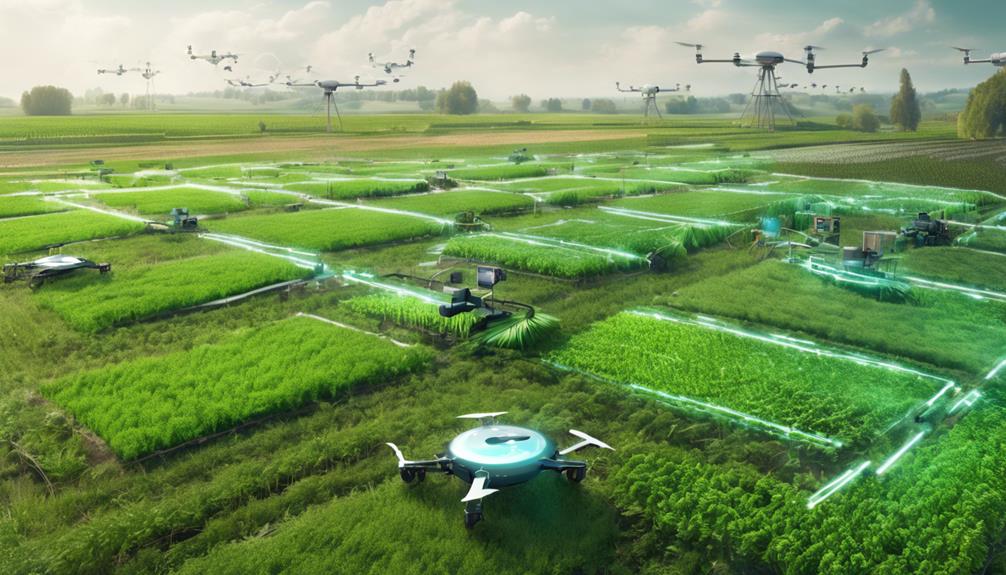
Technological advancements are transforming agriculture, increasing crop yields, and promoting sustainability. Precision farming utilizes GPS, drones, and satellite imaging to provide precise information on soil conditions and crop health, enabling tailored farming practices. Vertical farming enhances crop yields by up to 30% and allows year-round production regardless of weather conditions. Additionally, data-driven strategies and IoT sensors optimize resource allocation, while AI-powered crop prediction and farm robotics revolutionize farming practices. As agriculture continues to evolve, new innovations are emerging, and the industry is poised for even greater change and growth in the years to come.
Precision Farming Revolution
With the advent of cutting-edge technologies, precision farming has emerged as a game-changer in the agricultural landscape, transforming the way farmers cultivate and harvest crops. This innovative approach allows farmers to make data-driven decisions, reducing waste and increasing yields. By leveraging advanced tools like GPS, drones, and satellite imaging, farmers can now gather precise information about their fields, including soil conditions, moisture levels, and crop health.
Soil mapping, a critical component of precision farming, enables farmers to create detailed maps of their soil's characteristics, allowing them to tailor their farming practices to specific areas. This targeted approach guarantees that crops receive the exact amount of water, nutrients, and pesticides they need, reducing waste and environmental impact. Furthermore, precision farming facilitates the 'Farm to Table' movement by providing consumers with fresh, locally grown produce, while also supporting local economies.
Vertical Farming Takes Off
As vertical farming takes off, it's becoming clear that this innovative approach can greatly enhance crop yields. By controlling temperature, humidity, and light levels, farmers can now grow crops year-round, regardless of the season. Additionally, vertical farming's closed-loop systems minimize water waste, making it a game-changer for sustainable agriculture.
Increased Crop Yield
Vertical farming's innovative approach has boosted crop yields by as much as 30% in recent years, revitalizing the agricultural industry's pursuit of sustainable food production. By growing crops in vertically stacked layers, farmers can increase their yield per square foot, reducing the need for land, water, and other resources. This method also allows for better control over the growing environment, enabling farmers to optimize conditions for each crop.
Some key benefits of vertical farming include:
- Crop diversification: Growing a variety of crops in the same space, reducing reliance on a single crop and increasing overall yield.
- Soil enrichment: Using nutrient-rich soil and controlled-release fertilizers to promote healthy plant growth.
- Increased precision in irrigation and nutrient delivery, reducing waste and minimizing environmental impact.
- Improved pest control and reduced chemical use, resulting in healthier crops and a safer food supply.
- Year-round production, regardless of weather conditions or seasonal changes.
As the world's population continues to grow, innovative approaches like vertical farming will be essential in meeting the demand for sustainable food production.
Year-Round Growing Seasons
By harnessing the power of controlled environments, vertical farming enables farmers to defy traditional growing seasons, cultivating crops 365 days a year regardless of external weather conditions. This innovative approach allows for precise climate control, creating an ideal environment for plant growth. Temperature, humidity, and light levels can be tailored to meet the specific needs of each crop, ensuring consistent and healthy growth. Season extension is also made possible, as farmers can now grow crops year-round, regardless of the external climate. This means that crops can be harvested multiple times a year, increasing overall yield and reducing the reliance on seasonal availability. With vertical farming, the limitations of traditional farming methods are eliminated, and farmers can now focus on maximizing crop quality and quantity. By controlling the growing environment, farmers can provide a consistent and reliable supply of fresh produce, meeting the increasing demands of a growing population. Understanding climate solutions is crucial in optimizing vertical farming techniques, as it allows farmers to implement sustainable practices that minimize resource consumption and environmental impact. By utilizing advanced technologies such as hydroponics and aeroponics, vertical farms can significantly reduce water usage and eliminate the need for harmful pesticides. These innovations not only enhance food security but also contribute to a more resilient and eco-friendly agricultural system.
Reduced Water Usage
Farmers cultivating crops in controlled environments also reap the benefit of greatly reduced water usage, as precision irrigation systems and recirculating water methods minimize waste and optimize water allocation. This is a significant advantage, especially in areas where water is scarce or expensive. By using advanced technologies, farmers can conserve water while still maintaining healthy crops.
Here are some key benefits of reduced water usage in controlled environment agriculture:
- Water Conservation: Up to 90% of water can be saved compared to traditional farming methods
- Efficient Irrigation: Precise irrigation systems deliver water directly to the roots of the plants, reducing evaporation and runoff
- Increased Crop Yields: Optimized water allocation leads to healthier plants and higher yields
- Reduced Energy Costs: Recirculating water systems use less energy than traditional irrigation methods
- Improved Water Quality: Recirculated water is filtered and reused, reducing the amount of wastewater generated
Livestock Monitoring Goes Digital
As agricultural technology advances, farmers are now leveraging digital tools to revolutionize livestock monitoring. They're using innovative solutions to track animal health in real-time, automate feeding systems, and make data-driven breeding decisions. By harnessing the power of digital monitoring, farmers can improve animal welfare, increase efficiency, and boost productivity.
Real-time Health Tracking
Monitoring livestock health in real-time has become a reality, thanks to advancements in digital technologies that enable immediate detection of potential health issues. This is achieved through the use of sensors, wearable devices, and other digital tools that track an animal's crucial signs, behavior, and environmental conditions. The data collected is then analyzed using machine learning and predictive analytics to identify patterns and anomalies that may indicate health problems.
Some of the key benefits of real-time health tracking include:
- Early detection of illnesses, allowing for timely treatment and reducing the need for antibiotics
- Reduced mortality rates and improved overall health of the herd
- Increased efficiency and productivity, as farmers can focus on healthy animals and make data-driven decisions
- Improved animal welfare, as farmers can respond quickly to signs of distress or discomfort
- Enhanced biosecurity, as real-time monitoring can help detect and prevent disease outbreaks
Automated Feeding Systems
Digital technologies are now being leveraged to optimize livestock feeding, with automated systems that tailor nutrition to individual animal needs and reduce waste. These systems use sensors and data analytics to monitor animal behavior, health, and growth, guaranteeing that each animal receives the right amount of feed at the right time. This results in improved feed quality, reduced overfeeding, and lower environmental impact. Automated feeding systems also enable farmers to make data-driven decisions, adjusting feed rations based on real-time data and expert recommendations. System integration with other digital tools, such as health tracking and breeding management systems, further enhances the precision and efficiency of livestock feeding. By automating feeding processes, farmers can save time, reduce labor costs, and focus on other critical aspects of their operations. Additionally, automated feeding systems can help improve animal welfare, as they ensure that animals receive a consistent and nutritious diet, leading to better health and productivity.
Data-Driven Breeding Decisions
Livestock breeders are now leveraging advanced data analytics and IoT sensors to make informed, data-driven breeding decisions, revolutionizing the industry's traditional reliance on intuition and manual observation. This shift towards data-driven breeding decisions enables breeders to make more accurate predictions about an animal's genetic potential, reducing the risk of costly mistakes.
By combining genetic profiling with real-time data from IoT sensors, breeders can identify top-performing animals and develop targeted breeding strategies. This approach allows for:
- Precise selection of breeding stock: Data analytics helps identify animals with desirable traits, increasing the chances of producing high-quality offspring.
- Optimized breeding programs: IoT sensors track animal behavior, health, and performance, enabling breeders to create tailored breeding strategies.
- Reduced genetic defects: Advanced genetic profiling identifies genetic defects, allowing breeders to eliminate them from the breeding program.
- Improved animal welfare: Real-time monitoring enables early detection of health issues, ensuring prompt intervention and better animal care.
- Increased efficiency: Data-driven breeding decisions reduce the need for manual observation, freeing up resources for more strategic activities.
Drones in Agricultural Surveillance
By guaranteeing real-time aerial views of fields and crops, drones are revolutionizing agricultural surveillance, enabling farmers to identify issues earlier and respond more effectively. With drones, farmers can detect early signs of stress, disease, or pests, allowing them to take prompt action to prevent crop damage and reduce losses. This proactive approach not only improves crop yields but also helps reduce the environmental impact of farming practices.
Before deploying drones for agricultural surveillance, farmers must make certain they comply with flight regulations and have the necessary drone insurance coverage. Flight regulations vary by country, and farmers must understand the rules governing drone usage in their region. Drone insurance, on the other hand, provides financial protection in case of accidents or equipment damage. By investing in drone insurance, farmers can minimize risks and focus on leveraging the benefits of drone technology.
Drones equipped with high-resolution cameras and sensors can capture detailed images of fields and crops, providing valuable insights into soil health, moisture levels, and crop growth. This data can be used to create detailed maps, enabling farmers to identify areas that require attention and optimize their farming practices. As the use of drones in agricultural surveillance continues to grow, farmers can expect to see significant improvements in crop yields, reduced costs, and enhanced environmental sustainability.
AI-Powered Crop Prediction
They're harnessing the power of artificial intelligence to predict crop yields with unprecedented accuracy, enabling farmers to make informed decisions about harvesting, pricing, and supply chain management. AI-powered crop prediction is revolutionizing the agriculture industry, and its impact is being felt across the board. By leveraging machine learning algorithms, vast amounts of data, and advanced weather forecasting, farmers can now predict crop yields with remarkable precision.
This technology has far-reaching implications, including:
- Improved crop insurance: AI-powered crop prediction enables insurers to better assess risks, leading to more accurate policies and payouts.
- Enhanced weather forecasting: Advanced weather forecasting models, combined with AI, provide farmers with critical insights into weather patterns, allowing them to make informed decisions about planting, irrigation, and harvesting.
- Optimized resource allocation: With accurate crop yield predictions, farmers can allocate resources more efficiently, reducing waste and improving profitability.
- Better supply chain management: AI-powered crop prediction enables farmers to predict supply and demand more accurately, streamlining logistics and reducing waste.
- Increased food security: By optimizing crop yields and resource allocation, AI-powered crop prediction contributes to a more sustainable and food-secure future.
As the agriculture industry continues to evolve, AI-powered crop prediction is poised to play an increasingly important role in shaping the future of farming.
IoT Sensors Optimize Resources
Farmers are leveraging IoT sensors to gather real-time data on soil moisture, temperature, and crop health, allowing them to optimize resource allocation and reduce waste. These sensors, strategically placed throughout the farm, provide accurate and reliable information that helps farmers make informed decisions. By monitoring soil conditions, farmers can determine the best time for irrigation, reducing water waste and minimizing the risk of overwatering or underwatering.
To guarantee accuracy, sensor calibration is essential. Farmers must regularly check and adjust the sensors to make sure they are providing reliable data. This process helps to eliminate errors and ensures that the data collected is precise. With calibrated sensors, farmers can prioritize resources effectively, allocating them to areas that require the most attention.
Resource prioritization is critical in agriculture, where every resource counts. By identifying areas of the farm that need attention, farmers can allocate resources such as water, fertilizer, and labor more efficiently. For instance, if the sensors detect dry soil, the farmer can prioritize irrigation in that area, ensuring that the crops receive the necessary water. This targeted approach reduces waste, saves resources, and ultimately increases crop yields. By leveraging IoT sensors, farmers can optimize resource allocation, reduce waste, and increase efficiency, leading to a more sustainable and profitable agricultural practice.
Data-Driven Farming Decisions
Accurate data analysis enables farmers to make data-driven decisions, leveraging insights to refine their farming strategies and maximize crop yields. By leveraging advanced farm analytics, farmers can gain a deeper understanding of their operations, identify areas for improvement, and optimize their resources. This data-driven approach allows farmers to make informed decisions, reducing the risk of costly mistakes and improving overall efficiency.
Farm analytics provides farmers with a decision framework to evaluate and respond to various factors affecting their crops, such as weather patterns, soil health, and pest management. With access to real-time data, farmers can:
- Monitor crop growth and development, enabling targeted interventions to address potential issues
- Analyze weather patterns to optimize irrigation and fertilization schedules
- Identify areas of high and low productivity, informing decisions on resource allocation
- Track equipment performance, reducing downtime and maintenance costs
- Develop predictive models to forecast yields and inform pricing strategies
Sustainable Agriculture Practices
By adopting sustainable agriculture practices, the environmental footprint of farming can be greatly reduced, paving the way for a more eco-friendly food production system. This shift in approach is vital, as traditional farming methods have contributed to soil degradation, water pollution, and biodiversity loss. Sustainable agriculture practices, on the other hand, prioritize the long-term health of the environment, ensuring that natural resources are preserved for future generations.
One key aspect of sustainable agriculture is the use of organic amendments, which replace synthetic fertilizers with natural alternatives. These amendments enrich the soil with essential nutrients, promoting healthy plant growth and reducing the risk of water pollution. Additionally, they help to sequester carbon in the soil, mitigating the effects of climate change.
Soil remediation is another critical component of sustainable agriculture. This process involves restoring degraded or contaminated soil to a healthy state, often through the use of microorganisms or other natural agents. By remediating the soil, farmers can improve its fertility and structure, reducing the need for chemical inputs and enhancing the overall resilience of their crops.
The Future of Farming Technology
Rapidly evolving technologies are transforming the agricultural landscape, promising to revolutionize the way crops are planted, monitored, and harvested. As the industry looks to the future, several key trends are emerging that will shape the next generation of farming.
Some of the most significant advancements include:
- Farm Robotics: Autonomous farming equipment, such as self-driving tractors and drones, are becoming increasingly prevalent, allowing farmers to optimize crop yields and reduce labor costs.
- Precision Farming: Advanced sensors and GPS technology are enabling farmers to gather precise data on soil conditions, weather patterns, and crop health, enabling data-driven decision making.
- Vertical Farming: Indoor farming techniques are gaining traction, allowing for year-round production of fresh produce in urban areas, reducing transportation costs and increasing food security.
- Artificial Intelligence: AI-powered systems are being used to analyze data from various sources, providing insights on best farming practices, disease detection, and pest management.
- Cybersecurity Risks: As farming becomes increasingly reliant on technology, the risk of cyber attacks on farm equipment and data storage systems is becoming a growing concern, necessitating the development of robust security protocols.
These advancements hold immense potential for improving crop yields, reducing waste, and increasing efficiency. However, they also present new challenges that must be addressed, such as ensuring the security of sensitive data and protecting against potential cyber threats. As the agricultural industry continues to evolve, it's essential to stay ahead of the curve and adapt to these emerging trends.
Frequently Asked Questions
How Will Farmers Access and Afford Advanced Agricultural Technologies?
Farmers face significant barriers in accessing and affording advanced agricultural technologies. To overcome these hurdles, they're exploring innovative financing options, such as crowdfunding and government-backed loans. Equipment leasing is another viable solution, allowing farmers to utilize cutting-edge technology without shouldering the full upfront cost. By leveraging these alternatives, farmers can bridge the affordability gap and stay competitive in an increasingly tech-driven industry.
Will Automation in Agriculture Lead to Significant Job Losses?
As automation takes hold, concerns arise about significant job losses. While it's true that machines might replace some farm labor, experts argue that new opportunities will emerge. Job retraining programs can equip workers with skills to operate and maintain high-tech equipment, creating new career paths. Additionally, rural revitalization efforts can focus on developing industries that support automation, such as data analysis and precision farming, thereby offsetting potential losses and revitalizing rural communities.
Can Digital Farming Practices Ensure Global Food Security?
She believes digital farming practices can guarantee global food security by optimizing crop yields and reducing waste. Through advanced Crop Monitoring systems, farmers can identify areas of improvement, leading to more Sustainable Harvest practices. This precision farming approach enables data-driven decisions, increasing efficiency and productivity. As a result, the global food supply can meet the demands of a growing population, reducing the risk of food insecurity and promoting a more food-secure future.
How Can Farmers Protect Sensitive Data From Cyber Threats?
A farmer's data is like a treasure trove of gold, vulnerable to cyber pirates lurking in the digital shadows. To protect sensitive information, farmers should encrypt their data, making it unreadable to unauthorized eyes. Moreover, investing in cyber insurance can provide a financial safety net in case of a breach. By taking these measures, farmers can rest assured that their digital harvest remains secure, allowing them to focus on cultivating a bountiful future.
Will Genetically Modified Crops Become the New Agricultural Norm?
Genetically modified crops are gaining traction, but will they become the new norm? While they offer benefits like increased yields and pest resistance, concerns around crop diversity and food safety remain. Proponents argue that genetic modification can improve nutrition and reduce chemical use, but critics worry about unintended consequences. As the debate continues, it's important to weigh the pros and cons before embracing genetically modified crops as the future of farming.
