
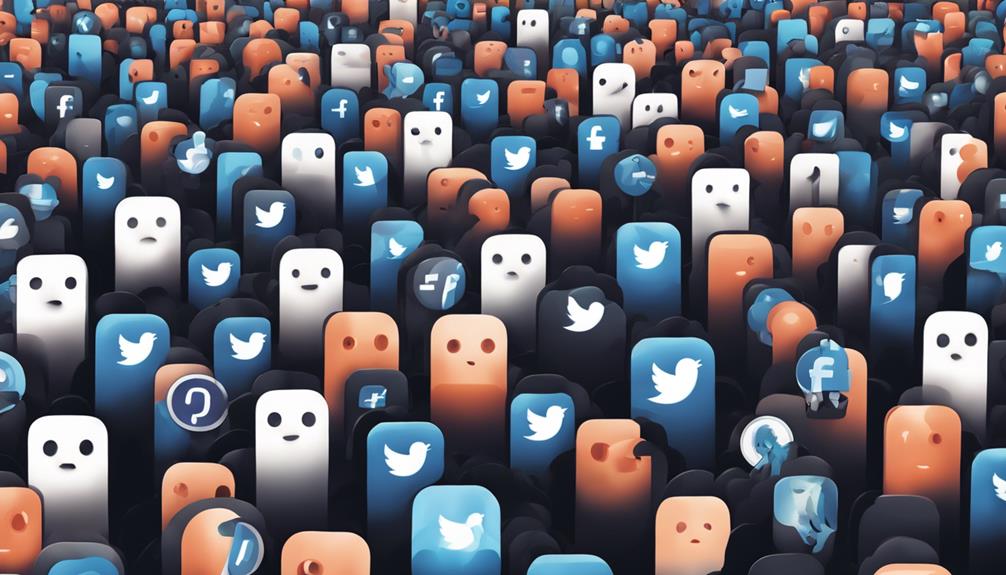
Social media's profound influence on public opinion is undeniable, with its far-reaching impact evident in the rapid dissemination of information, the amplification of diverse voices, and the shaping of collective perspectives. Virtual activism mobilizes support, influencer marketing reaches target audiences, and real-time opinion formation occurs rapidly. However, filter bubbles, misinformation, and cyberbullying are significant concerns. Celebrity endorsements sway opinions, while hashtag campaigns mobilize action. As social media continues to shape public opinion, understanding its complexities is vital – and there's still more to explore in the ever-changing landscape of online discourse.
The Rise of Virtual Activism
The advent of social media has spawned a new generation of virtual activists who leverage online platforms to mobilize support, disseminate information, and inspire collective action. These digital advocates harness the power of social media to raise awareness about social and political issues, mobilize public opinion, and influence policy decisions. Digital protests, online petitions, and hashtag campaigns have become essential tools in their arsenal, allowing them to reach a vast audience and create a wave of public opinion.
Virtual activism has democratized the process of social change, enabling individuals and groups to bypass traditional gatekeepers and directly engage with the public. Online platforms provide a level playing field, where anyone can create and disseminate content, mobilize support, and build a movement. This shift has enabled marginalized voices to be heard, and has created new opportunities for social and political mobilization.
Digital protests and online petitions have become particularly effective in mobilizing public opinion and influencing policy decisions. By leveraging social media's vast reach and real-time engagement, virtual activists can create a groundswell of public opinion, forcing policymakers to take notice and respond. As a result, social media has become an indispensable tool for social and political change, empowering individuals and groups to create meaningful impact and drive positive change.
Social Media's Echo Chamber Effect
Beyond the mobilizing power of social media lies a more insidious phenomenon: the echo chamber effect, where users unwittingly confine themselves to ideological bubbles, shielded from opposing viewpoints and reinforced in their beliefs. This phenomenon is fueled by algorithms that prioritize content that aligns with users' existing views, creating filter bubbles that limit their exposure to diverse perspectives. As a result, individuals become trapped in information silos, where they only interact with like-minded people and consume information that confirms their biases.
| Filter Bubbles | Information Silos | Echo Chamber Effect |
|---|---|---|
| Personalized feeds that prioritize similar content | Limited exposure to diverse perspectives | Reinforcement of existing beliefs |
| Algorithms prioritize content that aligns with user views | Interaction with like-minded individuals only | Shielded from opposing viewpoints |
| Limited exposure to opposing views | Confirmation bias is reinforced | Ideological bubbles are formed |
| Users become trapped in their own reality | Diversity of thought is suppressed | Public discourse is polarized |
The echo chamber effect has significant implications for public discourse, as it fosters polarization and reinforces existing beliefs. By understanding how social media platforms contribute to this phenomenon, individuals can take steps to burst their filter bubbles and engage with diverse perspectives, ultimately leading to a more informed and nuanced public opinion.
The Power of Influencer Marketing
As social media platforms have become integral to daily life, influencer marketing has emerged as a potent force, allowing brands to tap into the vast followings and persuasive power of popular online personalities. These individuals, often with millions of followers, have built trust and credibility within specific niches, making them ideal brand ambassadors. By partnering with influencers, companies can reach their target audience more effectively, increasing brand awareness and driving sales. This strategy leverages the influence of pop culture, as many influencers shape and reflect current trends, making their endorsements highly impactful. Consumers are more likely to trust recommendations from their favorite influencers than traditional advertisements, leading to higher engagement and conversion rates. As a result, businesses are increasingly investing in influencer partnerships to stay relevant and competitive in the ever-evolving digital landscape.
Influencer marketing's success lies in its ability to facilitate niche targeting. Brands can identify influencers who cater to their desired demographic, ensuring that their message resonates with the right people. This targeted approach enables companies to cut through the noise and reach consumers who are more likely to be interested in their products or services. Additionally, influencers often create sponsored content that is engaging, relatable, and authentic, making it more persuasive than traditional advertising methods.
The rise of influencer marketing has also led to the development of specialized platforms and tools, making it easier for brands to discover, collaborate with, and measure the impact of influencers. As the industry continues to evolve, it's clear that influencer marketing will remain an essential component of many brands' social media strategies. By leveraging the power of influencers, companies can tap into the vast potential of social media, shaping public opinion and driving business results.
Real-Time Opinion Formation
Social media's real-time nature enables instantaneous opinion formation, allowing users to share and respond to information rapidly, shaping public perception in the process. This expedited flow of information facilitates flash judgments, where users form opinions based on initial impressions, often without thorough consideration. As a result, public opinion can shift rapidly, influenced by the collective impulse reactions of social media users.
The speed at which information spreads on social media platforms fosters an environment where users are prone to making hasty judgments. A single tweet or Facebook post can spark a wave of reactions, with users jumping on the bandwagon without fully understanding the context. This can lead to the perpetuation of misinformation, as well as the amplification of biases and stereotypes.
Moreover, the real-time nature of social media encourages users to react impulsively, often driven by emotions rather than reason. This emotional reactivity can cloud judgment, leading to the formation of opinions that may not be entirely informed. As public opinion takes shape, it can be challenging to correct misconceptions or provide a more nuanced perspective, especially when the narrative has already gained momentum.
Ultimately, real-time opinion formation on social media can have a profound impact on public perception, often driven by flash judgments and impulse reactions. As users, it's essential to remain aware of these dynamics, taking the time to critically evaluate information before forming and sharing opinions.
Social Proof and Conformity
On social media, the desire for social proof drives users to conform to prevailing opinions, often sacrificing their individual perspectives in the process. This phenomenon is rooted in the human need for validation and acceptance. When users see a large number of people sharing similar opinions or beliefs, they are more likely to adopt those views, even if they don't necessarily align with their own. This is known as social proof, and it's a powerful influencer of public opinion.
As a result, social media platforms can become breeding grounds for group norms and herd behavior. Users begin to prioritize fitting in over thinking critically, and individuality is lost in the process. This can lead to a homogenization of opinions, where diverse perspectives are silenced in favor of a dominant narrative.
Some key aspects of social proof and conformity on social media include:
- The bandwagon effect: Users are more likely to join a conversation or adopt an opinion if they see many others doing so.
- Fear of social exclusion: The risk of being ostracized or ridiculed for holding a minority opinion can lead users to conform to the majority view.
- Lack of critical thinking: The fast-paced nature of social media can make it difficult for users to engage in thoughtful reflection and critical analysis.
- Influencer influence: Social media influencers can shape public opinion by promoting certain views or products, often without providing a balanced perspective.
Algorithms Shape Our Views
Their personalized feeds, curated by algorithms, funnel users into echo chambers that reinforce their existing beliefs, making it increasingly difficult to encounter diverse viewpoints. This phenomenon is often referred to as a 'filter bubble,' where users only see content that aligns with their preconceived notions, sheltered from opposing perspectives. As a result, social media platforms inadvertently contribute to the polarization of society.
Algorithms, designed to maximize user engagement, prioritize content that sparks emotions, often sensational or provocative. This can lead to the amplification of extreme views, further solidifying users' beliefs and making them less receptive to alternative opinions. The consequences are far-reaching, as people become more entrenched in their convictions, and less willing to engage in constructive debates.
Moreover, the lack of exposure to diverse viewpoints hinders critical thinking and nuanced understanding. Users are less likely to question their assumptions or consider multiple sides of an issue. The echo chambers created by algorithms can also lead to the formation of online 'tribes,' where users surround themselves with like-minded individuals, further reinforcing their beliefs.
Ultimately, the algorithms that shape our online experiences have a profound impact on our worldviews. As social media continues to play an increasingly prominent role in shaping public opinion, it is essential to recognize the influence of these algorithms and work towards a more balanced and diverse online environment. By doing so, we can foster a more informed and open-minded society, where users are encouraged to engage with a wide range of perspectives.
The Spread of Misinformation
They examine how social media platforms enable the rapid dissemination of false news, which can have devastating consequences. By exploring the mechanisms of false news propagation, researchers can better understand how misinformation spreads like wildfire online. Additionally, they investigate the viral deception tactics employed by bad actors to manipulate public opinion.
False News Propagation
Social media platforms have inadvertently become breeding grounds for false news propagation, where misinformation spreads rapidly and often uncontrollably. This phenomenon has become a significant concern, as it can sway public opinion and have real-world consequences. The spread of misinformation is often facilitated by fake headlines, which are designed to grab attention and elicit an emotional response. However, these headlines often bear little resemblance to the actual content of the article, if there's any substance to it at all.
Some key factors contributing to the spread of misinformation on social media include:
- Lack of information literacy: Many users are not equipped with the critical thinking skills necessary to evaluate the credibility of online sources.
- Algorithmic amplification: Social media algorithms prioritize sensational or provocative content, making it more visible and shareable.
- Emotional appeal: Misinformation often taps into users' emotions, making it more memorable and shareable.
- Network effects: When users see their friends or followers sharing misinformation, they're more likely to share it too, creating a snowball effect.
As the spread of misinformation continues to pose a threat to public discourse, it's essential to develop strategies for promoting information literacy and critical thinking on social media.
Viral Deception Tactics
Cunningly crafted deception tactics, designed to go viral, are deliberately employed by misinformation peddlers to manipulate public opinion. These tactics exploit psychological vulnerabilities, using clickbait psychology to lure users into engaging with false or misleading content. Sensational headlines, provocative images, and emotive language are all used to create a sense of urgency or outrage, encouraging users to share the content without fact-checking. This creates a snowball effect, where misinformation spreads rapidly across social media platforms.
Another tactic used by misinformation peddlers is to create fake followers or bot accounts to artificially inflate engagement metrics. This creates the illusion of widespread support or popularity, further convincing users of the content's legitimacy. Fake followers can also be used to bombard users with spam messages or comments, overwhelming them with misinformation. By using these viral deception tactics, misinformation peddlers can successfully manipulate public opinion, often with devastating consequences. It's essential for social media users to be aware of these tactics and take steps to critically evaluate the information they consume online.
Cyberbullying and Online Harassment
They argue that social media's dark underbelly is perpetuating online threats and intimidation, where users, especially teenagers, are subjected to relentless harassment. This toxic environment can leave emotional scars, causing victims to withdraw from online interactions altogether. As a result, cyberbullying and online harassment have become major concerns, with many calling for stricter regulations and greater accountability from social media platforms.
Online Threats and Intimidation
Behind the veil of anonymity, online perpetrators wield significant power to intimidate and harass their victims, often with devastating consequences. The Dark Web, in particular, has become a breeding ground for such malicious activities, providing a platform for trolls to thrive. Troll Culture has become a pervasive phenomenon, where individuals take pleasure in causing chaos and distress online.
This sense of empowerment has led to a surge in online threats and intimidation, making the digital landscape a challenging space for many. The consequences are far-reaching, with victims often experiencing emotional distress, anxiety, and even physical harm.
Some alarming aspects of online threats and intimidation include:
- The ease with which perpetrators can remain anonymous, making it difficult to track them down
- The speed at which online harassment can escalate, making it challenging to contain
- The lack of effective measures to report and address online threats, leaving victims feeling helpless
- The blurred lines between online and offline harassment, making it difficult to distinguish between the two
Emotional Scars and Silence
Approximately 43% of teens have experienced cyberbullying, leading to a staggering number of young people suffering in silence, their emotional scars hidden from the world. This silent suffering can have a profound impact on their mental health, leaving a trauma legacy that can last for years to come. The anonymity of the online world allows bullies to hide behind screens, making it difficult for victims to seek justice or find solace. As a result, many teens are forced to endure the pain and humiliation in isolation, afraid to speak out for fear of further persecution.
The consequences of cyberbullying can be devastating, leading to depression, anxiety, and even suicidal thoughts. It's essential for parents, educators, and policymakers to take this issue seriously and work together to create a safe and supportive online environment. By promoting empathy, kindness, and respect online, we can help break the silence and heal the emotional scars of cyberbullying victims. It's time to acknowledge the trauma legacy of cyberbullying and work towards creating a culture of kindness and compassion, where everyone can thrive without fear of online harassment.
Political Polarization on Social Media
Social media platforms have become breeding grounds for political polarization, where users often find themselves surrounded by like-minded individuals who reinforce their existing beliefs. This online segregation has contributed considerably to the growing political divide, making it challenging for people to engage in constructive discussions and consider alternative perspectives.
Some key factors contributing to political polarization on social media include:
- Algorithmic amplification: Social media algorithms prioritize content that sparks strong emotions, often leading to the amplification of extremist views and further entrenching users in their beliefs.
- Echo chambers: Users tend to follow and interact with individuals who share similar views, creating an 'echo chamber' effect that reinforces their existing beliefs and makes them less likely to engage with opposing views.
- Anonymity and lack of accountability: The relative anonymity of online interactions can lead to a lack of accountability, making users more prone to sharing inflammatory content and engaging in hostile behavior.
- Confirmation bias: Social media platforms often provide users with information that confirms their existing beliefs, rather than challenging them, which can further exacerbate political polarization.
As a result, social media has become a fertile ground for political polarization, where users are more likely to engage in hostile debates and less likely to engage in constructive discussions. This has important implications for public opinion and the overall health of democracy.
Celebrity Endorsements and Opinion
Celebrities, with their massive followings and influential voices, have become powerful opinion-shapers, often using their platforms to endorse political candidates, causes, and ideologies. Their celebrity credibility can greatly sway public opinion, making them valuable assets for politicians and causes seeking to gain traction. However, this raises important questions about endorsement ethics. Do celebrities have a responsibility to educate themselves on the issues they're promoting, or are they simply lending their fame to a cause?
When celebrities speak out, their fans listen. Research has shown that celebrity endorsements can increase voter turnout, boost fundraising efforts, and even shift public opinion on key issues. But what happens when celebrities use their platforms to promote misinformation or controversial views? The lines between free speech and responsible influence can become blurred, and the consequences can be far-reaching.
Ultimately, celebrities have a duty to use their platforms responsibly, ensuring that their endorsements are informed and ethical. This means doing their due diligence on the causes they support and being transparent about their motivations. By doing so, they can maintain their celebrity credibility while also contributing to meaningful public discourse. As social media continues to amplify celebrity voices, it's essential that both celebrities and their followers approach endorsements with a critical eye, recognizing both the potential benefits and the potential pitfalls of celebrity influence.
The Role of Hashtag Campaigns
Hashtag campaigns, fueled by the ease of social media sharing, have catapulted causes into the global spotlight, giving rise to a new era of online activism. These campaigns have proven to be effective in raising awareness about social issues, mobilizing supporters, and sparking conversations. By leveraging the power of hashtags, individuals and organizations can create a buzz around a particular cause, making it essential for the public to ignore.
Some notable aspects of hashtag campaigns include:
- Rapid mobilization: Hashtag campaigns can quickly gather momentum, allowing for swift action and response to emerging issues.
- Global reach: Social media platforms provide an unparalleled level of global connectivity, enabling hashtag campaigns to transcend geographical boundaries.
- Emotional resonance: Hashtags can evoke strong emotions, creating a sense of urgency and encouraging people to take action.
- Campaign longevity: While hashtag campaigns can experience fatigue over time, they can also lead to sustained conversations and long-term change.
However, the proliferation of hashtag campaigns has also led to concerns about fatigue. As the number of campaigns increases, it becomes challenging to maintain public interest and engagement. To combat this, it's crucial for campaigns to be strategic, focused, and authentic, ensuring that they resonate with their target audience and avoid feeling superficial or opportunistic. By doing so, hashtag campaigns can continue to play an important role in shaping public opinion and driving meaningful change.
Measuring Public Opinion Online
When it comes to measuring public opinion online, researchers turn to various methods to gauge the pulse of the digital community. They analyze online sentiments, conduct social media polls, and scrutinize trending topic insights to understand what people are thinking and feeling. By examining these digital indicators, they can uncover patterns and trends that reveal the broader public opinion landscape.
Online Sentiment Analysis
Researchers employ online sentiment analysis to gauge public opinion by parsing through vast amounts of user-generated content on social media platforms. This involves using data mining techniques to collect and analyze social media posts, comments, and reviews to identify patterns and trends in public opinion. Online sentiment analysis requires a high level of emotional intelligence to accurately interpret the nuances of language and detect subtle changes in sentiment.
Some of the key aspects of online sentiment analysis include:
- Natural Language Processing (NLP): using algorithms to analyze and understand human language
- Machine Learning: training models to identify patterns and sentiment in large datasets
- Data Visualization: presenting complex data in a clear and actionable way
- Real-time Monitoring: tracking changes in public opinion as they happen
Social Media Polls
Across social media platforms, online polls have emerged as a popular tool for measuring public opinion, allowing users to weigh in on various topics and issues in real-time. These polls provide valuable insights into public sentiment, enabling users to gauge opinions and make informed decisions. However, social media polls also have their limitations. For instance, poll fatigue can set in when users are bombarded with multiple polls, leading to decreased participation and accuracy.
| Advantages | Limitations |
|---|---|
| Real-time feedback | Poll fatigue |
| Increased engagement | Voting habits may not reflect offline behavior |
| Cost-effective | Lack of representation from all demographics |
Social media polls can be influential in shaping public opinion, but it's essential to take into account their limitations. For instance, voting habits on social media may not reflect offline behavior, and polls may not represent all demographics. Despite these limitations, social media polls remain a valuable tool for measuring public opinion, providing instant feedback and insights into the collective psyche of online communities.
Trending Topic Insights
Trending topics on social media platforms offer a unique window into the collective consciousness, revealing what issues, events, and ideas are currently resonating with the online population. By analyzing trending topics, researchers can gain valuable insights into public opinion, sentiment, and concerns. This is particularly useful for understanding real-time reactions to events, such as political elections, natural disasters, or social movements.
Some key ways to tap into trending topic insights include:
- Using Twitter analytics to track hashtag usage and sentiment analysis
- Conducting content analysis of social media posts to identify patterns and themes
- Monitoring trending topics across multiple platforms to identify cross-platform trends
- Utilizing natural language processing to identify emotional tone and sentiment behind trending topics
Frequently Asked Questions
Can Social Media Platforms Be Held Liable for Spreading Misinformation?
A staggering 70% of Americans believe social media platforms spread misinformation. Can these platforms be held liable for it? The answer is complex. Social media companies aren't legally accountable for user-generated content, but they can be held responsible for amplifying false information. Implementing robust fact-checking mechanisms could help mitigate the issue. It's time for social media giants to take legal accountability seriously and prioritize fact-checking to restore public trust.
How Do Influencer Marketing Regulations Vary Across Countries?
She notes that influencer marketing regulations vary considerably across countries, largely due to cultural nuances and regional laws. In the US, the Federal Trade Commission (FTC) requires clear disclosures of sponsored content. In contrast, European countries like Germany and France have stricter regulations, with fines for non-compliance. Meanwhile, countries like India and China have more relaxed laws, allowing for greater creative freedom.
Are Social Media Algorithms Biased Towards Certain Political Views?
As Galileo once mused, 'measure what is measurable,' but what about the immeasurable biases in social media algorithms? She wonders if these algorithms are biased towards certain political views, creating a political echo chamber that reinforces users' existing beliefs. The question of algorithm fairness is vital, as it can either promote diversity of thought or entrench ideological divisions. Unfortunately, the answer remains unclear, shrouded in the mystery of complex code and proprietary secrets.
Can Online Harassment Be Effectively Reported and Addressed?
She believes that effectively reporting and addressing online harassment is a complex issue. To combat cyberbullying, social media platforms can implement anonymous reporting systems, allowing victims to report abuse without fear of retaliation. Additionally, governments can establish and enforce cyberbullying laws, holding perpetrators accountable for their actions. By taking these steps, online harassment can be reduced, creating a safer online environment.
Do Social Media Platforms Prioritize Profit Over Public Well-Being?
She wonders if social media platforms prioritize profit over public well-being. The answer seems clear: they do. The profit motive drives their decisions, often creating an ethical dilemma. They must choose between increasing revenue and protecting users from harmful content. Unfortunately, the desire for profit often wins, leading to a toxic online environment. This prioritization of profit over people has devastating consequences, including the spread of misinformation and online harassment.
