
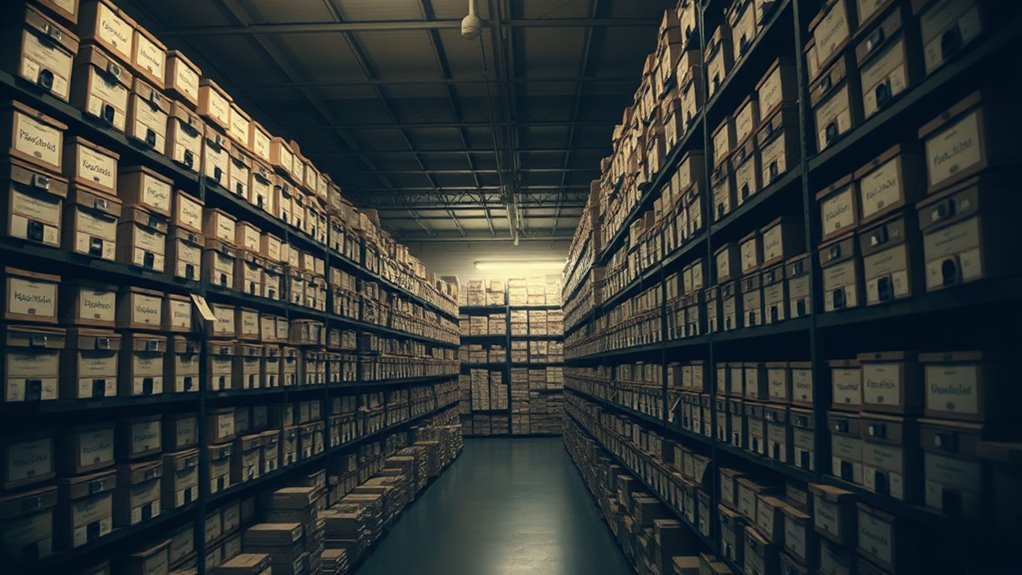
News archives serve as the guardians of our collective history, providing a chronological record of past events, cultural and social trends, and historical context for modern issues, thereby preserving the integrity of our shared past for future generations. They maintain historical accuracy through firsthand accounts of events, free from nostalgia and revisionism, and guarantee integrity through adherence to archival ethics and standards. By examining the archives, we can gain a deeper insight into the intricacies of our collective past, and uncover valuable lessons that inform our present and shape our future, revealing a rich mosaic of stories waiting to be explored.
Preserving the Record of History
Through the careful curation of news archives, historians and researchers are granted unparalleled access to the past, uncovering the intricacies of historical events and social movements that have shaped our collective identity. This access is vital in maintaining historical accuracy, as primary sources provide firsthand accounts of events, untainted by the biases of subsequent interpretations. News archives serve as a window into the past, offering a chronological record of events as they unfolded, free from the distortions of nostalgia or revisionism.
The preservation of news archives is guided by archival ethics, ensuring that the integrity of the historical record is maintained. Archivists adhere to strict standards of collection, preservation, and dissemination, guaranteeing that the archives remain a trustworthy source of information. This commitment to authenticity is fundamental, as it allows researchers to draw informed conclusions about the past, without being misled by inaccurate or incomplete information.
The importance of news archives in preserving our collective history cannot be overstated. By providing a reliable and thorough record of past events, they enable historians and researchers to reconstruct the intricacies of historical phenomena, and to identify patterns and trends that have shaped our world. In the end, the careful preservation of news archives is fundamental for cultivating a deeper comprehension of our shared heritage, and for promoting a more informed and nuanced appreciation of the past.
Capturing Cultural and Social Trends
Additionally, news archives provide insight into the cultural environment of the past, including popular culture, fashion, and entertainment. They offer a glimpse into the music, art, and literature that defined different eras, along with the social norms and values that shaped everyday life. By analyzing these cultural and social trends, we can gain a deeper comprehension of the intricacies of human experience and the ways in which our collective identity has evolved over time.
Historical Context for Modern Issues
News archives also serve as a rich repository of historical context for grasping modern issues, providing a nuanced perspective on the intricacies of contemporary society. By examining past events and their subsequent impact, news archives offer valuable historical lessons that can inform our perception of present-day concerns. This context analysis enables us to identify patterns, recognize the evolution of social and political movements, and better comprehend the challenges of modern issues.
| Issue | Historical Context | Lesson Learned |
|---|---|---|
| Climate Change | Industrial Revolution's environmental impact | Gradual, collective action is necessary for mitigation |
| Racial Inequality | Civil Rights Movement's struggle for justice | Systemic change requires persistent, grassroots efforts |
| Economic Inequality | Great Depression's economic reform | Regulatory measures can prevent financial crises |
| Immigration Policy | Post-WWII refugee crises | Humanitarian responses require empathy and cooperation |
| Public Health Crises | 1918 Spanish Flu pandemic | Global cooperation and preparedness are crucial for containment |
Through this context analysis, news archives provide a deeper insight into the historical underpinnings of modern issues, allowing us to approach contemporary challenges with a more informed and nuanced perspective. By learning from the past, we can develop more effective solutions to the intricate problems that face our global community today.
The Evolution of Journalism
The evolution of journalism has been shaped by significant milestones that have transformed the way news is gathered, reported, and consumed. From the early newspaper era, characterized by print journalism's golden age, to the digital age that has brought about a sea change in the media environment, journalism has undergone a profound metamorphosis. Comprehending this evolution is crucial to appreciating the role news archives play in preserving our collective history.
Early Newspaper Era
As the printing press spread throughout Europe in the 15th century, the groundwork was laid for the emergence of newspapers, which would eventually become a cornerstone of modern journalism. This marked the beginning of the early newspaper era, a significant period in the evolution of journalism. The print revolution enabled mass production of newspapers, making them more accessible to the general public. Pioneering journalism during this era focused on disseminating information about current events, politics, and social issues. News archives from this period provide valuable insights into the past, offering a window into the thoughts, attitudes, and values of the time.
The early newspaper era saw the rise of influential publications, such as the German Relation in 1605 and the Daily Courant in 1702. These newspapers played an important role in shaping public opinion and holding those in authority accountable. As the industry grew, so did the importance of news archives, which preserved the collective memory of the past. Today, these archives remain a vital resource for historians, researchers, and journalists, providing a rich mosaic of historical context and perspective.
Digital Age Dawns
Nearly five centuries after the print transformation, the advent of digital technology marked a seismic shift in the journalism sector, heralding the dawn of the digital age. This paradigm shift transformed the way news was gathered, reported, and consumed. Digital journalism emerged as a significant force, allowing for instant dissemination of information and real-time updates. The internet enabled news organizations to reach a global audience, transcending geographical boundaries.
The digital age additionally brought about a new era of online preservation. News archives, once confined to physical storage, could now be digitized and made accessible online. This enabled researchers, historians, and the general public to access historical news content with ease. Digital archives also facilitated the preservation of news articles, photographs, and videos, ensuring that our collective history remained intact for future generations. As a result, the digital age has not just transformed the way we consume news but has also safeguarded our cultural heritage, making it more accessible and enduring than ever before.
Archiving the Voices of Change
News archives serve as a repository for the voices of protest, capturing the passion and conviction of individuals and groups who have challenged the status quo throughout history. Chronicles of activism, preserved in these archives, provide a nuanced comprehension of the struggles and triumphs of social movements. By examining these records, researchers can gain insight into the intricacies of social change and the enduring impact of collective action.
Voices of Protest
Through the lens of history, social movements are often defined by their most vocal proponents, whose passionate cries for change echo through the ages. These voices of protest, preserved in news archives, offer a unique window into the struggles and triumphs of protest movements. By archiving the voices of change, news archives provide a platform for activist narratives to be heard, comprehended, and contextualized.
Protest movements, from the Civil Rights Movement to the anti-apartheid movement, have been shaped by the voices of individuals who dared to challenge the status quo. Through news articles, photographs, and videos, these voices are preserved, allowing future generations to engage with the raw emotions, passion, and conviction that drove these movements. By examining the voices of protest, researchers and scholars can gain a deeper comprehension of the intricacies and nuances of social change, and how individual actions can collectively shape the course of history. By preserving these voices, news archives guarantee that the lessons of the past inform the struggles of the present, and inspire future generations to continue fighting for a better world.
Chronicles of Activism
As the echoes of social unrest resonate across generations, the chronicles of activism serve as a demonstration of the strength of human resilience and determination. Through news archives, we can revisit the pivotal moments of activism movements, from the Civil Rights Movement to the modern-day fight for climate justice. These archives provide a window into the past, allowing us to understand the evolution of social change and the grassroots campaigns that drove it.
The chronicles of activism additionally serve as a confirmation of the influence of collective action. By examining the strategies, successes, and setbacks of past movements, we can inform and inspire contemporary activism. Some key aspects of archiving activism include:
- Preserving primary sources: News articles, photographs, and oral histories provide firsthand accounts of activism movements.
- Contextualizing historical events: Archives help situate activism within broader social, political, and economic contexts.
- Amplifying marginalized voices: News archives can highlight the contributions of underrepresented groups, ensuring their stories are not lost to history.
- Fostering intergenerational learning: By studying past activism, newer generations can build upon the successes and learn from the mistakes of their predecessors.
Understanding the Past Through Data
By leveraging these diverse sources of historical data, researchers can develop a more thorough grasp of the past. Additionally, data analysis can help to challenge prevailing narratives, revealing new perspectives and shedding light on previously overlooked aspects of history. As news archives continue to grow, the potential for data-driven historical research will only continue to expand, providing a rich foundation for comprehending the intricacies of our shared human experience.
Learning From Historical Events
Historical events offer a unique lens through which to examine the intricacies of human society, revealing patterns, trends, and consequences that can inform our grasp of the present and future. By analyzing these events, we can extract valuable historical lessons that can guide our decision-making processes and prevent us from repeating past mistakes.
A thorough event analysis can provide insights into the intricacies of human behavior, social dynamics, and the consequences of policies and actions. This, in turn, can help us develop more effective strategies for addressing contemporary challenges and creating a better future.
Some key benefits of learning from historical events include:
- Improved decision-making: By studying the outcomes of past decisions, we can make more informed choices in the present and avoid costly mistakes.
- Enhanced comprehension of human behavior: Historical events offer a unique window into human psychology, allowing us to better grasp the motivations and actions of individuals and groups.
- Development of effective strategies: By analyzing the successes and failures of past strategies, we can create more effective approaches to addressing contemporary challenges.
- Increased empathy and insight: Historical events can promote empathy and insight by providing a nuanced perspective on the experiences of others, encouraging tolerance and cooperation.
Frequently Asked Questions
Are News Archives Accessible to the General Public for Research Purposes?
A treasure trove of information lies hidden, waiting to be unearthed by curious minds. Fortunately, the answer is a resounding yes! News archives are increasingly accessible to the general public for research purposes, offering a wealth of public access to valuable resources. With advanced research tools, individuals can now explore the rich history of news archives, unearthing hidden gems and gaining valuable insights into the past.
Can News Archives Be Used for Educational or Academic Purposes?
News archives serve as valuable educational resources, offering a wealth of information for academic research. Scholars and students can leverage these archives to explore historical events, social trends, and cultural movements. By analyzing news articles and artifacts, researchers can gain a deeper comprehension of the past, informing their studies and contributing to new knowledge. In this way, news archives play an essential role in supporting educational and academic pursuits, providing a rich foundation for inquiry and discovery.
How Are News Archives Protected From Natural Disasters or Damage?
"A stitch in time saves nine," emphasizing the importance of proactive measures. News archives are protected from natural disasters or damage through robust disaster recovery plans and advanced preservation techniques. These archives are often housed in climate-controlled facilities, with duplicate copies stored offsite for added security. Moreover, digital backups are created and regularly updated to guarantee the integrity of the archives. By taking these precautions, valuable historical records are safeguarded for future generations.
Can News Archives Be Used to Verify Historical Events or Facts?
News archives serve as an essential resource for historical verification, providing primary sources that facilitate fact-checking methods. By consulting archival records, researchers can authenticate accounts of past events, corroborate eyewitness testimonies, and debunk myths. The accuracy and reliability of news archives enable scholars to reconstruct historical narratives with confidence, ensuring that our comprehension of the past is grounded in verifiable evidence.
Are News Archives Biased Towards Certain Perspectives or Viewpoints?
News archives can certainly be partial in relation to certain perspectives or viewpoints, often inadvertently perpetuating dominant narratives. This is because of the subjective nature of archival curation, where curators' personal beliefs and cultural backgrounds influence the selection and organization of materials. Perspective analysis is essential in recognizing these biases, as it enables researchers to contextualize and critically evaluate the information presented. By acknowledging these limitations, researchers can work for a more nuanced comprehension of historical events and promote a more inclusive representation of diverse viewpoints.
