
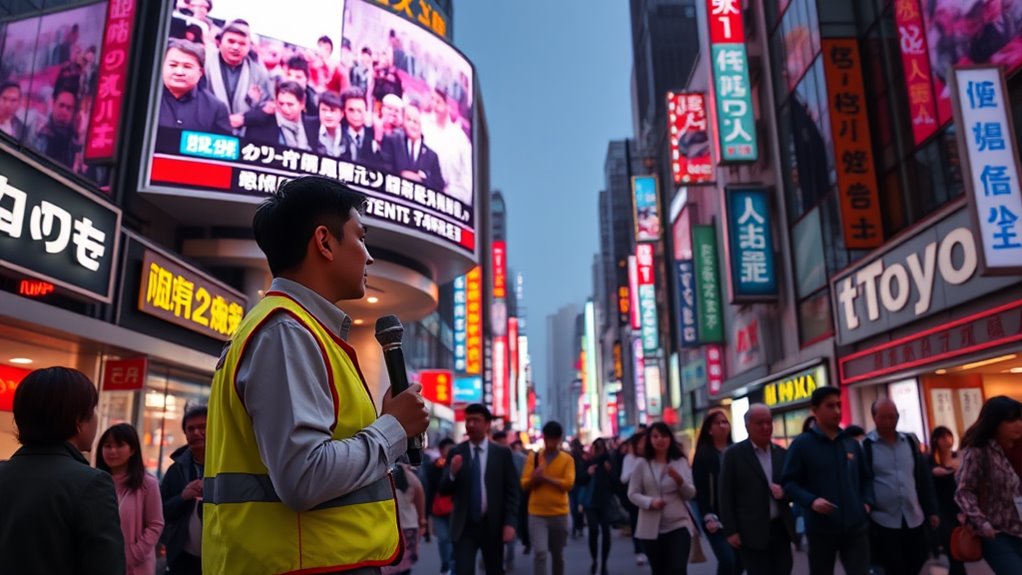
Major global events are often reported and perceived differently across the world, shaped by cultural biases, language nuances, political agendas, and varying journalistic priorities that influence the way news is selected, framed, and presented to diverse audiences. Cultural lenses can lead to downplaying or ignoring certain stories, whereas political leanings shape narrative tone and focus. Language misinterpretations and cultural idioms lost in translation can alter context and lead to misinformation. As a result, disparate coverage can lead to confusion and misunderstanding among global audiences, and a closer examination of these factors reveals the intricacies beneath the surface of international news reporting.
Cultural Biases in News Reporting
As global events unfold, the news reporting that follows is often tinted by the cultural lens of the reporting organization, which can greatly impact the narrative that is presented to the public. This cultural bias can manifest in various ways, including the selection of stories, the framing of issues, and the representation of different ethnic groups. For instance, news outlets may prioritize stories that resonate with their local audience, whilst downplaying or ignoring those that are deemed less relevant. This can lead to a skewed representation of events, with some voices and perspectives being amplified over others.
Moreover, cultural biases can influence the way historical context is presented. News organizations may draw upon their own cultural narratives and historical experiences when reporting on global events, which can result in a lack of comprehension or appreciation for the cultural nuances and historical intricacies of other countries. This can be particularly problematic when reporting on conflicts or crises, where a lack of historical context can lead to oversimplification or misinterpretation of the underlying issues.
Ultimately, cultural biases in news reporting can have significant consequences, including the perpetuation of stereotypes, the exacerbation of conflicts, and the erosion of trust in the media. It is crucial for news organizations to be aware of their own cultural biases and to endeavor for greater diversity and inclusivity in their reporting, including more nuanced representations of ethnic groups and a deeper grasp of historical context.
Language Barriers and Nuances
Beyond cultural biases, language barriers and nuances likewise greatly impact the way global events are reported. Even with the advancement of technology, language remains a significant obstacle in conveying accurate information across borders. A single misinterpreted phrase or idiomatic expression can alter the entire context of a news story, leading to misinformation and confusion.
- A news anchor in Japan uses the phrase "honne" to describe a government official's statement, which is lost in translation as it conveys a sense of insincerity, whereas in the original context, it meant the opposite.
- A reporter in Brazil uses the phrase "tomar um pé na bunda" to describe a politician's actions, which, when translated, becomes "to take a kick in the butt," but in reality, it means to take advantage of someone.
- A headline in a Chinese newspaper reads "Xi Jinping Warns of 'Gray Rhino' Threat," which, without comprehension of the cultural reference, may seem nonsensical, but in reality, it refers to a metaphor for a sudden, unexpected crisis.
Language translation is not just about replacing words; it requires an appreciation of cultural nuances and idiomatic expressions. This highlights the importance of having a diverse team of journalists and translators who can accurately convey the intended message, ensuring that global events are reported with precision and clarity.
Political Agendas at Play
In the complex fabric of global event coverage, political agendas often weave a subtle yet pervasive influence, shaping the narrative to suit vested interests. This phenomenon is particularly pronounced in international news reporting, where different political perspectives can greatly alter the way a story is told. Agenda setting, a concept coined by media scholars, refers to the process by which news outlets selectively focus on certain aspects of a story, thereby influencing public opinion and perception.
The political leanings of a news organization can greatly impact the tone, language, and framing of a story. For instance, a news outlet with a conservative bent may emphasize the economic implications of a global event, whereas a liberal outlet may focus on the humanitarian aspects. This selective emphasis can lead to vastly different narratives, even when reporting on the same event. In addition, state-controlled media outlets often propagate the official government line, suppressing dissenting voices and alternative perspectives.
The consequences of political agendas in event coverage can be far-reaching, influencing public opinion, shaping policy decisions, and even impacting international relations. It is crucial for consumers of news to be aware of these biases, critically evaluating the information presented and seeking out diverse sources to form a more thorough grasp of global events. By recognizing the role of political agendas in shaping the narrative, we can cultivate a more informed and nuanced perception of the world around us.
Regional Focus and Priorities
One significant factor influencing global event coverage is the regional focus and priorities of news organizations. News outlets cater to their local audience, tailoring their coverage to resonate with regional interests and concerns. This localized approach often leads to varying levels of attention and emphasis on different aspects of the same event.
- A major natural disaster in Asia might receive extensive coverage in regional news outlets, with in-depth reporting on the humanitarian response and economic impact, whereas European news organizations might focus on the international aid efforts and global implications.
- A political scandal in Latin America might dominate headlines in local newspapers, with detailed analysis of the implications for regional politics and trade, whereas North American news outlets might focus on the potential repercussions for global markets and diplomacy.
- A major sporting event in Europe might receive wall-to-wall coverage in local media, with detailed commentary on team strategies and player performances, whereas news outlets in other regions might focus on the broader cultural and economic significance of the event.
Regional focus and priorities shape the narrative of global events, highlighting the diverse perspectives and concerns that exist across different regions. By grasping these local perspectives, we can gain a more nuanced appreciation of the intricacies and nuances of global events.
Media Censorship and Control
Government restrictions and propaganda machinery can greatly influence the coverage of global events, often leading to a sanitized or distorted narrative that serves the interests of those in authority. This phenomenon is particularly prevalent in countries with authoritarian regimes, where the government exercises significant control over the media environment. In such settings, journalists may face censorship, intimidation, or even imprisonment for reporting on sensitive topics or deviating from the official narrative.
The government's influence on media coverage can have a profound impact on public perception, shaping the way people comprehend and respond to major events. By selectively presenting information, governments can create a biased or misleading narrative that advances their own agendas. For instance, during times of conflict or political unrest, governments may restrict access to certain areas or information, effectively controlling the flow of news and shaping the public's grasp of the situation.
The consequences of media censorship and control can be far-reaching, undermining the public's trust in institutions and eroding the credibility of the media. In extreme cases, it can even lead to the suppression of dissenting voices and the perpetuation of human rights abuses. As the global media environment continues to evolve, it is crucial to recognize the role of government influence in shaping our comprehension of major events and to promote a free and independent press that can provide unbiased and accurate reporting.
Social Media's Impact on Coverage
- A single tweet can spark a global conversation, mobilizing public opinion and shaping the narrative around a particular event.
- Viral narratives can spread like wildfire, often blurring the lines between fact and fiction, and influencing the way people perceive and respond to a major event.
- Social media influencers and citizen journalists can provide on-the-ground coverage, offering unique perspectives and insights that traditional media outlets may miss.
Social media’s impact on coverage is further amplified by its ability to facilitate audience engagement. People can share their thoughts, opinions, and experiences, creating a dynamic and interactive environment that encourages a sense of community and participation. This, in turn, can influence the way news organizations cover major events, as they aim to engage with their audience and stay relevant in a swiftly changing media environment. In the end, social media’s impact on coverage has transformed the way we consume and interact with news, making it a critical component of modern journalism. Additionally, the rise of social media has prompted newsrooms to adopt more flexible and innovative strategies, often blending traditional reporting with real-time updates and interaction. This shift has led to the emergence of cozy techsavvy workspace ideas that promote collaboration among journalists, enabling them to harness the power of social media effectively. As a result, news coverage has become more nuanced, reflecting a diverse array of voices and perspectives that resonate with a broader audience.
Objectivity Lost in Translation
As major events unfold, the pursuit of objectivity is often hindered by cultural bias and selective storytelling. News outlets, shaped by their cultural context, tend to frame narratives that reinforce their audience's existing beliefs, rather than providing a balanced view. This results in disparate coverage of the same event, with different regions and news sources presenting vastly different accounts of reality.
Cultural Bias Prevails
Across the globe, news organizations endeavor to provide objective coverage of major events, but cultural bias often prevails, leading to a loss of objectivity in translation. This phenomenon is particularly evident in the way different cultures perceive and report on the same event. Cultural stereotypes and preconceived notions influence media representation, resulting in varying narratives and interpretations.
- A protest in the Middle East is framed as a violent uprising in Western media, whereas Arab news outlets portray it as a peaceful demonstration for democratic reforms.
- A natural disaster in Asia is often characterized as a catastrophic event in Western media, whereas local media focuses on the resilience and community spirit of the affected regions.
- A political scandal in Europe is sensationalized in American media, whereas European outlets provide a more nuanced analysis of the incident.
These examples illustrate how cultural bias permeates news coverage, leading to diverse and often conflicting narratives. As a result, audiences are presented with different versions of reality, further fragmenting global comprehension and perpetuating cultural stereotypes.
Selective Storytelling Reigns
The influence of cultural bias on news coverage is further exacerbated by selective storytelling, where media outlets cherry-pick facts and anecdotes to support a preconceived narrative. This approach leads to a distorted representation of reality, as journalists and editors prioritize certain aspects of a story over others to fit their desired storyline. Selective emphasis is placed on specific details, whereas contradictory information is often omitted or downplayed. Narrative framing likewise plays a significant role, as media outlets use language and tone to shape public perception and emotional response. By carefully crafting their narrative, media outlets can influence how audiences interpret and respond to major events. As a result, the same event can be presented in vastly different ways depending on the media outlet and its target audience. This lack of objectivity can have significant consequences, perpetuating misinformation and reinforcing existing biases.
Frequently Asked Questions
How Do News Outlets Balance Speed and Accuracy in Breaking News Coverage?
In the frenetic world of breaking news, speed and accuracy are perpetually at odds. On one hand, the public craves instantaneous updates; on the other, hasty reporting can lead to disastrous inaccuracies. To strike a balance, reputable outlets implement rigorous verification processes, leveraging trusted sources and expert analysis to guarantee precision. Although speed is essential, it's the commitment to accuracy that ultimately fosters trust and credibility in the face of uncertainty.
Do Journalists Receive Training on Cultural Sensitivity and Awareness?
Journalists often undergo cultural training to guarantee they approach stories with sensitivity and awareness. Many news organizations provide sensitivity workshops, focusing on diversity, equity, and inclusion. These training sessions equip journalists with the skills to navigate complex cultural environments, avoiding stereotypes and biases. By prioritizing cultural training, journalists can produce more nuanced and respectful reporting, in the end enriching the narrative and nurturing a deeper comprehension of the communities they serve.
Can Governments Legally Restrict International Media Coverage Within Their Borders?
As the curtain of freedom rises, the spotlight shines on the government's role in controlling the narrative. In many countries, the answer to this question is a resounding yes. Governments can legally restrict international media coverage within their borders, often citing national security or public order concerns. Media censorship is a harsh reality, enabled by legal frameworks that prioritize state control over press freedom. This raises critical questions about the authenticity of information and the ability of citizens to access unbiased truth.
Are There Any International Standards for Journalist Conduct and Ethics?
The issue of international standards for journalist conduct and ethics is essential in ensuring responsible reporting. During there is no single, universally binding code, many organizations have established ethical guidelines to promote press freedom and accountability. For instance, the International Federation of Journalists and the Society of Professional Journalists have developed codes of ethics that emphasize accuracy, fairness, and transparency. These guidelines serve as a benchmark for journalists worldwide, encouraging responsible reporting practices that respect human rights and dignity.
How Do News Organizations Ensure Diversity in Their Reporting Teams?
Guaranteeing diversity in reporting teams is essential for news organizations to deliver thorough coverage. To accomplish this, many organizations adopt inclusive practices, such as actively recruiting journalists from varied backgrounds and implementing training programs to nurture cultural competence. By doing so, they can guarantee that their reporting teams bring diverse perspectives to the table, resulting in more nuanced and accurate storytelling. This, in turn, enriches the audience's comprehension of complex issues and promotes a more informed public discourse.
