
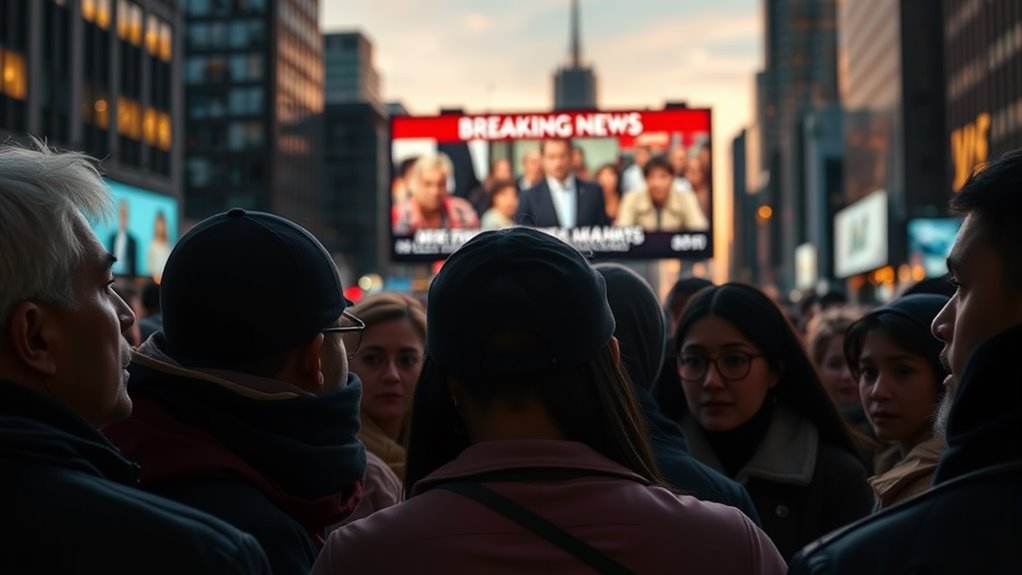
Breaking news considerably impacts global conversations, facilitating instant information exchange across geographical boundaries. It triggers discussions on politics, social movements, and environmental concerns, shaping public perception and discourse. Social media amplifies individual and collective opinions, influencing cultural context and global events. As breaking news continues to shape global opinion dynamics, a closer examination of its effects can provide valuable insights into the intricacies of global conversations and the factors that influence them. Further exploration of this topic can reveal the nuances of this phenomenon.
Global News Sharing Trends
The rapid dissemination of information through digital platforms has greatly altered global news sharing trends, with social media sites like Twitter and Facebook serving as hubs for real-time updates. This shift has led to increased global awareness, as people from diverse backgrounds can now access and engage with news from around the world. The internet and social media have bridged geographical gaps, enabling individuals to stay informed about global events and issues. As a result, news engagement has become more widespread, with people actively seeking out and sharing news content.
The impact of global news sharing trends on global awareness is significant. With the ability to access news from diverse sources, individuals can gain a more thorough comprehension of global events and issues. This, in turn, can encourage greater empathy and insight among people from different cultural backgrounds. News engagement has likewise become more dynamic, with social media platforms providing opportunities for people to discuss and share their thoughts on current events. By facilitating global news sharing, digital platforms have played a vital role in promoting global awareness and news engagement, enabling people to stay informed and connected with others worldwide. Overall, the evolution of global news sharing trends has transformed the way people consume and interact with news.
Real Time Information Exchange
Global news sharing trends have laid the groundwork for a new era of information exchange, where real-time updates have become the norm. This shift has greatly impacted the way people consume and interact with news, allowing for a more dynamic and immersive experience. Real-time updates enable individuals to stay informed about current events as they unfold, nurturing a sense of immediacy and relevance.
The key aspects of real-time information exchange include:
- Facilitating instant access to news and updates
- Enabling swift dissemination of information across geographical boundaries
- Promoting information accuracy through timely corrections and updates
- Allowing for diverse perspectives and opinions to emerge
- Supporting collaborative news gathering and reporting efforts
The importance of information accuracy in real-time updates cannot be overstated. As news breaks and spreads quickly, it is essential to guarantee that the information being shared is reliable and trustworthy. This requires a commitment to verifying sources and facts, in addition to a willingness to correct mistakes and update information as necessary. By prioritizing information accuracy, individuals and organizations can help maintain the integrity of real-time information exchange, ultimately enhancing global conversations and promoting a more informed public discourse. Real-time updates have transformed the news environment, and their impact will continue to shape the way we engage with information.
Social Media Impact Analysis
Social media platforms have stepped up to play a pivotal role in shaping conversations around breaking news, facilitating instantaneous information exchange and sparking widespread discussions. This phenomenon has led to the emergence of social media trends that can greatly influence public opinion and perception. As news breaks, social media platforms become a hub for real-time updates, analysis, and debate, allowing users to engage with the information and share their thoughts with a global audience.
The impact of social media on breaking news conversations is further amplified by digital activism, which enables individuals and groups to mobilize support, raise awareness, and promote their causes. Digital activism can take many forms, including online petitions, fundraising campaigns, and social media challenges, all of which can contribute to the viral spread of information and the shaping of public discourse. By analyzing social media trends and digital activism, researchers can gain valuable insights into the dynamics of online conversations and the ways in which social media influences the dissemination and reception of breaking news.
Through social media impact analysis, it is possible to identify key patterns and trends in online conversations, including the role of influencers, the spread of misinformation, and the emergence of new forms of digital activism. By comprehending these dynamics, individuals and organizations can develop more effective strategies for engaging with breaking news and leveraging social media to promote their messages and causes.
Current Events Discussions
Breaking news often sets off a chain reaction, sparking intense current events discussions that can quickly gain momentum and spread across various platforms. These discussions play a significant role in shaping our comprehension of current affairs, as people from diverse backgrounds and perspectives come together to share their thoughts and opinions. The rapid dissemination of information through social media, news outlets, and other channels facilitates the exchange of ideas, nurturing a sense of community and promoting media literacy.
As people engage in current events discussions, they are exposed to a wide range of topics and issues, including:
- Political developments and their impact on society
- Social movements and their role in driving change
- Economic trends and their effects on global markets
- Environmental concerns and the need for sustainable practices
- Technological advancements and their potential to shape the future
Worldwide Opinion Formation
Current events discussions, as sparked by breaking news, finally contribute to the formation of opinions on a worldwide scale. This phenomenon is driven by the rapid dissemination of information across the globe, allowing people from diverse backgrounds to engage in discussions and shape international sentiment. The collective opinions and perspectives of individuals from different countries and cultures influence opinion dynamics, leading to a complex and dynamic global conversation. These global conversations not only shape public perception but also have tangible effects on various sectors, including economics and politics. A key example of this impact can be seen in how financial markets respond to breaking news, as investor sentiment and market trends are often influenced by international discussions and emerging narratives. As a result, real-time information flow plays a critical role in shaping both economic decisions and geopolitical strategies.
| Factor | Description | Impact |
|---|---|---|
| Social Media | Platforms for global discussions | Amplifies opinions |
| News Outlets | Sources of information | Influences opinion formation |
| Cultural Context | Local customs and values | Shapes individual perspectives |
| Global Events | International happenings | Unites or divides global opinions |
The interplay between these factors contributes to the formation of opinions on a worldwide scale. As people engage with breaking news, they form opinions that are shaped by their cultural context, social media, and news outlets. The resulting international sentiment reflects the diversity of global perspectives, highlighting both areas of agreement and disagreement. Comprehending opinion dynamics is essential in traversing the intricate environment of worldwide opinion formation, where individual voices contribute to the global conversation. By examining the factors that influence opinion formation, we can gain insights into the intricacies of international sentiment and its implications for global discussions.
Frequently Asked Questions
What Is Breaking News Definition?
A recent earthquake is an example. Breaking news refers to urgent updates on significant events. It involves news significance, requiring immediate attention, and is typically characterized by sudden, unexpected occurrences, such as natural disasters, providing critical information to the public.
How Fast Does News Spread?
The speed of news dissemination is remarkably swift, thanks to social media and advanced news algorithms. These platforms facilitate instantaneous information sharing, allowing news to spread globally in mere minutes. As a result, news can reach vast audiences quickly, often outpacing traditional media outlets and enabling real-time updates and discussions to unfold swiftly.
Can News Be Biased?
A two-sided mirror reflects reality, yet distorts truth. Can news be biased? Certainly, media influence shapes personal perception, as reporters' perspectives tint the lens through which we view events, often unconsciously altering our comprehension of reality, and consequently, our worldview is subtly, yet considerably, swayed. Objective truth becomes subjective.
What Is News Verification?
News verification involves authenticating information through fact checking techniques to prevent misinformation. This process guarantees accuracy and reliability, utilizing credible sources to validate claims. By employing rigorous verification methods, misinformation prevention is accomplished, providing readers with trustworthy content and promoting informed decision-making. Accurate news verification is crucial in maintaining journalistic integrity.
Is News Always Accurate?
Is news always accurate? Unfortunately, no. Fact checking is vital to verify information, as misinformation effects can be detrimental. Inaccurate reporting can spread quickly, leading to confusion and mistrust. It is important to critically evaluate news sources to guarantee the information is reliable and trustworthy, mitigating the risks of misinformation effects and promoting a well-informed public.
