
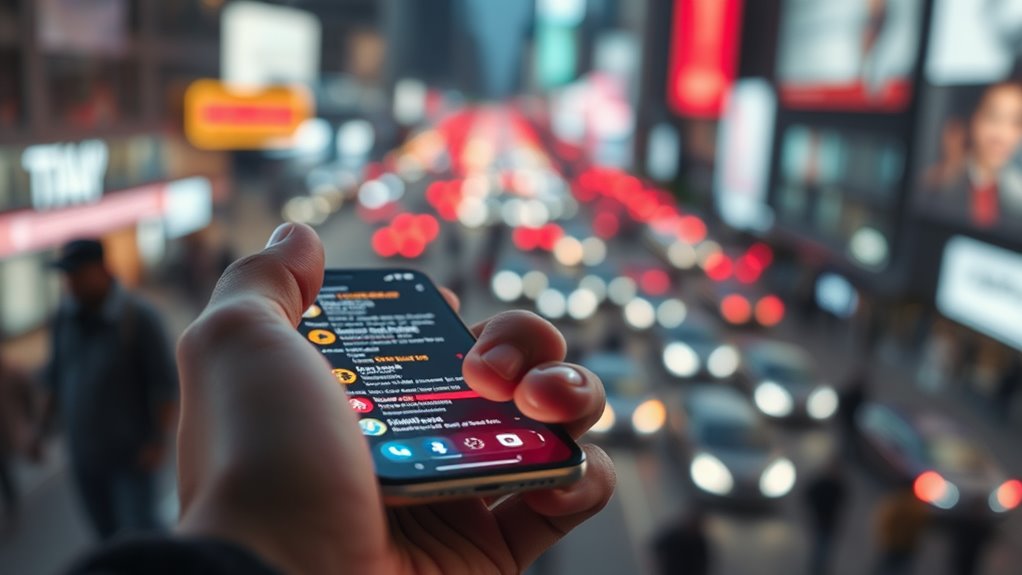
Breaking news alerts are fundamentally redefining the concept of urgency in news consumption. With the shift to digital platforms, information is delivered in real-time through mobile apps and social media. This creates a demand for immediate updates, compelling audiences to engage compulsively with news. Nevertheless, this rapid delivery often leads to anxiety and confusion, as users struggle to distinguish significant alerts from mere noise. Social media amplifies this effect, creating a cycle of sensationalism. Balancing urgent updates with user experience is essential for managing information overload. Discover more about the strategies being implemented to improve engagement without overwhelming audiences.
The Rise of Breaking News Alerts
In an age defined by rapid information exchange, breaking news alerts have emerged as a pivotal tool for news dissemination. These alerts, typically delivered via mobile applications, social media platforms, and traditional broadcasting, serve to inform the public of notable developments in real-time. The rise of alert systems has transformed how individuals consume news, moving from passive engagement to immediate notification.
As technology continues to advance, the evolution of breaking news alerts has become increasingly sophisticated. News organizations employ algorithms and artificial intelligence to tailor alerts to individual preferences, ensuring that users receive information that is most relevant to them. This personalization aspect not only improves user experience but also nurtures a sense of immediacy and urgency, compelling audiences to engage with the content without delay.
Furthermore, the prevalence of smartphones has facilitated the widespread adoption of these alert systems. The convenience of receiving instant notifications on personal devices has greatly increased the demand for timely information. Audiences now expect to be informed about key events as they unfold, leading to a paradigm shift in news consumption behavior.
Psychological Impact on Consumers
Amid the constant stream of breaking news alerts, consumers experience a profound psychological impact that shapes their perceptions and behaviors. The immediacy of these alerts can induce significant psychological stress, leading to heightened anxiety and an ongoing sense of urgency. As individuals grapple with the barrage of information, their emotional responses can become overwhelming, influencing decision-making and daily activities.
The following aspects illustrate the psychological effects of breaking news alerts on consumers:
- Heightened Anxiety: The rapid delivery of alarming news can create a perpetual state of worry, making it difficult for individuals to focus on their daily tasks.
- Desensitization: Continuous exposure to distressing events can lead to emotional numbness, causing consumers to become less responsive to future alerts.
- Fear of Missing Out (FOMO): The urgency of breaking news can trigger a compulsive need to stay updated, resulting in constant engagement with media platforms that further amplifies stress.
- Social Isolation: As individuals become preoccupied with news consumption, their interpersonal relationships may suffer, leading to feelings of loneliness and disconnect.
These psychological effects highlight the complexity of human emotions in response to breaking news. As consumers navigate this environment, grasping the emotional responses and the resulting psychological stress becomes crucial for nurturing healthier media consumption habits. Awareness of these impacts can empower consumers to manage their engagement with breaking news more effectively.
The Role of Social Media
The psychological effects of breaking news alerts are greatly influenced by the pervasive role of social media in contemporary communication. Social media platforms serve as primary conduits for news dissemination, shaping how audiences perceive urgency and relevance. When breaking news is shared on these platforms, it often triggers immediate reactions, encouraging an environment where information spreads swiftly. This phenomenon can create a sense of urgency, compelling users to engage with and share content before fully absorbing its implications.
The mechanics of social sharing amplify the impact of breaking news. Each share, like, or retweet contributes to the viral potential of content. Users are not merely consumers of information; they become active participants in a cycle of engagement that prioritizes speed and sensationalism. This can lead to the quick proliferation of stories, sometimes before they are fully verified, raising questions about the credibility of the information being circulated.
Moreover, the nature of social media encourages a culture of instant gratification. Users often seek out the latest updates, driven by the desire to be among the first to know, which heightens the emotional stakes associated with breaking news. The blend of urgency and the quest for viral content creates a unique dynamic that influences how news is perceived and acted upon. To conclude, the role of social media in breaking news alerts redefines urgency, shaping public discourse and personal reactions in profound ways.
Urgency vs. Information Overload
A constant barrage of breaking news alerts can create a challenging dichotomy between urgency and information overload. As individuals are bombarded with notifications, their urgency perception can become distorted, leading to confusion and apathy in the face of critical information. Information saturation occurs when the volume of incoming news exceeds a person's capacity to process it, resulting in diminished comprehension and engagement.
Consider the following scenarios that illustrate this phenomenon:
- News Alerts at Midnight: An emergency alert interrupts sleep, prompting immediate concern, but the details remain vague and scattered.
- Multiple Sources: Simultaneous notifications from various platforms flood a user's device, making it difficult to discern which is most important.
- Rapid Updates: A developing story unfolds in real time, with updates arriving every few minutes, overwhelming the audience with conflicting information.
- Audience Fatigue: After days of intense news cycles, individuals tune out entirely, missing essential updates because of exhaustion from constant alerts.
In this climate, individuals may struggle to differentiate between significant news and routine updates, leading to a false sense of urgency. The continuous onslaught of information can diminish the very urgency that these alerts intend to convey. To navigate this terrain, it is critical to cultivate a discerning approach to news consumption, prioritizing quality over quantity during the process and remaining aware of the inherent risks of information overload.
News Consumption Patterns Today
In today's fast-paced digital environment, consumers have unprecedented access to instant information, shaping their news consumption habits. This immediacy has led to a significant shift in attention spans, as audiences increasingly favor brief, digestible content over in-depth reporting. Comprehending these evolving patterns is essential for media outlets aiming to engage effectively with their audiences.
Instant Information Access
Amid the rapid evolution of technology, instant information access has transformed news consumption patterns considerably. The expectation for immediate updates has reshaped how audiences engage with news, leading to a culture of heightened urgency and awareness. Instant notifications have become a staple of modern journalism, driving users to seek rapid responses to the latest developments.
This shift is characterized by several key trends:
- 24/7 News Cycle: News is no longer confined to traditional schedules; updates are continuous and immediate.
- Mobile Accessibility: Smartphones and apps guarantee that breaking news is always within reach, allowing users to stay informed on the go.
- Social Media Integration: Platforms like Twitter and Facebook serve as primary sources for real-time news sharing, often outpacing traditional media.
- User-driven Engagement: Audiences now actively curate their news feeds, selecting sources and topics that resonate with their interests and values.
This environment of instant information access not just improves the immediacy of news but likewise cultivates a more informed public, enthusiastic to engage with current events as they unfold.
Shifted Attention Span
Shifting attention spans have notably altered news consumption patterns today, as audiences increasingly favor bite-sized content that delivers information quickly and efficiently. The rise of digital platforms and mobile devices has contributed greatly to this trend, leading to attention fragmentation. Consumers now encounter multiple news sources simultaneously, resulting in a preference for brief updates over in-depth analysis.
The constant barrage of notifications and alerts exacerbates focus decline, making it challenging for individuals to engage deeply with any single piece of content. As a result, media outlets have adapted their strategies to create more succinct headlines and easily digestible formats, catering to the diminished attention spans of their audience.
This shift is not merely a result of technological advancement but likewise reflects changing societal norms around information consumption. People are now conditioned to expect immediate gratification, which can undermine the traditional journalistic values of thoroughness and depth. As a result, during breaking news alerts serve to inform, they likewise challenge the public's ability to absorb complex narratives, eventually shaping a more superficial comprehension of current events. As the environment evolves, the implications for both consumers and journalists will continue to unfold.
Enhancing Engagement With Alerts
Enhancing engagement with breaking news alerts requires a strategic approach to immediate information access and real-time notifications. By comprehending the impact of timely updates on audience behavior, organizations can implement techniques that promote deeper connections with their audience. This discussion will explore how effective alert systems can raise audience engagement and response.
Immediate Information Access
In today's fast-paced digital environment, timely access to information has become paramount for engaging audiences effectively. Immediate information access not only improves user experience but also cultivates a deeper connection between the audience and the news. Through instant updates, news outlets can guarantee that their viewers remain informed and engaged, transforming passive consumption into an interactive experience.
Consider the following aspects that illustrate the importance of immediate information access:
- Real-Time Updates: Audiences crave the latest information as events unfold, allowing them to stay ahead of the story.
- Contextual Relevance: Alerts customized to user preferences guarantee that the information received is pertinent and timely, improving news accessibility.
- Increased Interaction: Instant notifications stimulate discussions on social media, encouraging users to share their perspectives and insights.
- Trust and Credibility: Providing timely information reinforces a news outlet's reputation, as audiences rely on their ability to deliver crucial updates quickly.
Real-Time Notifications Impact
Real-time notifications have transformed how audiences engage with news, facilitating a more dynamic interaction between consumers and content. By delivering updates as events unfold, these alerts create a sense of real-time urgency, compelling users to remain informed and responsive. This immediacy can greatly improve engagement, as audiences feel more connected to unfolding stories and can participate in discussions as they arise.
However, the proliferation of alerts has likewise led to notification fatigue. As users receive an overwhelming volume of updates, their ability to discern what is truly important diminishes. This fatigue can result in disengagement, where individuals begin to ignore notifications altogether, undermining the very purpose of real-time alerts.
To maintain effective engagement, news organizations must strike a balance between timely updates and user experience. By curating content and personalizing alerts based on audience preferences, they can mitigate the risks associated with notification fatigue. In the end, the challenge lies in ensuring that real-time notifications serve to improve, rather than detract from, the audience's connection to the news, encouraging a more informed and engaged public.
Audience Engagement Techniques
Many news organizations are exploring innovative audience engagement techniques to maximize the effectiveness of alerts. By implementing these strategies, they aim to improve audience interaction and enhance engagement metrics, eventually cultivating a more connected readership.
Here are four key techniques to improve engagement with alerts:
- Personalized Notifications: Tailoring alerts based on user preferences guarantees that audiences receive information relevant to their interests, increasing the likelihood of interaction.
- Interactive Content: Incorporating polls, quizzes, or questions within alerts encourages immediate audience participation, turning a passive experience into an interactive one.
- Social Sharing Options: Enabling easy sharing of alerts on social media platforms not just broadens reach but invites users to actively engage with the content, promoting community discussions.
- Timely Follow-ups: Sending updates or follow-up stories shortly after the initial alert keeps the audience informed and maintains engagement over time, encouraging them to return for more information.
Strategies for Managing Notifications
Effective management of notifications is vital for maintaining focus and productivity in today's fast-paced environment. With the incessant flow of breaking news alerts, individuals often experience notification fatigue, which can hinder their ability to concentrate on tasks that require deeper cognitive engagement. To combat this, implementing strategic alert management techniques is important.
First, prioritize the sources of notifications. Determine which news outlets and topics are most relevant to your personal or professional interests, and adjust your settings accordingly. By limiting alerts to these selected sources, you can reduce the overall volume of notifications and minimize distractions.
Second, designate specific times for checking notifications. Instead of allowing alerts to interrupt your workflow throughout the day, establish dedicated intervals to review updates. This practice not only helps maintain focus during work periods but additionally allows for a more thorough comprehension of the news during designated times.
Furthermore, consider utilizing "Do Not Disturb" modes or notification silencing features during important work hours. This enables you to work uninterrupted while still being able to catch up on significant updates at a later time.
Lastly, regularly assess and refine your notification preferences. As your interests and needs evolve, so too should your alert management strategy. By actively engaging with your notification settings, you can effectively combat notification fatigue and encourage a more productive and focused work environment.
Future Trends in News Delivery
As technology continues to evolve, the environment of news delivery is undergoing significant transformations that promise to reshape how audiences consume information. Future technologies are driving innovations in how news is disseminated, creating an increasingly personalized experience for users. As news organizations adapt to these changes, several key trends are emerging that will likely characterize the future of news delivery:
- AI-Driven Content Curation: Advanced algorithms will analyze user behavior and preferences, delivering news customized to individual interests and past consumption patterns.
- Real-Time Personalized Alerts: By leveraging data analytics, news apps will provide tailored notifications, ensuring users receive breaking news that is most relevant to them, thereby enhancing engagement.
- Voice-Activated News Delivery: The rise of smart speakers and virtual assistants will enable hands-free access to news updates, allowing users to receive information in a conversational manner.
- Augmented Reality Experiences: News organizations will incorporate AR to provide immersive storytelling, allowing users to engage with news in a more interactive and visually compelling way.
These trends suggest a future where news delivery is not merely about speed but also about relevance and personalization. As audiences increasingly seek information that resonates with their individual needs, the role of personalized alerts will become paramount, ensuring that news remains not only urgent but significant in the lives of its consumers.
Frequently Asked Questions
How Do Breaking News Alerts Influence Political Opinions?
Breaking news alerts greatly influence political opinions by amplifying political polarization and shaping public perceptions. Rapid dissemination of information can lead to immediate reactions, often reinforcing pre-existing biases. As individuals increasingly rely on alerts from preferred media sources, trust in those outlets becomes paramount. This selective engagement can distort the comprehension of complex issues, encouraging division and contributing to a fragmented political environment where consensus becomes increasingly elusive.
Are Breaking News Alerts More Effective Than Traditional News Broadcasts?
Breaking news alerts have demonstrated greater effectiveness compared to traditional news broadcasts, particularly regarding impact assessment and viewer engagement. These alerts provide immediate updates, capturing audience attention and cultivating a sense of urgency that conventional broadcasts may lack. By delivering concise information swiftly through digital platforms, breaking news alerts engage viewers more effectively, resulting in heightened awareness and responsiveness to unfolding events, thereby reshaping how news is consumed in the contemporary environment.
What Demographics Are Most Affected by Breaking News Alerts?
Demographics most affected by breaking news alerts include Millennials and seniors, each exhibiting distinct engagement patterns. Millennial engagement is characterized by high responsiveness to real-time updates through digital platforms, reflecting their preference for instant information. Conversely, senior responsiveness tends to be moderated, often relying on traditional media sources. Comprehending these demographic differences is essential for tailoring communication strategies that effectively reach and resonate with each group, ensuring timely and relevant news dissemination.
Can Breaking News Alerts Cause Anxiety or Stress in Consumers?
In an age where news travels faster than the speed of light, breaking news alerts can certainly serve as significant anxiety triggers for consumers. The immediacy of such notifications often leads to heightened stress, influencing consumer behavior as individuals may feel compelled to remain constantly informed. This relentless barrage of updates can create a sense of urgency that overwhelms, nurturing an environment where anxiety and stress become commonplace in daily life.
How Do Different News Outlets Vary Their Breaking News Alert Strategies?
Different news outlets adopt varied strategies for breaking news alerts, influenced by their respective alert frequency and outlet credibility. High-frequency alerts are common among outlets prioritizing immediacy, potentially leading to audience fatigue. Conversely, outlets with established credibility may opt for a more measured approach, emphasizing accuracy over speed. This strategy can improve trust, as consumers may appreciate fewer but more reliable updates. Ultimately, the balance between urgency and reliability shapes audience engagement and perception.
