
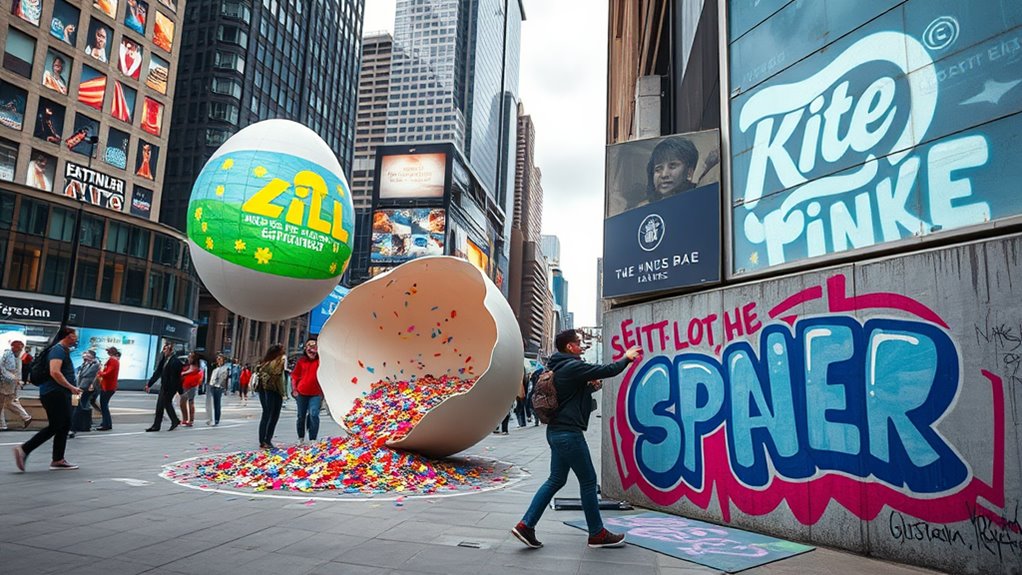
Guerrilla marketing stands out through innovative tactics that engage audiences in memorable ways. Street art transforms urban environments as it aligns brand values with societal issues, nurturing community connection. Flash mobs create surprise and emotional resonance, enhancing message retention. Interactive installations invite consumer participation, turning public spaces into dynamic experiences. Viral social media campaigns leverage humor and relatability to encourage user-generated content and engagement. Pop-up experiences appeal to the senses, whereas unexpected partnerships and community initiatives amplify brand narratives. Each tactic not only captures attention but likewise cultivates lasting relationships, revealing the breadth of creativity within guerrilla marketing strategies. The spectrum of these approaches is astonishing.
Street Art Transformations
Street art transformations serve as a powerful medium for guerrilla marketing, effectively merging creativity with commercial messaging. This lively form of expression not only beautifies urban environments but also serves as a canvas for brands to communicate their values and engage with audiences in a memorable way. As society increasingly values authenticity, integrating street art into marketing strategies enables brands to resonate with their target demographic on a deeper level.
Street art activism plays a vital role in this dynamic, as artists often use their work to challenge societal norms and promote social issues. By aligning with these artists, brands can leverage mural collaborations that reflect shared values, creating a synergistic relationship that improves both brand identity and artistic integrity. Such partnerships allow brands to tap into the cultural zeitgeist, positioning themselves as allies in the pursuit of social change.
Moreover, the ephemeral nature of street art adds a layer of intrigue, prompting audiences to seek out these installations and share them across social media platforms. This organic dissemination amplifies the reach of brand messages, transforming public spaces into interactive marketing arenas. By adopting street art transformations as part of their guerrilla marketing toolkit, brands can cultivate community engagement and stimulate conversations around their products or services.
Flash Mobs and Performance Art
Flash mobs and performance art emerge as dynamic avenues for guerrilla marketing, enthralling audiences through unexpected and engaging live experiences. These innovative tactics utilize crowd coordination to captivate onlookers, transforming ordinary spaces into lively stages for artistic expression. By orchestrating spontaneous gatherings, brands can create memorable moments that resonate deeply with their target audience.
The effectiveness of flash mobs lies in their ability to surprise and delight participants, often leading to viral social media exposure. Here are some compelling reasons why brands are increasingly leveraging this approach:
- Enhanced Engagement: Flash mobs draw in diverse audiences, nurturing a sense of community and shared experience.
- Visual Impact: Performance art captivates the senses, making the brand message more memorable through striking visuals and emotional resonance.
- Social Media Buzz: The surprise element encourages attendees to capture and share the moment, amplifying the campaign's reach.
- Authentic Connections: Artistic expressions resonate with audiences, establishing a genuine connection that transcends traditional advertising methods.
Brands like T-Mobile and Coca-Cola have successfully utilized flash mobs to convey their messages, creating buzz and garnering attention without the need for expensive ad placements. As marketers continue to seek innovative ways to engage consumers, flash mobs and performance art stand out as impactful tools that blend creativity, spontaneity, and effective communication. By channeling the energy of collective participation, these tactics not only entertain but also effectively promote brand identity in a crowded marketplace.
Interactive Installations
Amidst the evolving terrain of guerrilla marketing, interactive installations have emerged as a potent tool for brands to engage consumers in immersive experiences. These enchanting setups transform public spaces into dynamic canvases, where the boundaries between art and commerce dissolve, inviting consumers to participate actively. By leveraging elements of interactive art, brands create environments that attract attention and promote emotional connections.
The allure of interactive installations lies in their ability to stimulate urban exploration. As consumers navigate these thoughtfully designed spaces, they become co-creators of the experience, generating spontaneous content that can resonate with their social circles. This participatory approach not only improves brand visibility but encourages organic storytelling, as each visitor contributes their unique interpretation and interaction.
Furthermore, interactive installations can be strategically placed in high-footfall areas, ensuring maximum exposure and engagement. Brands like Coca-Cola and IKEA have successfully utilized this tactic, offering experiences that are not merely promotional but unforgettable and shareable. These installations can incorporate technology, such as augmented reality or motion sensors, to deepen engagement, allowing consumers to experience the brand in a multi-dimensional context.
Viral Social Media Campaigns
Viral social media campaigns utilize the strength of engaging content to amplify brand messages and encourage community interaction. By utilizing memes that resonate with audiences, launching interactive hashtag challenges, and forming strategic partnerships with influencers, brands can greatly improve their reach and impact. These tactics not just drive engagement but additionally cultivate a deeper connection between the brand and its target audience.
Memes That Connect
Utilizing the strength of memes has become a cornerstone of effective guerrilla marketing, as brands seek to engage audiences in relatable and entertaining ways. The rapid evolution of meme culture presents a unique opportunity for brands to connect with consumers through humor, leveraging the humor impact to promote engagement and shareability.
Successful campaigns capitalize on the viral nature of memes, allowing brands to reach wider audiences with minimal investment. Key strategies to contemplate include:
- Relatability: Craft memes that resonate with everyday experiences, making them instantly recognizable.
- Timeliness: Align meme content with current events or trending topics to improve relevance.
- Simplicity: Keep the messaging clear and concise, ensuring the humor is easily digestible.
- Authenticity: Maintain brand voice while embracing the casual tone of meme culture, which nurtures genuine connections.
In this digital environment, brands that leverage the influence of memes not only boost their visibility but also cultivate a community of loyal followers. By comprehending the nuances of humor within meme culture, marketers can create campaigns that not only entertain but also inspire action.
Interactive Hashtag Challenges
As brands continue to explore innovative ways to engage their audiences, interactive hashtag challenges have emerged as a strong tool in the field of social media marketing. These campaigns invite users to create and share content that aligns with a specific hashtag, nurturing a sense of community and encouraging active participation.
Harnessing hashtag creativity, brands can effectively amplify their messages, driving organic reach and enhancing visibility. By crafting engaging prompts that resonate with their target audience, companies can transform passive viewers into active contributors. The success of such challenges often hinges on their ability to tap into current trends, cultural moments, or even seasonal themes, making the hashtag relatable and timely.
Moreover, audience participation is vital; the more users engage with the challenge, the greater the momentum and excitement generated around the brand. This level of interaction not only enriches the user experience but additionally cultivates brand loyalty, as participants feel personally connected to the campaign.
Ultimately, interactive hashtag challenges stand as an indication of the influence of collaboration in the digital environment, reinforcing the notion that when brands invite their audiences to co-create, the potential for virality is greatly amplified.
Influencer Partnerships Impact
In the domain of social media marketing, influencer partnerships have become a pivotal strategy for brands seeking to amplify their reach and drive engagement. By leveraging the trust that influencers cultivate with their audiences, brands can achieve remarkable visibility and resonance. Nevertheless, the effectiveness of these partnerships hinges upon two key factors: influencer authenticity and brand alignment.
To maximize the impact of influencer collaborations, consider the following tactics:
- Targeted Selection: Choose influencers whose values and aesthetics align with your brand to promote genuine connections.
- Creative Freedom: Allow influencers the autonomy to present your product in a manner that feels authentic to their style, enhancing relatability.
- Engagement Metrics: Focus on engagement rates rather than follower counts to identify influencers who truly connect with their audiences.
- Long-Term Relationships: Cultivate ongoing partnerships rather than one-off campaigns to build sustained brand loyalty and deeper consumer trust.
Pop-Up Experiences
Pop-up experiences offer brands a unique opportunity to create immersive interactions that captivate consumers. By employing location-based engagement strategies, companies can effectively target specific demographics and improve brand visibility. Furthermore, the allure of limited-time offers considerably boosts consumer interest and urgency, making these experiences a strong tool in guerrilla marketing.
Immersive Brand Interactions
Experiential marketing has transformed the way brands engage with consumers, and immersive brand interactions through pop-up experiences are at the forefront of this trend. These carefully curated events create memorable sensory experiences that nurture emotional connections between the brand and its audience. By leveraging innovative concepts, brands can create environments that captivate and resonate with potential customers.
Key elements that define successful immersive brand interactions include:
- Sensory Engagement: Utilizing sight, sound, touch, taste, and smell to create a holistic experience.
- Interactive Installations: Encouraging participation through hands-on activities or digital interfaces that invite consumer involvement.
- Storytelling: Crafting narratives that align with the brand's identity, allowing consumers to connect on a deeper level.
- Social Sharing Opportunities: Designing shareable moments that encourage attendees to capture and disseminate their experiences across social media platforms.
Incorporating these tactics not only improves brand visibility but additionally cultivates loyalty. As brands continue to explore the potential of pop-up experiences, the emphasis on immersive brand interactions will likely redefine consumer engagement strategies, ensuring that brands remain memorable and relevant in a saturated marketplace.
Location-Based Engagement Strategies
Strategic location-based engagement is a potent approach that allows brands to connect with consumers in meaningful and contextually relevant ways. By leveraging innovative pop-up experiences, brands can create memorable interactions that resonate with their target audience. These transient installations not just generate excitement but additionally cultivate a sense of urgency, drawing consumers into a unique brand narrative.
Incorporating geo-targeted promotions is crucial in this strategy, as it enables brands to tailor their offerings based on consumer location. For instance, a brand can send exclusive offers to users within a specific radius of a pop-up event, enhancing foot traffic and engagement. This precision guarantees that promotional efforts are maximally effective and relevant, turning casual passersby into engaged customers.
Furthermore, mobile app integration amplifies these initiatives, allowing brands to collect data, track consumer behavior, and refine their strategies in real-time. By encouraging app downloads during the pop-up experience, brands can extend their reach beyond the physical space, maintaining engagement long after the event concludes. This fusion of location-based tactics and technological innovation positions brands to not just capture attention but also maintain meaningful connections with their audience.
Limited-Time Offers Impact
Creating a sense of urgency through limited-time offers can greatly improve the effectiveness of pop-up experiences. By employing scarcity marketing and urgency tactics, brands can capture attention and drive immediate customer action. These techniques not only boost engagement but additionally cultivate a competitive atmosphere that encourages consumers to participate before the opportunity disappears.
To maximize the impact of limited-time offers, consider the following strategies:
- Time-Limited Discounts: Offer significant price reductions for a short duration to incentivize quick purchases.
- Exclusive Product Launches: Introduce new products available only during the pop-up event to create excitement and exclusivity.
- Flash Sales: Host surprise sales with minimal advance notice to stimulate spontaneous buying behavior.
- Limited Inventory Alerts: Inform consumers about the remaining stock levels to instill a fear of missing out (FOMO).
Unexpected Partnerships
Unexpected partnerships can serve as potent catalysts for innovative marketing campaigns, often leading to remarkable brand exposure and consumer engagement. By forging unexpected alliances, brands can tap into new audiences and leverage the unique strengths of each partner, creating a compelling narrative that captures consumer interest. Collaborative branding can be particularly effective; when two distinct entities combine their resources and creativity, they can create a synergy that resonates with consumers in unexpected ways.
Consider the collaboration between a high-end fashion brand and a popular fast-food chain, which results in a limited-edition line of merchandise. This unlikely partnership not only garners attention but also challenges conventional perceptions of luxury and accessibility. The juxtaposition of these brands creates a buzz that attracts media coverage and social media discussions, amplifying their reach far beyond traditional marketing tactics.
Furthermore, unexpected alliances can promote authenticity and relatability. When a tech startup partners with a local artisan, it highlights both innovation and craftsmanship, appealing to consumers' desires for genuine connections. Such partnerships can also improve brand storytelling, creating a narrative that is both intriguing and memorable.
Ultimately, the success of these unexpected partnerships hinges on strategic alignment and shared values. Brands that embrace unconventional collaborations stand to gain not just market visibility but equally the opportunity to redefine their identity in the eyes of consumers. By exploring the uncharted territories of collaborative branding, companies can pave the way for transformative marketing experiences that resonate on multiple levels.
Prank Marketing Stunts
Leveraging humor and surprise, prank marketing stunts have emerged as an enchanting method for brands to engage audiences and generate buzz. These innovative strategies not merely capture attention but additionally nurture memorable experiences that resonate with consumers. By employing humor and creativity, brands can craft compelling narratives that invite audiences to participate in the fun, often resulting in increased brand loyalty and visibility.
Prank product launches are a notable example of this tactic, allowing brands to reveal new offerings in a way that feels fresh and exciting. By integrating entertaining elements into their messaging, companies can effectively differentiate themselves in a saturated market. The success of prank marketing lies in its ability to connect emotionally with consumers through:
- Unexpected twists that enhance the brand narrative
- Shareable content that encourages social media engagement
- A lighthearted approach that humanizes the brand
- Memorable experiences that lead to word-of-mouth promotion
Humorous brand narratives serve as the backbone of these campaigns, transforming ordinary product reveals into extraordinary events. Brands that embrace this playful spirit not only entertain but inspire conversation, ensuring their message reaches a wider audience.
Ultimately, prank marketing stunts exemplify the influence of creativity in driving engagement. As brands continue to seek innovative ways to stand out, those willing to take risks and embrace humor will likely find themselves ahead of the curve in the evolving environment of marketing.
Community Engagement Projects
Even though prank marketing stunts effectively stimulate interest and engagement through humor, community engagement projects offer a deeper, more meaningful connection between brands and their audiences. These innovative initiatives cultivate a sense of belonging and trust, in the end driving brand loyalty and consumer advocacy.
Community engagement projects can manifest in various forms, such as community workshops that provide valuable skills or resources to local residents. By equipping individuals with practical knowledge, brands not only improve their visibility but additionally position themselves as committed stakeholders in the community. These workshops can cover topics ranging from sustainability practices to financial literacy, demonstrating a brand's dedication to social responsibility and community empowerment.
Local collaborations further amplify the impact of community engagement projects. By partnering with schools, non-profits, and local artists, brands can create unique experiences that resonate with diverse demographics. For instance, sponsoring a community art project not only beautifies public spaces but also nurtures relationships with local creatives, which can yield rich, organic brand narratives.
Moreover, these initiatives often generate social media buzz, as participants share their experiences and promote brand involvement. This organic word-of-mouth marketing is invaluable, as it resonates more authentically than traditional advertising methods.
Frequently Asked Questions
How Do Companies Measure the Success of Guerrilla Marketing Tactics?
Companies measure the success of guerrilla marketing tactics through a combination of success metrics and campaign analysis. Key performance indicators (KPIs) such as brand awareness, customer engagement, and conversion rates are assessed to evaluate impact. Furthermore, social media reach and sentiment analysis provide insight into audience perception and resonance. By employing data-driven methodologies, organizations can refine their strategies, ensuring that innovative approaches yield tangible results and cultivate meaningful customer connections.
What Are the Legal Considerations for Guerrilla Marketing Activities?
In the domain of unconventional marketing, one must tread carefully, considering the intricate web of regulations that govern such creative endeavors. Legal considerations encompass the protection of intellectual property, ensuring that original ideas remain safeguarded from replication. Moreover, activities conducted in public spaces necessitate adherence to local ordinances and permits. Maneuvering through these legal environments is essential for companies seeking to innovate during compliance and nurturing positive community relations.
Can Guerrilla Marketing Backfire on a Brand?
Guerrilla marketing, although innovative, can certainly backfire on a brand. If not executed thoughtfully, such campaigns may lead to negative impacts, including public backlash or misinterpretation of the intended message. This misalignment can damage brand reputation, eroding consumer trust and loyalty. It is essential for brands to carefully assess their target audience and the potential ramifications of their tactics to mitigate risks associated with unconventional marketing strategies.
How Much Budget Is Typically Required for Guerrilla Marketing Campaigns?
The budget allocation for guerrilla marketing campaigns can vary greatly, often ranging from a few hundred to several thousand dollars. Nevertheless, these campaigns are renowned for their cost-effective strategies, leveraging creativity over substantial financial investment. By utilizing unconventional tactics and grassroots approaches, brands can maximize impact during cost reduction. In the end, the emphasis should be on innovative execution rather than traditional spending, allowing brands to engage audiences effectively within their budgetary constraints.
What Skills Are Necessary for Executing Effective Guerrilla Marketing Strategies?
Effective guerrilla marketing strategies necessitate a blend of creative thinking and strategic planning. Importantly, 70% of consumers report feeling more engaged with brands that utilize unconventional marketing approaches. To execute these strategies successfully, professionals must possess strong problem-solving skills, adaptability, and a sharp comprehension of target demographics. Furthermore, the ability to analyze trends and integrate innovative concepts is essential for crafting memorable campaigns that resonate with audiences and drive brand loyalty.
