
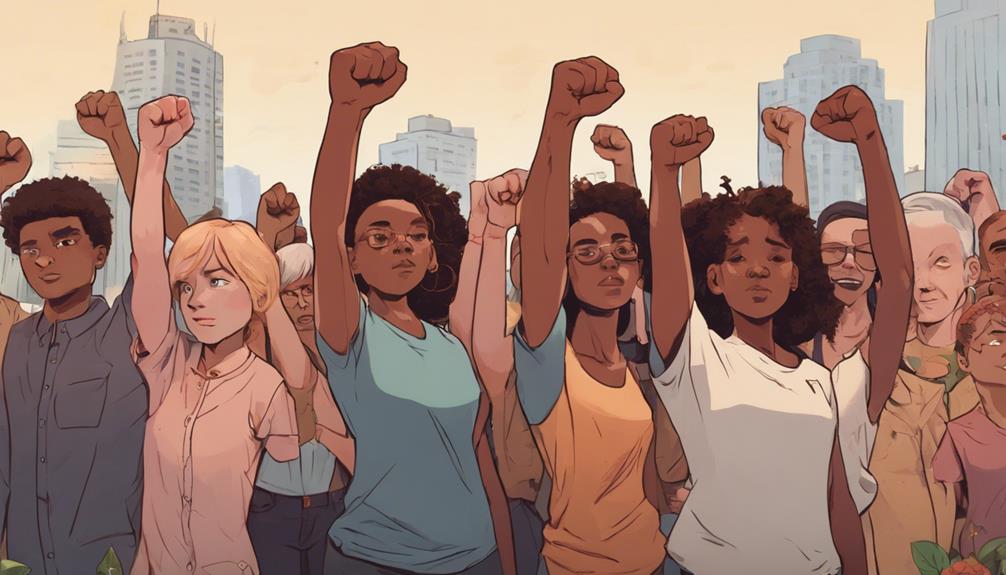
I've taken a stand for civil rights in modern society, and I believe it's time for me – and for all of us – to actively champion the cause of equality and justice. I've started by educating myself on the historical backdrop of civil rights movements and recognizing the ongoing struggles for social justice. I've identified my privilege and bias, and I'm actively working to amplify marginalized voices and create inclusive spaces everywhere. Through respectful conversations, volunteering for social justice, and demanding policy changes locally, I'm committed to creating a more just society. Now, it's time to take it to the next level.
Educate Yourself on Civil Rights
As I navigate the complex landscape of civil rights, I acknowledge the significance of educating myself on the challenges, victories, and ongoing fights for equality and justice. Diving into the historical backdrop of civil rights movements, I'm struck by the persistence of systemic racism, which has perpetuated inequality and discrimination throughout history. It's vital to grasp how this entrenched racism has shaped our society, from education and employment to housing and healthcare.
To truly advocate for civil rights, I need to recognize the intersectionality of social justice issues. I've come to realize that the struggle for equality is not a single-issue battle, but rather a intricate web of interconnected conflicts. For example, women of color face both sexism and racism, whereas LGBTQ+ individuals of color confront discrimination based on their race, gender, and sexual orientation. Acknowledging these intersections is necessary to create a more just and equitable society.
As I continue to educate myself, I'm dedicated to listening to the voices and experiences of marginalized communities. I'm learning about the ongoing struggles for social justice, from police brutality and mass incarceration to voter suppression and immigration reform. By deepening my comprehension of these issues, I'm better equipped to amplify the voices of those fighting for civil rights and to advocate for meaningful change. By doing so, I hope to become a more impactful ally and advocate of civil rights in modern society.
Identify Your Privilege and Bias
One important step in championing civil rights is recognizing the privilege and bias that I, myself, bring to the table. As I aim to be an ally, I must acknowledge privilege – the unearned benefits I've received based on my race, gender, class, or other aspects of my identity. I didn't ask for these advantages, but I've certainly benefited from them. Acknowledging privilege helps me understand how it influences my perceptions and actions, and how it may unintentionally perpetuate inequality.
Next, I must challenge bias – the often unconscious attitudes and stereotypes that shape my thoughts and behaviors. I've grown up in a society that perpetuates biases, and it is crucial to recognize when these biases are at play. I need to catch myself when I'm making assumptions or jumping to conclusions based on limited information. Challenging bias requires self-reflection, critical thinking, and a willingness to listen and learn. It's an ongoing process, as biases can be deeply ingrained and difficult to overcome.
Engage in Respectful Conversations
As I work to champion civil rights, I've come to realize that engaging in respectful conversations is essential. To do this effectively, I need to concentrate on listening without being defensive, gaining a better grasp of different perspectives, and speaking up politely always. By doing so, I can nurture a safe and open environment where everyone feels heard and valued.
Listen Without Being Defensive
I often find myself getting caught up in the heat of the moment, but I've learned that truly listening without being defensive is an essential skill for engaging in respectful conversations. It's easy to get triggered when discussing sensitive topics, but I've come to realize that active listening is key to building empathy and insight. When I focus on truly hearing the other person, I'm able to respond in a more thoughtful and constructive way. This helps to create an open-minded dialogue where both parties feel heard and valued.
To achieve this, I've developed a practice of self-reflection. I take a step back, acknowledge my emotions, and remind myself that I don't have to agree with the other person to listen to their perspective. By doing so, I'm able to separate my own biases and assumptions from the conversation, allowing for a more genuine exchange. It's not always easy, but I've found that listening without being defensive has helped me build stronger relationships and nurture a deeper insight into the issues at hand. By doing so, I'm able to engage in respectful conversations that drive meaningful change.
Understand Different Perspectives Better
By listening without being defensive, I’ve created space to genuinely consider opposing viewpoints, which has helped me better grasp the nuances of social justice issues. Now, I’m committed to engaging in respectful conversations that encourage deeper insight. I’ve found that empathy workshops have been instrumental in helping me develop the skills to navigate complex discussions. These workshops have taught me to acknowledge the emotional experiences of others, even when our views differ. Moreover, I’ve joined diverse book clubs that explore literature on social justice, which has broadened my perspective on the intersectionality of civil rights issues. Through these conversations, I’ve come to realize that comprehending different perspectives isn’t about agreeing on everything, but about recognizing the validity of others’ experiences. By doing so, I’ve become a more effective ally and advocate for marginalized communities. I’ve learned to ask open-ended questions, seek clarification, and acknowledge my own biases. Through these efforts, I’m better equipped to champion civil rights in modern society. Additionally, I have started attending community forums and legal education seminars to better understand the policies that impact marginalized groups. These experiences have reinforced the importance of advocating social justice legally, ensuring that systemic change is pursued through both grassroots activism and policy reform. By staying informed and actively participating in these discussions, I can contribute more effectively to creating a more equitable society.
Speak Up Politely Always
As I continue on my path to advocate for civil rights, I've come to realize that speaking up politely always plays a vital role in engaging in respectful discussions.
Polite disagreement can be a powerful catalyst for positive change, and I've learned to express my viewpoints respectfully, even when differing with others. This method has enabled me to uphold a sense of compassion and insight, all the while effectively conveying my thoughts and emotions. Through respectful promotion, I've been able to nurture open and sincere conversations, which has resulted in a deeper insight into various viewpoints.
Support Marginalized Communities
As I reflect on my role in championing civil rights, I recognize the significance of supporting marginalized communities. Many marginalized communities, including racial and ethnic minorities, women, and LGBTQ+ individuals, face systemic barriers that limit their access to resources, opportunities, and social justice. I believe it's crucial to engage with these communities and amplify their voices.
One way I do this is by attending community events and advocacy workshops. These events provide a platform for marginalized communities to share their experiences, raise awareness about the issues they face, and mobilize support. By attending these events, I'm able to listen, learn, and show my solidarity with these communities. I've participated in grassroots movements as well, which have been pivotal in bringing about social change. These movements empower marginalized communities to take ownership of their struggles and advocate for their rights.
To be an effective ally, I've undergone allyship training, which has equipped me with the knowledge and skills to support marginalized communities effectively. This training has taught me how to listen without being defensive, amplify marginalized voices without speaking over them, and use my privilege to challenge systemic injustices. By supporting marginalized communities, I'm committed to creating a more just and equitable society where everyone has access to the same opportunities and resources.
Volunteer for Social Justice
I take my dedication to social equity a step further by volunteering for organizations that work tirelessly to address the systemic disparities I've learned about through my advocacy work. By doing so, I'm able to make a tangible impact in my community and contribute to the creation of a fairer society. Through community service, I've had the opportunity to engage with marginalized groups and gain a deeper insight into the challenges they face.
One of the most rewarding aspects of volunteering is being part of grassroots movements that drive actual change. I've worked with organizations that focus on issues like education reform, criminal justice reform, and environmental justice. By being on the ground and working alongside dedicated individuals, I've seen firsthand the strength of collective action and the impact it can have on policy and legislation.
Volunteering has also given me a sense of community and connection with like-minded individuals who share my passion for social equity. We work together, share ideas, and support each other in our efforts to create a more just society. Through volunteering, I've developed valuable skills, built meaningful relationships, and gained a deeper insight into the intricacies of social equity issues.
Ultimately, volunteering for social equity is not just a way to give back to my community, but also a way to continue my own education and growth as an advocate. By rolling up my sleeves and getting involved, I'm able to make a real difference and work towards a brighter future for all.
Amplify Diverse Voices Online
As I advocate for civil rights, I recognize the importance of amplifying diverse voices online. I'll start by sharing marginalized stories that often get overlooked, and then break down digital silos that can isolate us from each other. By empowering online activism, I believe we can create a more inclusive and equitable digital terrain.
Share Marginalized Stories
As I reflect on my role in advocating for civil rights, I realize that sharing marginalized narratives is essential in amplifying diverse voices online. By utilizing social media platforms, we can provide a megaphone for marginalized voices, amplifying their stories and perspectives to a wider audience. This is especially important in today's digital era, where representation in media holds significant importance.
Here are three ways I've learned to make a difference:
- Facilitate storytelling workshops where marginalized individuals can share their experiences, nurturing a sense of community and empathy.
- Participate in intersectionality dialogues to recognize the unique challenges faced by individuals with multiple marginalized identities.
- Promote varied perspectives by sharing articles, videos, and personal narratives that spotlight the experiences of underrepresented groups.
Break Digital Silos
As I reflect on my role in advocating for civil rights, I realize that dismantling digital barriers is vital in amplifying diverse voices online. By amplifying marginalized voices online, we can break through digital barriers that often segregate people into echo chambers, limiting their exposure to diverse perspectives. This means actively engaging with social media platforms to promote community outreach and encourage diverse conversations. I make it a point to follow and share content from marginalized groups, ensuring that their voices are heard and valued. Through online activism, I've witnessed offline impact, where online movements translate into real-world change. By bridging the online-offline gap, we can create a ripple effect that nurtures greater comprehension and empathy. I've seen this firsthand when online campaigns spark community-led initiatives, driving tangible progress in the fight for civil rights. By dismantling digital barriers, I believe we can create a more inclusive and just society, where every voice is heard and valued.
Empower Online Activism
Through my online platforms, I intentionally curate a varied feed that showcases the stories, struggles, and triumphs of marginalized communities, ensuring their voices are amplified and their messages resonate with a broader audience. By doing so, I'm able to empower online activism, creating a ripple effect that inspires others to join the movement.
Here are three ways I'm making a difference:
- Amplifying marginalized voices: I share posts, articles, and personal stories from underrepresented groups, giving them a platform to express themselves freely.
- Supporting online petitions and virtual rallies: I participate in digital campaigns that raise awareness about critical social issues, using my online presence to mobilize others to take action.
- Engaging in social media activism: I use my social media channels to spark meaningful conversations, challenge biases, and promote digital advocacy, inspiring others to do the same.
Demand Policy Changes Locally
As I continue my path to champion civil rights, I shift my focus to demanding policy changes locally. I urge my local representatives to reform outdated policies that perpetuate systemic inequalities, starting with those that disproportionately affect marginalized communities in my own backyard. Through community organizing and policy advocacy, I'm committed to creating meaningful change that resonates with my neighbors.
I recognize that grassroots activism is key to driving local impact. By mobilizing like-minded individuals and building coalitions, we can amplify our voices and demand tangible reforms. I'm talking about concrete policy changes that address the systemic barriers faced by marginalized communities, not just symbolic gestures.
I've taken the time to educate myself on the existing policies that perpetuate inequality, and I'm prepared to engage in constructive dialogue with my local representatives. I'm unafraid to challenge the status quo and push for reforms that promote equity and justice. By doing so, I'm advocating for the rights of marginalized communities and contributing to a more just and equitable society for all.
Through persistent advocacy and grassroots activism, I'm confident that we can create a ripple effect of positive change that resonates far beyond our local communities. By demanding policy changes locally, we can set a potent precedent for broader social change, and that's a reality I'm dedicated to making a reality.
Participate in Peaceful Protests
As I prepare to participate in peaceful protests, I know it's essential to understand my role in the movement. I need to familiarize myself with the laws and regulations surrounding protests, so I can exercise my rights effectively. By doing so, I'll be able to choose the battles that matter most to me and amplify my voice to bring about meaningful change.
Know Your Rights
I exercise my right to free speech and assembly by participating in peaceful protests, knowing that my voice matters in the fight for civil rights. As I stand among like-minded individuals, I'm reminded of the strength of collective action. But I also acknowledge that it's vital to know my rights as a protester. That's why I educate myself on legal resources, such as the First Amendment and local ordinances, to make sure I'm exercising my rights within the bounds of the law.
Here are three reasons why knowing my rights is important:
- Protection from unlawful arrest: Having an understanding of my rights helps me navigate interactions with law enforcement and avoid unnecessary confrontations.
- Effective advocacy: Knowing my rights enables me to focus on the message I want to convey, rather than getting caught up in unnecessary conflicts.
- Historical context: I'm aware that the fight for civil rights is built on the sacrifices of those who came before me, and I honor their legacy by exercising my rights responsibly.
Choose Your Battles
When deciding which protests to attend, I prioritize causes that align with my values and have the potential to create meaningful change. I don't spread myself too thin by trying to participate in every protest that comes along. Instead, I focus on the ones that resonate deeply with me, where I can make a tangible impact. This approach allows me to conserve my energy and resources, ensuring I can sustain my activism over the long run.
By choosing my battles wisely, I can engage in strategic protests that amplify my voice and contribute to lasting progress. I research the organizers, the cause, and the expected outcomes before committing to a protest. This due diligence helps me identify opportunities for effective, peaceful activism that aligns with my values and goals.
Through strategic engagement, I can maximize my influence and create a ripple effect that inspires others to join the movement. By being intentional about the protests I attend, I can channel my passion into tangible results, eventually driving meaningful change in my community and beyond.
Amplify Your Voice
Amplify Your Voice
By strategically selecting protests, I empower myself to amplify my voice through peaceful demonstrations that bring attention to critical issues. I understand that my presence matters, and I choose to use it to make a difference. Through peaceful protests, I can bring awareness to social injustices and advocate for change.
Here are three ways I ensure my voice is heard:
- Social Media Amplification: I utilize social media platforms to spread the word about the cause I'm fighting for. I share informative posts, personal stories, and updates from the protest to reach a wider audience.
- Community Events: I participate in community events, such as rallies, marches, and town hall meetings, to engage with like-minded individuals and local leaders. These events provide a platform for open discussions and collective action.
- Personal Stories: I share my personal experiences and the reasons why I'm passionate about the cause. This helps to humanize the issue and creates a sense of empathy among those who may not be directly affected.
Create Inclusive Spaces Everywhere
As I continue on this path to uphold civil rights, I acknowledge that establishing inclusive spaces everywhere is a vital step towards nurturing a culture of equality and respect.
Embracing diversity and championing equality, we must purposefully design and adjust our surroundings to cultivate a sense of belonging for everyone. Inclusive workplaces, for example, can be accomplished by implementing diversity and inclusion training, ensuring equal opportunities for career progression, and celebrating diverse cultural backgrounds. Similarly, varied schools can be developed by incorporating diverse curricula, hiring diverse educators, and promoting inclusive extracurricular activities.
Beyond our workplaces and schools, community gatherings and public areas also play a significant role in promoting inclusivity. By hosting cultural events, coordinating community service initiatives, and creating accessible public spaces, we can bring individuals from various backgrounds together and celebrate our distinctions. Moreover, we can design public areas that are welcoming and accessible to all, irrespective of their abilities, gender, or race. By doing so, we can establish a sense of community and belonging that surpasses our individual disparities. As I endeavor to establish inclusive spaces everywhere, I am reminded that every endeavor matters, and even minor adjustments can have a profound impact on promoting equality and justice for all.
Hold Leaders Accountable Always
I recognize that holding leaders responsible for their actions is crucial in creating a society where civil rights are genuinely upheld. When those in authority are not held responsible, they become complacent, and systemic injustices persist. As champions of civil rights, it's our duty to ensure that leaders are transparent, responsible, and committed to creating a just society.
Here are three reasons why holding leaders responsible is vital:
- Lack of responsibility breeds complacency: When leaders are not held responsible, they become comfortable with the status quo, and systemic injustices continue to thrive.
- Responsibility fuels grassroots movements: Holding leaders responsible galvanizes grassroots movements, which are essential for driving systemic change and creating a more just society.
- Responsibility amplifies marginalized voices: By holding leaders responsible, we amplify the voices of marginalized communities, ensuring that their concerns are heard and their rights are protected.
To achieve this, we must engage in community organizing and advocacy campaigns that demand transparency and responsibility from our leaders. We must also support organizations and individuals who are dedicated to holding leaders responsible and promoting systemic change. By doing so, we can create a society where civil rights are truly upheld, and everyone has the opportunity to thrive.
Frequently Asked Questions
What if I'm Not an Expert on Civil Rights Issues?
"I'm not an expert on civil rights issues, but that won't stop me from making a difference. I'll start by educating myself through books, documentaries, and online resources. Then, I'll get involved in activism by attending rallies, volunteering for organizations, and participating in online campaigns. By raising awareness about social injustices and advocating for change, I'll become a champion for civil rights – even without being an expert."
How Do I Respond to Racist Family Members or Friends?
'I coincidentally stumbled upon a racist comment from a family member on social media, and it sparked a difficult conversation. I realized I needed to set boundaries and educate them on why their words were harmful. I approached the conversation with empathy, not anger, and it led to a profound shift in their perspective. Now, I'm prepared to have similar conversations with friends and family, knowing that education and empathy can be impactful catalysts for change.'
Can I Support Civil Rights Causes if I'm Not a Minority?
I often wonder, can I truly support civil rights causes if I'm not a minority? The answer is yes, I can be an ally. I recognize that I may not fully understand the struggles, but I can use my privilege to amplify marginalized voices. By embracing intersectionality, I acknowledge that various forms of oppression intersect and affect different groups uniquely. I'll take on an allyship role, listening, learning, and advocating for change, even in situations where it's uncomfortable.
Is It Enough to Just Treat Everyone With Respect and Kindness?
As I stroll down the street, I see faces that reflect the beauty of diversity. But is it enough to simply treat everyone with respect and kindness? Honestly, no. Treating others with respect is a great start, but it's not sufficient. I need to be advocating actively, listening empathetically, and educating myself on the challenges others face. Simply being kind isn't taking action – it's time for me to take a stand and make a difference.
What if I Unintentionally Offend Someone From a Different Culture?
When I unintentionally offend someone from a different culture, I realize that even with good intentions, cultural sensitivity can be a learning curve. I take a deep breath, listen to their perspective, and communicate my apologies sincerely. I acknowledge the cross-cultural misinterpretation, and ask questions to clarify their concerns. By doing so, I show that I value their cultural identity and am committed to growth, nurturing a deeper insight and stronger relationships.
