
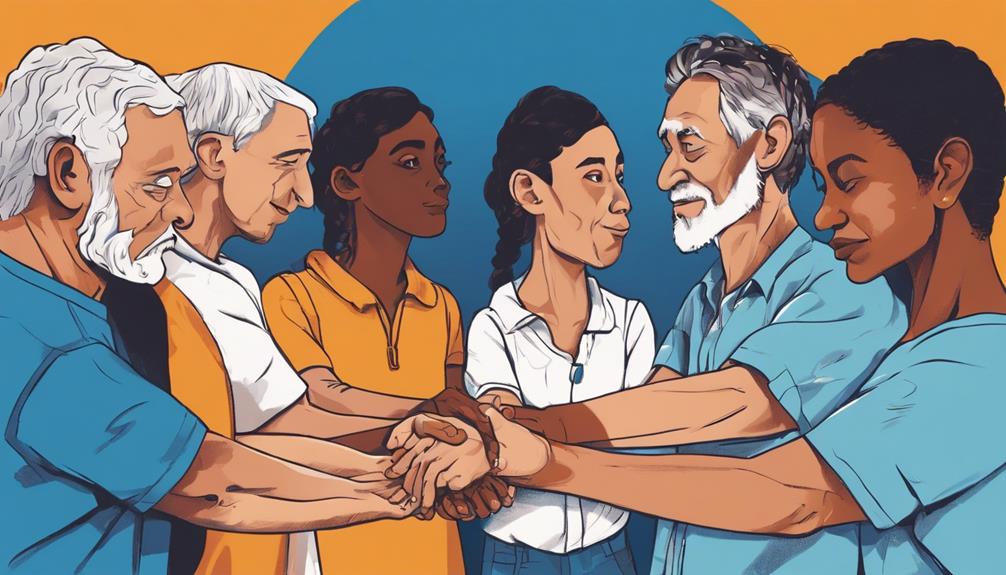
As I explore the intricacies of championing human rights in global settings, I'm faced with the harsh realities of nationalism, authoritarianism, and economic inequality. Cultural relativism raises difficult questions about balancing universal human rights with local cultural norms. Meanwhile, globalization and conflict zones present unique challenges to protecting human rights. In spite of these obstacles, I'm heartened by the potential of empowering marginalized communities, addressing economic inequality, and building a global human rights movement. As I navigate these elaborate issues, I'm reminded that there's still much to uncover about the nuances of human rights advocacy – and the importance of continued exploration.
Understanding Human Rights in Context
As I explore the realm of human rights, I'm struck by the intricate nature of this concept, deeply ingrained in the social, cultural, and political fabric of our societies. It's a multifaceted issue that raises ethical dilemmas, compelling us to question our moral compass and the ethical standards we uphold. For instance, should we prioritize individual freedoms over collective security, or vice versa?
Navigating these intricacies requires a profound comprehension of the legal frameworks that govern human rights. International agreements, such as the Universal Declaration of Human Rights, provide a foundation for protecting and promoting human dignity. Yet, these agreements often clash with local customs, traditions, and laws, creating tension between universal standards and cultural relativism.
As I delve further, I realize that championing human rights is not just about advocating for abstract principles, but about grappling with the nuances of real-world contexts. It's about recognizing that ethical standards can be culturally constructed, and that what's considered a fundamental right in one society may be seen as a threat to social harmony in another.
Ultimately, understanding human rights in context requires a nuanced approach that balances universal principles with local realities. By acknowledging the intricacies and ethical dilemmas inherent in human rights, we can work towards creating a more just and equitable world, where the dignity and worth of every individual are respected and protected.
The Rise of Nationalism and Authoritarianism
As I reflect on the current state of human rights, I'm struck by the alarming rise of nationalism and authoritarianism worldwide. It's evident to me that these trends pose significant threats to human freedoms, undermining the very foundations of democratic societies. I believe it is crucial to examine how these forces are eroding democratic values and what we can do to push back against them.
Threats to Human Freedoms
Across the world, I've observed a troubling increase in nationalist and authoritarian regimes that systematically dismantle human freedoms. As a result, I've witnessed the rise of surveillance states, where governments monitor and control citizens' every move, raising serious privacy concerns. This pervasive surveillance has created an atmosphere of fear, where individuals are hesitant to express their opinions or engage in dissenting activities.
The proliferation of online censorship is another significant threat to human freedoms. Governments are increasingly blocking access to certain websites, social media platforms, and online content, stifling freedom of expression and hindering the flow of information. This suppresses dissenting voices but also limits access to knowledge, education, and cultural exchange. The consequences are far-reaching, as online censorship can lead to the suppression of marginalized communities, the restriction of artistic expression, and the erosion of civil liberties. It's crucial that we recognize the dangers of these trends and strive to promote transparency, accountability, and the protection of human rights in the digital age.
Erosion of Democratic Values
I've noticed that the erosion of democratic values is often preceded by a resurgence of nationalist and authoritarian ideologies, which exploit fear and uncertainty to justify their control. This trend is alarming, as it threatens the very foundations of democracy and human rights.
| Country | Nationalist/Authoritarian Tendencies | Erosion of Democratic Values |
|---|---|---|
| Hungary | Rise of far-right nationalism | Limitations on press freedom, judicial independence |
| Turkey | Consolidation of executive authority | Crackdown on opposition, civil society |
| Brazil | Growing militarism | Attacks on indigenous rights, environmental protections |
| Poland | Nationalist rhetoric, judicial reforms | Restrictions on abortion, LGBTQ+ rights |
| India | Hindu nationalist agenda | Discrimination against minorities, press censorship |
As I examine these examples, it's clear that the erosion of democratic values is a pressing concern. Nationalist and authoritarian ideologies often disguise themselves as champions of national interests, but in reality, they undermine the principles of democracy, equality, and human rights. It's crucial that we recognize these patterns and take action to protect democratic values before it's too late.
Cultural Relativism and Human Rights
As I explore the intricate domain of human rights, I'm faced with the contentious issue of cultural relativism. Cultural relativism, a philosophical approach that underscores the importance of cultural norms and values, has ignited intense debates on the universality of human rights. This debate raises significant ethical dilemmas, compelling us to question whether human rights are truly universal or culturally relative.
On one hand, advocates of cultural relativism argue that human rights must be customized to accommodate diverse cultural contexts. They argue that imposing universal human rights standards can be seen as cultural imperialism, ignoring the unique values and traditions of non-Western societies. This viewpoint highlights the significance of cultural diversity and the necessity to respect local customs and practices.
On the other hand, supporters of universal human rights argue that certain rights are inherent and inalienable, irrespective of cultural differences. They maintain that cultural relativism can be utilized to justify human rights violations, such as gender-based violence or discrimination against minorities. This standpoint underscores the importance of upholding universal rights, even in the presence of cultural diversity.
As I navigate this intricate debate, I'm reminded that cultural relativism is not a fixed or binary concept. Instead, it's a nuanced and context-dependent approach that necessitates careful consideration of local cultural norms and universal human rights principles. By recognizing the tensions between cultural relativism and universal human rights, we can strive towards a more informed and culturally sensitive approach to promoting human rights globally.
Globalization and Its Consequences
The intricate interplay between cultural relativism and universal human rights is further complicated by the forces of globalization, which have significantly reshaped the world's economic, social, and political environments. As I explore the outcomes of globalization, I'm struck by the contradictory effects it has on human rights. On one hand, economic globalization has raised millions out of poverty, generating new opportunities for social mobility and access to education and healthcare. This, in turn, has empowered marginalized communities to demand greater social justice and equality.
On the flip side, the same forces of globalization have also worsened income inequality, environmental degradation, and labor exploitation. The arrival of multinational corporations has caused the decline of traditional industries, displacing workers and jeopardizing their livelihoods. Moreover, the swift progress of technology has empowered governments to monitor and control their citizens, suppressing dissent and limiting human rights. The expansion of social media has additionally opened up new pathways for hate speech and discrimination, undermining the very foundation of human rights.
As I navigate this intricate terrain, I am keenly aware that the outcomes of globalization are far-reaching and diverse. While it has brought unparalleled economic growth, it has also presented new challenges for human rights advocates. It is essential that we recognize these contradictions and strive to utilize the benefits of globalization while mitigating its negative impacts on human rights. By doing so, we can establish a more fair and just world where human rights are respected and safeguarded.
Human Rights in Conflict Zones
As I reflect on human rights in conflict zones, I realize that protecting civilians in war is of utmost importance. In the midst of chaos, upholding their rights is vital, ensuring they're not caught in the crossfire or subjected to human rights abuses. I believe exploring ways to safeguard civilians and promote accountability in these volatile regions is necessary.
Protecting Civilians in War
During times of war, I've witnessed firsthand the devastating impact of conflict on civilians, and it's crucial that we prioritize their protection. The consequences of neglecting civilian protection are severe, leading to unimaginable human suffering, displacement, and loss of life. It's our moral obligation to make certain that non-combatant safety is upheld, and humanitarian intervention is implemented to mitigate the effects of war.
| Conflict Zone | Civilian Protection Measures | Humanitarian Intervention |
|---|---|---|
| Syria | Establishing safe zones, evacuating civilians | Providing medical aid, food, and shelter |
| Yemen | Implementing ceasefire agreements, protecting infrastructure | Delivering humanitarian assistance, rebuilding communities |
| South Sudan | Creating demilitarized zones, separating combatants from civilians | Offering psychological support, restoring basic services |
| Ukraine | Ensuring access to vital services, protecting cultural heritage | Facilitating dialogue, promoting conflict resolution |
| Afghanistan | Supporting local peace initiatives, empowering community leaders | Providing emergency assistance, promoting sustainable development |
As we work towards protecting civilians in war, we must adopt a multifaceted approach that combines humanitarian intervention with conflict resolution efforts. By prioritizing civilian protection, we can reduce the human cost of war and create an environment conducive to peaceful resolution.
Upholding Rights Amid Chaos
My experiences in conflict areas have taught me that upholding human rights amidst chaos is not just a moral necessity, but also an important stride in building trust and promoting reconciliation. In the midst of war and violence, it's easy to lose sight of the intrinsic value of human life, but it's essential to prioritize upholding dignity and promoting justice. As I've witnessed firsthand, the absence of human rights can lead to further destabilization and suffering.
In these tumultuous environments, it's vital to establish a strong human rights presence to monitor and document abuses. This not only provides a sense of security for civilians but also helps to hold perpetrators accountable. Additionally, it's crucial to engage with local communities and empower them to take ownership of their human rights. By doing so, we can nurture a sense of trust and promote sustainable peace. Upholding human rights in conflict zones is a challenging task, but it's a significant step towards rebuilding shattered societies and promoting a culture of justice and respect for human dignity.
The Role of International Organizations
As I explore the role of international organizations in championing human rights, I’m reminded of the significant impact they’ve had in promoting and protecting human rights globally. Several international organizations have been instrumental in promoting and protecting human rights globally. These organizations have encouraged international cooperation, which is vital in addressing human rights violations that often cross national borders. By promoting accountability, they’ve motivated governments to take responsibility for their actions and adhere to international human rights standards. Through advocacy, legal frameworks, and on-the-ground initiatives, these organizations work tirelessly to safeguard fundamental freedoms and dignity for all individuals. Their efforts in championing justice in international law have helped establish legal precedents that hold violators accountable and provide redress for victims. By fostering collaboration among nations, they continue to strengthen global mechanisms that uphold human rights principles.
Through advocacy, these organizations have raised awareness about human rights issues, mobilizing public opinion and influencing policy implementation. The United Nations, Amnesty International, and Human Rights Watch are just a few examples of organizations that have been at the forefront of human rights advocacy. They've played an important role in shaping policy and legislation, ensuring that governments are held accountable for their actions. By providing a platform for victims of human rights abuses to share their stories, these organizations have given a voice to the voiceless. Furthermore, they've worked tirelessly to develop and implement policies that promote human rights, providing a framework for governments to follow. As I reflect on the role of international organizations, it's evident that their efforts have been pivotal in advancing human rights globally.
Human Rights Education and Awareness
As I reflect on the significance of human rights education and awareness, I realize that it's essential to empower marginalized groups who are often the most vulnerable to rights violations. By promoting cultural sensitivity and nurturing critical thinking, we can create a more informed and empathetic society that's better equipped to stand up for human rights. Through education and awareness, I believe we can make a tangible impact in promoting a culture of respect and dignity for all.
Empowering Marginalized Groups
As I reflect on the significance of human rights education and awareness, I'm convinced that empowering marginalized groups is essential in promoting social justice. Through targeted human rights education and awareness initiatives, marginalized groups can be empowered to recognize and assert their rights, challenging the status quo of discrimination and inequality.
By doing so, we can nurture community empowerment, where marginalized groups are equipped with the knowledge and skills to advocate for their rights and challenge oppressive systems. This, in turn, can lead to policy change, as advocacy campaigns raise awareness about the plight of marginalized groups and push for legislative reforms. I've seen firsthand how education and awareness initiatives can galvanize marginalized communities to demand their rights and challenge discriminatory practices.
As I work to champion human rights, I'm committed to supporting initiatives that empower marginalized groups to take control of their lives and demand social justice. By doing so, I believe we can create a more just and equitable society, where everyone's rights are respected and valued.
Promoting Cultural Sensitivity
As I explore the field of human rights education and awareness, I've realized that promoting cultural sensitivity is crucial. By acknowledging the diverse backgrounds and experiences of marginalized groups, I understand that promoting cultural sensitivity is vital in human rights education and awareness initiatives. It's important to create an environment where individuals feel valued and respected, regardless of their cultural identity.
Effective cross-cultural communication is key to promoting diversity and inclusion. This involves being sensitive to the nuances of different cultures, avoiding stereotypes, and being open to learning from others. By doing so, we can nurture a culture of empathy and comprehension, where everyone feels empowered to share their perspectives. Promoting cultural sensitivity also means recognizing and addressing power imbalances that can hinder marginalized groups from fully participating in human rights initiatives. By incorporating cultural sensitivity into our approach, we can cultivate a more inclusive and equitable environment that truly champions human rights.
Fostering Critical Thinking
I explore the importance of nurturing critical thinking in human rights education and awareness, acknowledging that equipping individuals with the skills to analyze intricate issues, question assumptions, and form well-informed opinions is essential. Through critical analysis, we can navigate ethical dilemmas and develop a deeper grasp of the intricacies surrounding human rights. This enables us to challenge our own perspectives and biases, cultivating a more nuanced approach to human rights advocacy.
Promoting empathy is also vital in human rights education, as it allows us to connect with the experiences and struggles of others. By challenging our own perspectives and engaging with diverse viewpoints, we can develop a more detailed understanding of human rights issues. This, in turn, enables us to craft more effective solutions that address the needs of marginalized communities. By nurturing critical thinking and promoting empathy, we can empower individuals to become active champions of human rights, equipped with the skills to navigate intricate issues and drive meaningful change.
Empowering Marginalized Communities
As I explore the vital topic of empowering marginalized communities, I'm reminded that nearly 80% of the world's poorest populations are marginalized communities, and it's essential that we prioritize their empowerment to dismantle systemic barriers and promote inclusive development. It's high time we acknowledge that these communities have been systematically excluded from decision-making processes, and it's our duty to amplify their voices.
Through grassroots advocacy and community empowerment, we can create spaces for marginalized communities to take ownership of their struggles and aspirations. This means supporting community-led initiatives, providing resources and capacity-building opportunities, and centering their experiences in our advocacy efforts. By doing so, we can nurture a sense of agency and self-determination among marginalized communities, enabling them to challenge systemic injustices and demand their rights.
As I engage in this work, I'm acutely aware that intersectional activism is key to achieving social justice. We must recognize the interconnected nature of oppressions, and how they intersect to produce unique forms of marginalization. By adopting an intersectional approach, we can develop targeted strategies that address the specific needs and concerns of marginalized communities, ensuring that no one is left behind. As I champion human rights, I'm dedicated to listening to and amplifying the voices of marginalized communities, and working alongside them to create a more just and equitable world.
Addressing Economic Inequality and Poverty
Economic disparity and poverty are deeply rooted barriers to human rights, sustaining cycles of disadvantage that disproportionately impact marginalized communities. As I investigate the intricacies of this matter, I am reminded that wealth distribution plays a crucial role in addressing economic inequality. The accumulation of wealth among a small privileged group not just worsens poverty but also undermines social unity and stability.
| Nation | Wealth Distribution | Poverty Rate |
|---|---|---|
| United States | 1% possesses 39% of wealth | 12.9% |
| Brazil | 1% possesses 28% of wealth | 13.4% |
| South Africa | 1% possesses 55% of wealth | 23.4% |
| India | 1% possesses 22% of wealth | 21.9% |
| China | 1% possesses 30% of wealth | 16.6% |
To alleviate poverty, it is crucial to embrace a multifaceted approach that tackles the underlying causes of economic inequality. This involves implementing progressive taxation, expanding access to education and employment opportunities, and investing in social safety nets. Additionally, empowering marginalized communities through grassroots initiatives and advocacy can help shift the dynamics of influence that perpetuate poverty. By addressing economic inequality and poverty, we can establish a fairer and more equitable society where human rights are honored and valued. Ultimately, it is our joint duty to make sure that everyone has access to the resources and opportunities they require to prosper.
The Impact of Climate Change on Human Rights
As I explore the intricate issue of climate change, I'm struck by the sheer magnitude of its impact on human rights. Climate change's far-reaching consequences, from devastating natural disasters to unpredictable weather patterns, are increasingly threatening the very foundation of human rights worldwide.
The most vulnerable populations, including indigenous communities, low-income families, and small-island nations, are disproportionately affected by climate-related disasters. This, in turn, has led to the rise of climate refugees, forced to flee their homes in search of safety and security. It's a stark reminder that environmental justice is intricately linked to human rights.
Here are just a few ways climate change is eroding human rights:
- Displacement and migration: Rising sea levels, droughts, and extreme weather events are forcing people to leave their homes, often without access to basic necessities like food, water, and shelter.
- Water scarcity: Changes in precipitation patterns are leading to water shortages, affecting people's right to clean drinking water and sanitation.
- Food insecurity: Climate-related disruptions to agriculture are exacerbating hunger and malnutrition, particularly in developing countries.
- Health impacts: Warmer temperatures are increasing the spread of diseases, heat stress, and other health problems.
It's clear that sustainable development and climate adaptation must be prioritized to mitigate the worst effects of climate change on human rights. As I continue to investigate this critical issue, I'm reminded of the urgent need for collective action to protect the most vulnerable among us.
Building a Global Human Rights Movement
I believe that the fight against climate change's devastating impact on human rights must be accompanied by a broader, more unified global human rights movement that amplifies the voices of the marginalized and holds governments accountable. This movement requires a multifaceted approach that utilizes grassroots activism, global solidarity, and innovative strategies to mobilize people and resources.
At the heart of this movement lies a commitment to empowering local communities and marginalized groups to take ownership of their struggles and demand justice. This can be achieved through capacity-building programs, training, and resource allocation that enable them to organize and advocate for their rights effectively. Additionally, building global solidarity is essential, as it allows us to share knowledge, expertise, and best practices across borders, nurturing a sense of collective responsibility and urgency.
In today's digital age, social media has become a potent tool for mobilization, allowing us to reach a broader audience and amplify our messages. Advocacy campaigns can be designed to target specific issues, governments, and corporations, using social media platforms to create viral movements and pressure points. By utilizing the influence of social media, we can create a virtual global community that is informed, engaged, and mobilized to take action. In the end, building a global human rights movement requires a sustained effort, strategic partnerships, and a willingness to adapt and evolve in response to emerging challenges.
Frequently Asked Questions
How Can Human Rights Be Protected in Politically Unstable Countries?
As I contemplate how to protect human rights in politically unstable nations, I believe international intervention is essential to establishing accountability. Nevertheless, it's equally important to empower local communities through grassroots activism and education. By doing so, we can nurture a culture of respect for human rights from the ground up. This dual strategy will eventually lead to a more sustainable and efficient protection of human rights in these fragile states.
Are Human Rights Only Applicable to Citizens of a Country?
Can human rights truly be confined within national borders? I think not. As I ponder this question, I'm reminded that human rights aren't limited to citizens of a country. Refugee rights, for instance, are a pressing concern, as they often find themselves in limbo, without a state to call their own. Stateless populations, too, are entitled to basic human dignity, regardless of their nationality. It's time to recognize that human rights transcend citizenship.
Can Cultural Norms Justify Human Rights Violations?
As I reflect on the intricate matter, I firmly believe that cultural norms cannot justify human rights violations. Recognizing that certain practices, though deeply rooted in a culture, can still be harmful and discriminatory is vital. I believe it's important to differentiate between cultural diversity and unjustifiable human rights breaches. We must prioritize universal human dignity over cultural relativism, ensuring that everyone's fundamental rights are safeguarded, irrespective of their cultural background.
Do Human Rights Organizations Prioritize Certain Causes Over Others?
As I scrolled through my social media feed, I stumbled upon two contrasting posts – one highlighting the plight of refugees, and another discussing LGBTQ+ rights. It struck me that human rights organizations often prioritize certain causes over others. I realized that funding allocation and advocacy strategies play a significant role in this prioritization. Additionally, media coverage and public awareness influence the attention given to specific causes, leaving some issues in the shadows.
Can Individuals Make a Significant Impact in Promoting Human Rights?
I firmly believe I can make a significant impact in promoting human rights. Through grassroots activism, I can mobilize my community to raise awareness about pressing issues. Social media campaigns can amplify my voice, reaching a global audience and inspiring others to take action. By leveraging these tools, I'm empowered to create meaningful change and contribute to a more just and equitable world.
